
While this weekend’s The Running Man isn’t exactly a remake of the 1987 Arnold Schwarzenegger movie of the same name, most moviegoers will head into it thinking it is. The film is a more faithful adaptation of the 1982 Stephen King novel and is certainly its own beast compared to the more action-driven and 80s-influenced Schwarzenegger vehicle. The verdict is still out on whether fans will think this 2025 iteration is better than what was offered in 1987, but, in the spirit of fun, let’s take a look at movie remakes that happen to be a step above their source material.
Honorable Mention: Freaky Friday (2003)
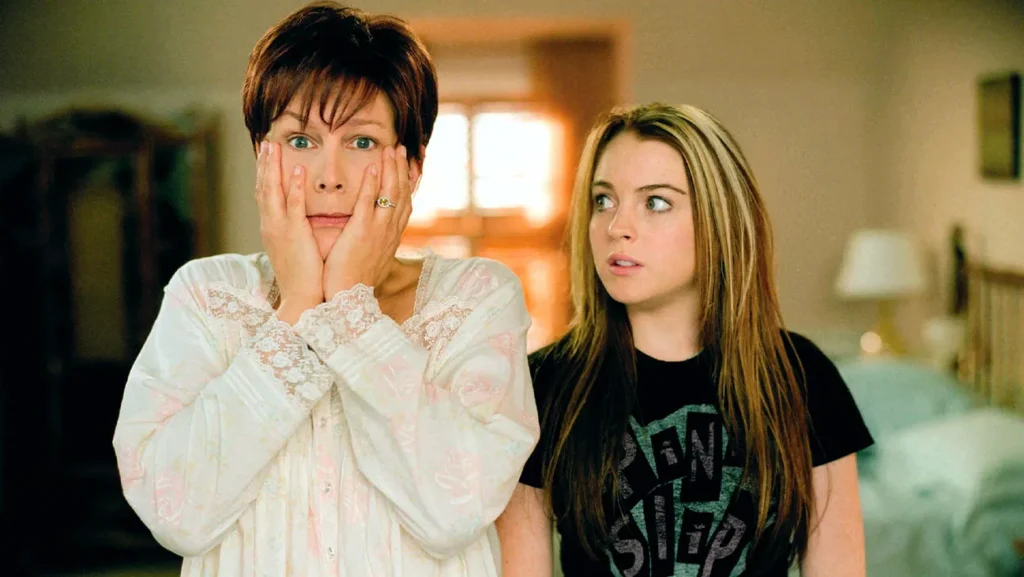
The pairing of Lindsay Lohan and Jamie Lee Curtis proved to be quite fruitful in this 2003 take on Mary Rodgers’ 1972 novel, which was previously adapted in 1976, starring Barbara Harris and Jodie Foster. Both iterations involve a mother-daughter body switch, but the 2003 version has it happen through the magic of Chinese fortune cookies (the ensuing racial stereotypes have been addressed in the years since, so I suppose we can give them a pass here).
The 2003 version fares better, first and foremost, because of the on-screen chemistry between Lohan and Curtis, which didn’t dwindle over the years when they decided to do the body swap again in this year’s sequel, Freakier Friday. The update allowed for the film’s themes of a generational divide between a mother and a daughter to feel more relatable, and the humor is smart and impactful without being neutered by the movie being released by the Mouse House. Besides, who can’t resist Lohan’s catchy “Ultimate” track recorded for the film, which continues to be a banger by 2003 standards.
5. It (2017)
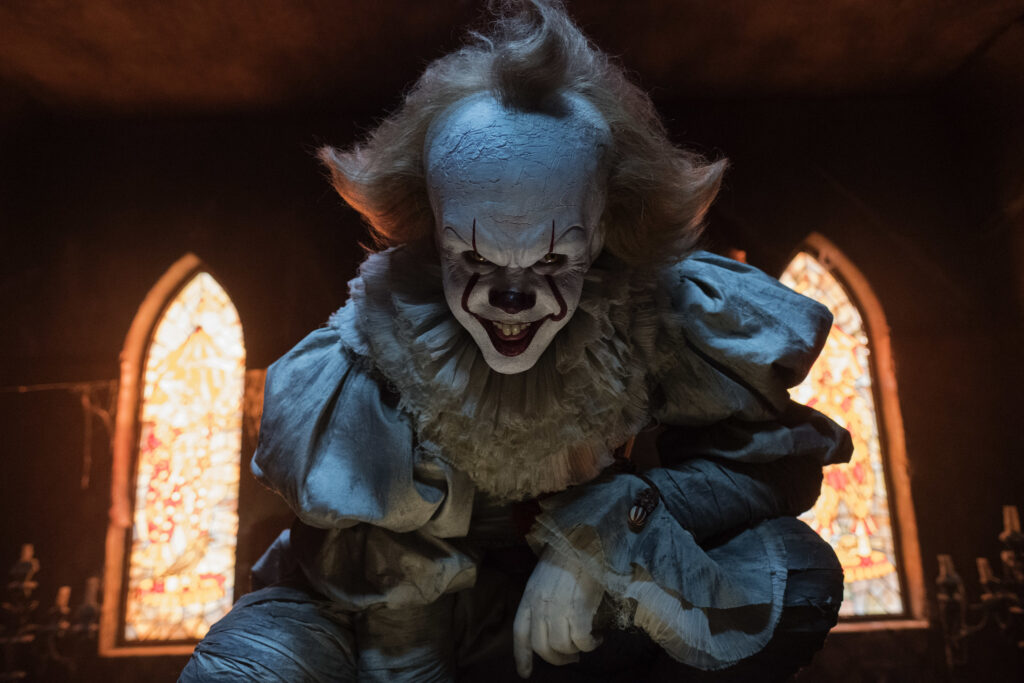
There is no shame in nostalgia bringing up good feelings about the 1990 TV movie adaptation of Stephen King’s It, and who doesn’t love Tim Curry’s portrayal of Pennywise, but the 2017 theatrical version is just a better take on the story in just about every way. In the film, the fictional town of Derry, Maine, particularly a group of kids dubbed The Losers’ Club, begin being terrorized by a being that takes on the form of Pennywise the Dancing Clown (Bill Skarsgård), which forces them to confront their own personal demons. The TV movie is no doubt one of the better TV movies of its time, but given the nature of the big screen treatment, the 2017 version has much better filmmaking techniques on display, courtesy of director Andy Muschietti.
The film also gets to lean into its R-rated sensibilities, something that a TV version could never do, and this allows it to be more in line with King’s novel, which describes some pretty disturbing imagery. The performances of the cast are also top-notch, from Skarsgård’s take on Pennywise, which is frightening in its own right and different from Curry’s portrayal, to the performances of the kids, with Jaeden Lieberher, Sophia Lillis, Jack Dylan Grazer, Finn Wolfhard, Wyatt Oleff, Chosen Jacobs, and Jeremy Ray Taylor putting in work that elevates the material. While the 1990 version has sensibilities that will continue to make it a favorite, the 2017 adaptation’s cinematic aesthetic adds to its fear element and makes it a better take on the story.
4. Ocean’s Eleven (2001)
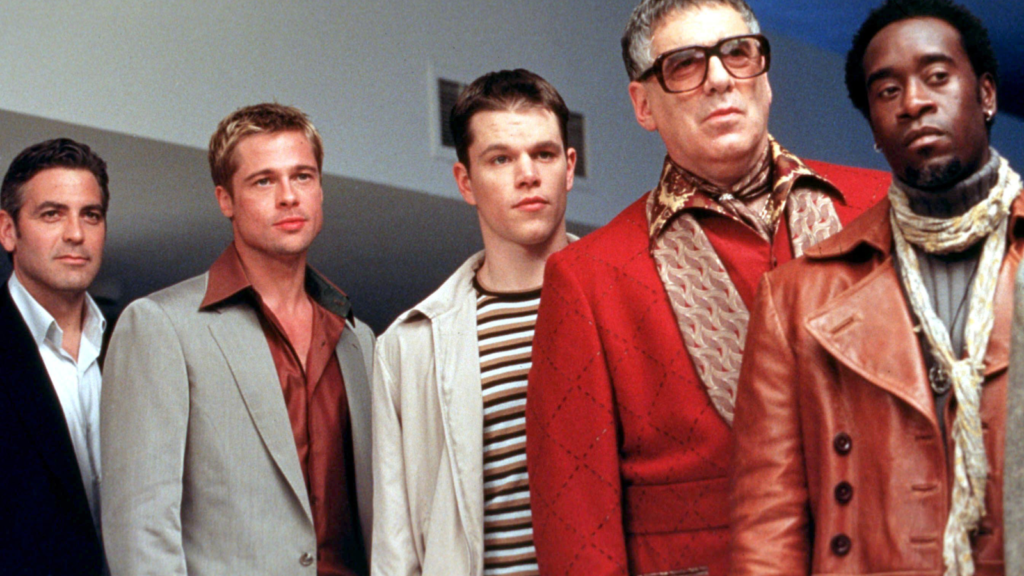
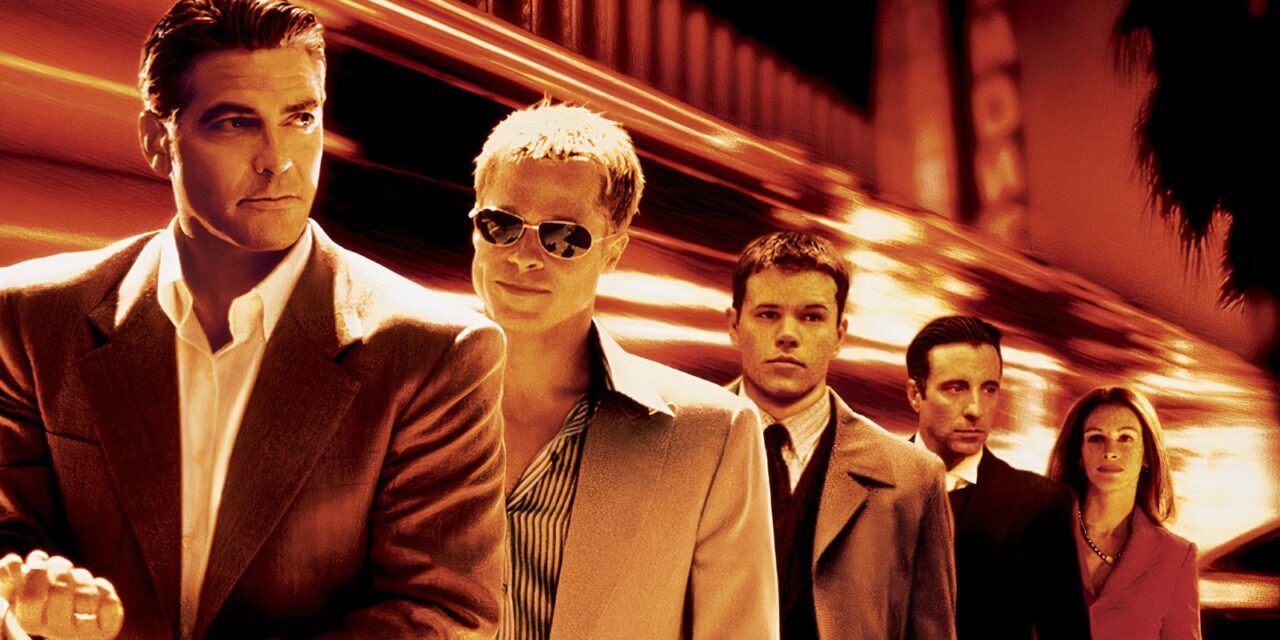
The Rat Pack is no doubt a cool group of fellas, particularly Frank Sinatra, Dean Martin, and Sammy Davis Jr., but their Ocean’s 11, released in 1960, just doesn’t touch the cool of the 2001 remake directed by Steven Soderbergh. In the film, Danny Ocean (George Clooney) and Rusty Ryan (Brad Pitt) recruit a group to plan a heist of $160 million from casino owner Terry Benedict (Andy Garcia) in Las Vegas. Soderbergh manages to maintain old Hollywood sensibilities with this version of the film while giving the project slicker production values, a kinetic style, and a faster pace that elevates the tension of the heist.
The old Hollywood aesthetic is also aided by the film’s perfect casting, particularly that of Clooney and Pitt, who exude movie star coolness throughout. The ensemble cast is uniformly excellent, with Matt Damon, Don Cheadle, Julia Roberts, Elliott Gould, Bernie Mac, Carl Reiner, Scott Caan, and Casey Affleck all getting a moment to shine in this star-studded vehicle. The movie also benefits from a more elaborate heist, involving three casinos, and the added complication of Ocean’s ex-wife Tess (Roberts) being romantically linked to their target. The chemistry from all involved is electric, and Ocean’s Eleven still remains a glowing example of how to make a Hollywood film with both style and substance.
3. The Fly (1986)
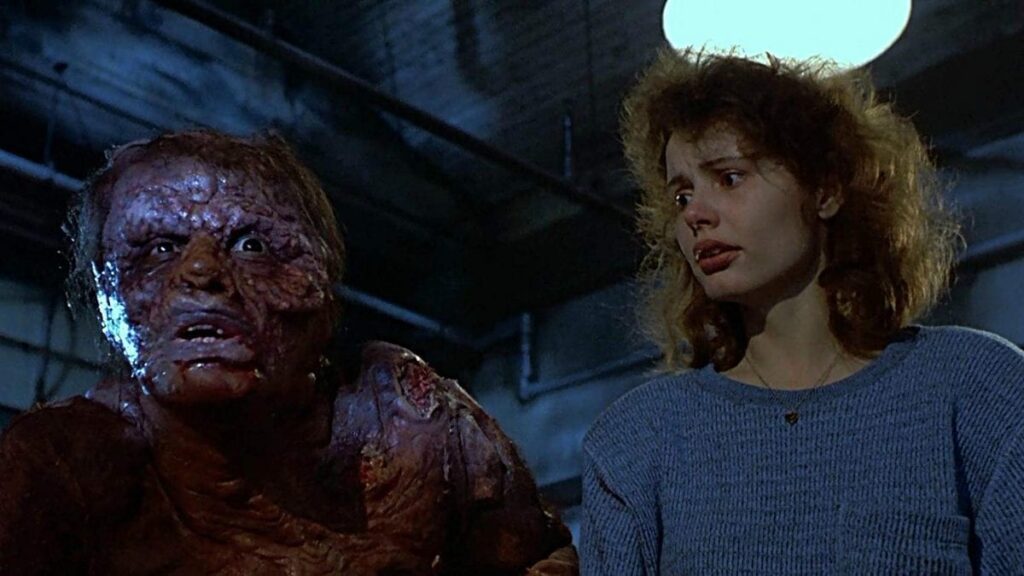
Sometimes remakes need to be far and away different from the original, and that is the very case with 1986’s The Fly, directed by David Cronenberg. There are elements of the narrative that remain from the 1958 adaptation of George Langelaan’s short story, but Cronenberg ups the horror and emotional tragedy of the story, giving it a more profound impact while also giving the audience some startling and disgusting practical effects for good measure. In the film, an eccentric scientist named Seth Brundle (Jeff Goldblum) finds himself falling victim to an experiment gone wrong when he begins to gradually turn into a fly-hybrid monstrousity. While the 1958 version is a bit more faithful to the source material and offers up its own iconic moment (“Help me!”), the film is a bit slow-moving and plays more like a mystery.
Cronenberg’s interpretation of the story is scary for reasons that feel more intimate and personal. The film is deeply tragic in the sense that the relationship between Seth and Veronica “Ronnie” Quaife (Geena Davis) is forever changed by the accident that finds Seth slowly morphing into a fly-hybrid creature. Their love for each other runs deep, and she wants to be there for him through these changes (perhaps a little too long), and that’s strongly because she remembers the man he once was. The film also touched on the hard-hitting issue of abortion when Ronnie finds herself pregnant with Seth and is frightened by the notion of what her child will be because of Seth’s transformation.
Throw in the fact that Seth’s desperate plan involves fusing himself with her and their unborn child to form one entity, and it tells a story of a man who becomes a monster who goes through extreme measures to hold onto an ounce of the humanity he once had. If the tragic love story isn’t your jam, the movie has some of the best body horror effects put to film, which resulted in Chris Walas and Stephen Dupuis earning a much-deserved Academy Award for Best Makeup.
2. The Thing (1982)
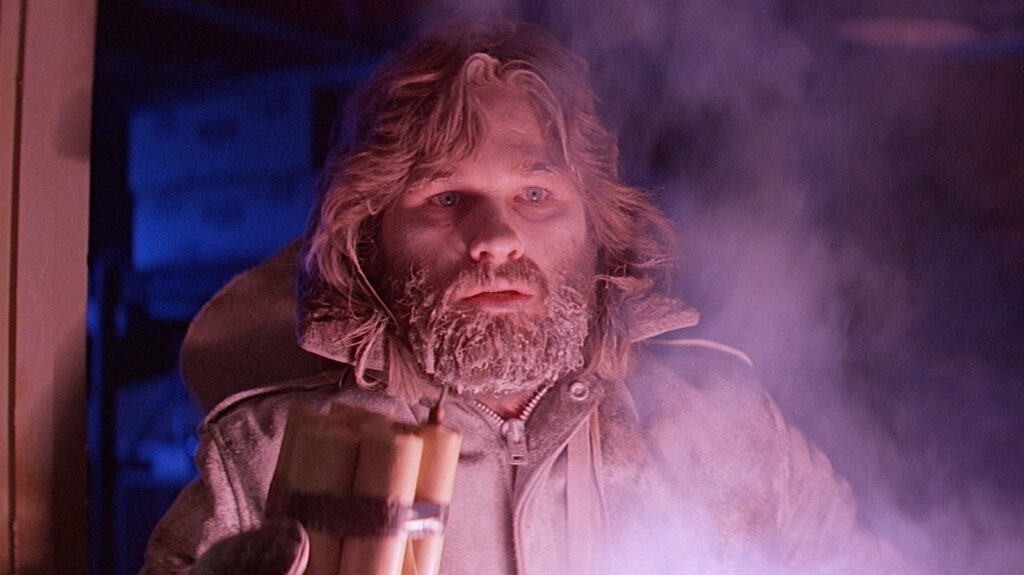
Despite being considered a box office disappointment in 1982, John Carpenter’s take on John W. Campbell Jr.’s 1938 novella Who Goes There?, which was later made into 1951’s The Thing from Another World, became a cult classic years later because it set a new standard for practical effects and is honestly leaps and bounds better than the 1951 iteration. In the film, a group of American researchers in Antarctica encounters an extraterrestrial life-form that assimilates and imitates other organisms, leading to mass paranoia within the group.
The Howard Hawks and Christian Nyby version is a product of its time and focuses on the aspect of scientists coming together to face off against an alien life-from but Carpenter’s The Thing elicits fear from more than the alien conflict. As the “thing” begins to take hold of the group and absorbs and imitates them, the growing paranoia becomes an escalating nightmare where it’s hard to determine who you can trust. It’s really a descent into dread and madness as this foreign life-form not only takes over the body but begins to affect their psyche as well.
A lot of theories have been given as to why this movie didn’t resonate in 1982, with competition from the more optimistic E.T. the Extra-Terrestrial being a driving factor, but time has been very kind to The Thing. It’s now largely regarded as one of the best science fiction horror films ever made, and Rob Bottin’s practical effects are still considered some of the best of its time, proving that making the grotesque appear as real as possible is the best possible bet.
1. A Star Is Born (2018)
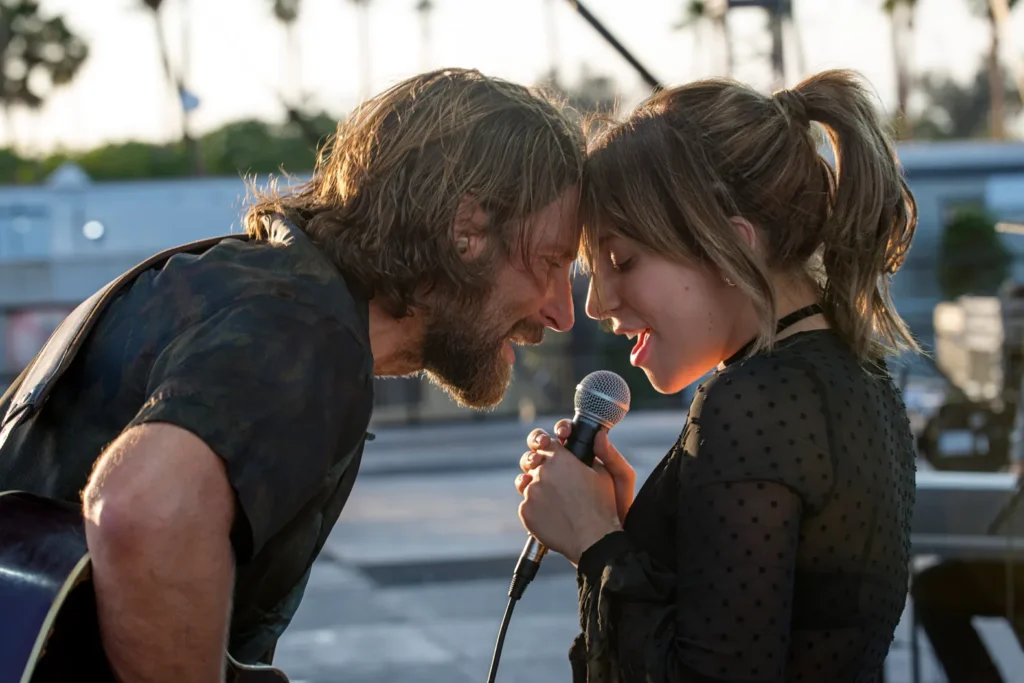
By the time A Star Is Born was released in 2018, it was the fourth version of the film made after the 1937 drama and its subsequent 1954 and 1976 remakes. What makes the Bradley Cooper-directed take better is most ways than all of those versions is that he, and his screenwriting partners Eric Roth and Will Fetters, were able to modernize the story in a way that dives into the trials and tribulations of fame while also tackling how the combined weight of perceived failure and alcoholism can gradually destroy someone from the inside out alongside the people they love. In the film, Jackson “Jack” Maine, an alcoholic musician, discovers and subsequently falls in love with Ally Campana, a singer-songwriter with undeniable talent.
A lot of time separates all the previous versions of the story from this one, so 2018’s A Star Is Born benefits greatly from topical relevance. In terms of the music industry, it has a more contemporary, undeniably realistic view of what women go through breaking into the entertainment industry, and sometimes the jealousy that ensues from even the closest person who helped get them to where they are. The film is also a profound examination of mental health and addiction, with Cooper tackling the subject matter without sugarcoating it, presenting it in a way that is tragic but realistic.
The movie is also aided by the performances of both Cooper and Lady Gaga, who exhibit chemistry as a pair but also bring individual greatness to their roles. They both are authentic in their portrayals, adding nuance and believability to characters that resonate with the audience. A Star Is Born may not be the easiest film to watch by the end, but its honesty strikes a chord that stays with you long after it’s over.
The Running Man opens in theaters nationwide this Friday.
For more on Movies, make sure to check back to That Hashtag Show.

![Darby and the Dead [PRESS JUNKET]](https://www.thathashtagshow.com/wp-content/uploads/2022/11/DHWK-05039_R-440x264.jpg)


 That Hashtag Show
