
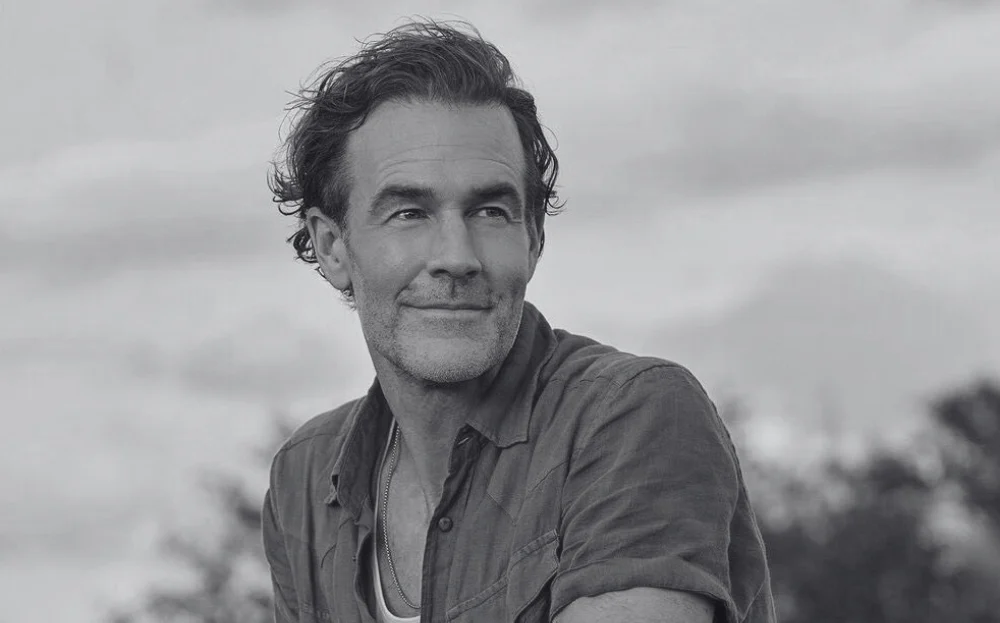
The industry was dealt a huge emotional blow when the news broke that actor James Van Der Beek passed away at the age of 48 after being diagnosed with colorectal cancer in 2023. His strength and generosity of spirit have been spoken of by many in the wake of his passing, but you’ve probably noticed that people of a particular age are taking his death harder than others. In many ways, some of us grew up watching the actor navigate adolescence through his character of Dawson Leery on Dawson’s Creek, and this carried on through some of his other early work, particularly 1999’s Varsity Blues. That’s not to say that he’s defined by these roles, but they resonate with others in a way that makes so many feel connected to him. Even if it’s through characters that he played, which helped define a generation.
It’s that saying, “you had to be there.” Dawson’s Creek burst out of the gate in 1998 as a true phenomenon. The series, created by Kevin Williamson, was riding in on a wave that its creator established when his screenplay for Scream turned into a pop culture-defining hit in 1996, which resulted in just about everything Williamson touched turning to gold. 7th Heaven and Buffy the Vampire Slayer came first on The WB network as it was trying to find its identity with youth culture, but Dawson’s Creek solidified it. When the series premiered with 6.8 million viewers, which was small potatoes compared to the major networks such as NBC, ABC, and CBS, it quickly became the highest-ranked series on the network. There’s no denying that Dawson’s Creek was a true ensemble with Katie Holmes, Joshua Jackson, and Michelle Williams aiding in the series’ popularity, but Van Der Beek was the face of the series. His image represented the idealism of a time that feels so out of touch now, but something many of us held onto while watching.
Even though some of us wish we could be Jackson’s Pacey Witter because he was “the cool best friend,” the fact of the matter is, most of us identified more with Dawson. Idealistic to the point of maybe being naive, Dawson was a dreamer. A film geek addicted to Steven Spielberg who believed, like the movies he loved, that life could be wrapped up with an aw-shucks happy ending. It might sound cheesy by today’s standards, but there’s a part of our adolescence that holds on to that idea, especially if you have an imagination.
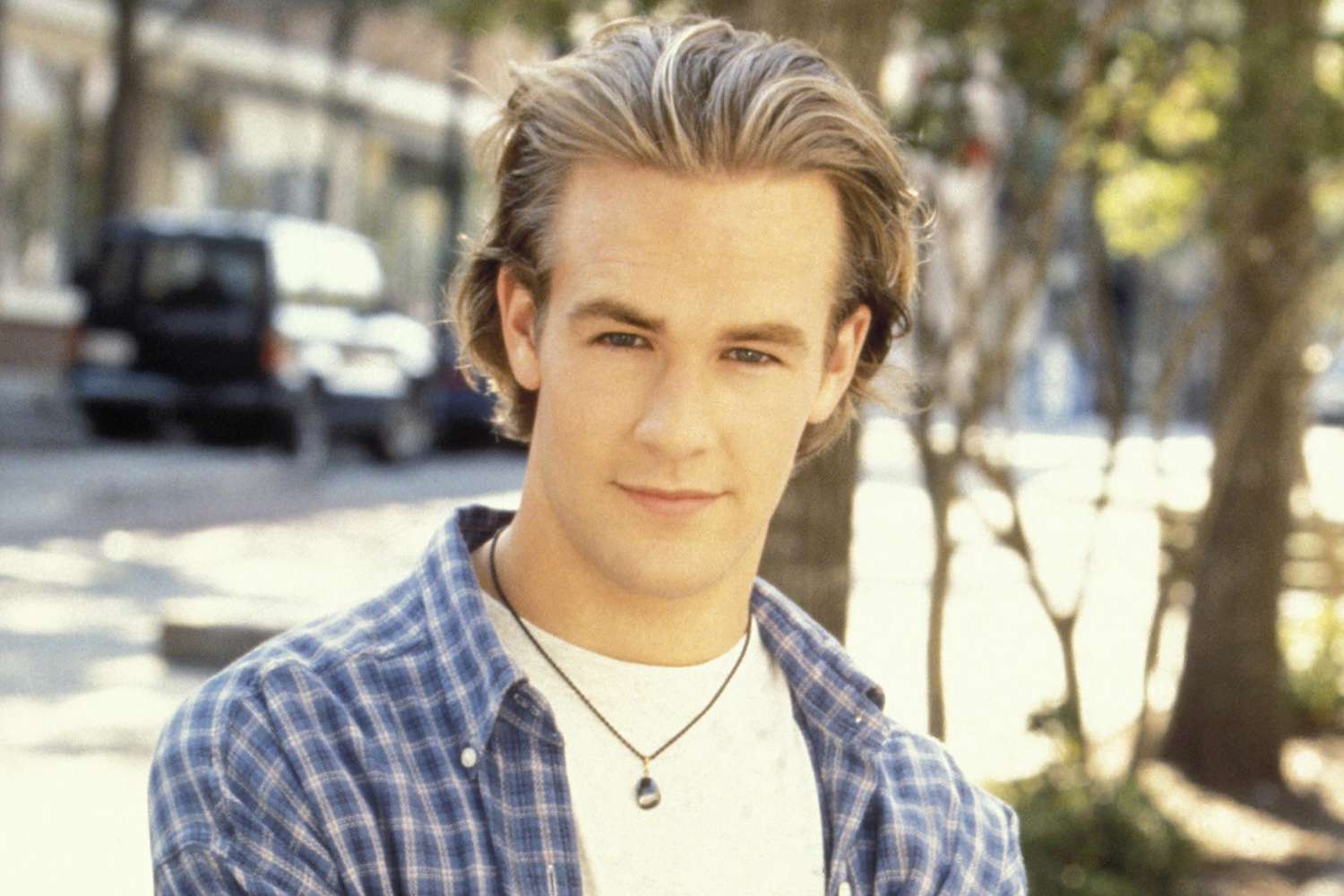
Dawson was full of imagination and believed earnestly that things would resolve as they should. As if it were the plot of some of his favorite films. That was inherently in how the character was written, but Van Der Beek is the reason those character traits shone brightly. Knowing what we have come to know over the years about his character, Van Der Beek’s heart was big, he loved hard, and he was incredibly giving to the people in his life. From his friends to his wife, with whom he shared six beautiful kids. Van Der Beek may not have been Dawson completely, but his spirit is what infused that character with so much integrity. This is why Dawson means so much to people who grew up with the show. There’s an innocence within that character that feels so endearing. In many ways, we’re so jaded about how people can act nowadays that we forget that simply being kind and shooting for the stars is something we all should aspire to.
Dawson’s Creek earned its share of criticism when it first premiered because critics and parents groups alike weren’t too pleased with the “explicit” way the characters spoke about sex, and they seemed to believe that their educated dialogue didn’t make them realistic teenagers (they were vastly underestimating just how intelligent teens were becoming as we entered the year 2000). The interesting thing is, by today’s standards, Dawson’s Creek was sugary sweet and tame. Even its most salacious storylines found ways to romanticize the outcome. Given what we would see a few years later with The O.C., Gossip Girl, or Pretty Little Liars, Dawson’s Creek feels like a show your parents might want you to tune into. Dawson Leery was a character in particular who could inspire. He learned, early on, being a sophomore in high school, that he wanted to be a filmmaker and nothing was going to stop him. Again, it’s all in how the character was written, but it was Van Der Beek who made you believe in that dream, and if you shared a similar dream like someone like me, Van Der Beek’s portrayal of Dawson made you feel just a little more confident in your youthful pursuits. If Dawson could do it, certainly I can. Van Der Beek became the youthful face of never giving up, even if the odds were stacked against you. No matter how unrealistic some of these dreams may be, this character and his ability to bring him to life in a profound way made those dreams seem possible.
Dawson wasn’t always perfect. Van Der Beek had to be the face of many a teen temper tantrum when things didn’t go according to plan, and if you were invested in the eventual Dawson, Joey, Pacey love triangle that began during Season 3, some of his choices and adolescent outbursts of woe-is-me teen angst made you mad on more than one occasion. That’s the thing, though. Thanks to Van Der Beek’s skills, he still managed to find the truth in anything Dawson did. Watching the series as a fully formed adult, you find some of the acting choices he made during those moments of turmoil more acceptable. After all, when you’re not looking at it from a young adult perspective, you clearly see some of the pain Dawson was going through because, low-key, you’ve gone through it at some point yourself, too. You see Dawson’s heart, even in his worst moments, because Van Der Beek’s was always shining through. He humanized Dawson’s angst in a way that could make you ultimately forgive some of his shortcomings. Let’s not underestimate that Van Der Beek was the poster boy for all of the coming-of-age trappings that many of us deal with, and he portrayed the highs and lows of those with heart and integrity.
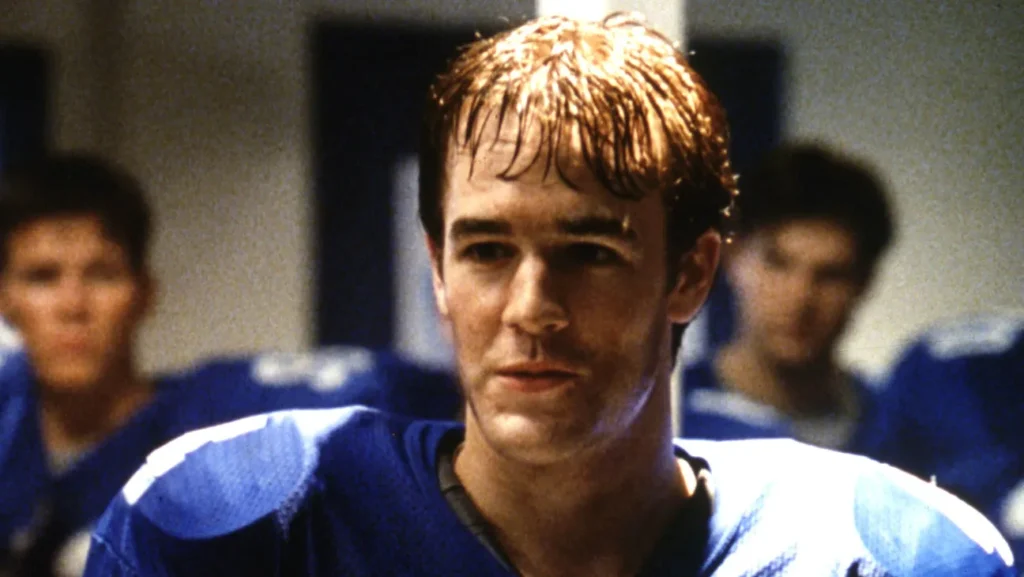
This is even true of Van Der Beek’s first major role outside of the hit series he was headlining. On paper, his taking on the coming-of-age sports drama Varsity Blues was a calculated effort to step out of Dawson’s shadow. The character gets to swear, unlike Dawson, drink beer, unlike his film-loving counterpart, rock a brunette look to further separate himself from the guy from Capeside, and he was a football player, a sport Dawson would be more likely to make a movie about rather than play. Despite all of this, Jonathan “Mox” Moxon has a similar warmth and generous spirit because it’s something that is just naturally instilled in Van Der Beek.
Johnny Moxon was different from his teammates. He wanted to play football, but he wasn’t hungry for it. He seemed to reject his dad’s insistence on living vicariously through him and preferred to read Kurt Vonnegut’s Slaughterhouse-Five rather than study his team’s plays while sitting on the bench. He was an introspective character who, even when he’s thrust into being his team’s star quarterback, is still not quite comfortable with all the trappings that come along with it. Mox had dreams of being something more. Not in the same way as Dawson, but it’s a similar trait that Van Der Beek was able to tap into to make this a role that so many people still remember.
As he stands up to Jon Voight’s truly evil Coach Bud Kilmer before the final moments of the game that closes the movie, Van Der Beek more than holds his own against Voight, who is undeniably strong. Van Der Beek gave Johnny Moxon integrity, and that is on full display in that final locker room scene. Once Bud Kilmer is finally brought to his knees, Mox’s speech to his team, which no doubt is riddled with final speech movie cheese, resonates because Van Der Beek sells it so effectively. The audience believes it because he believes it. As an actor, Van Der Beek had a special knack for making you believe in the impossible.
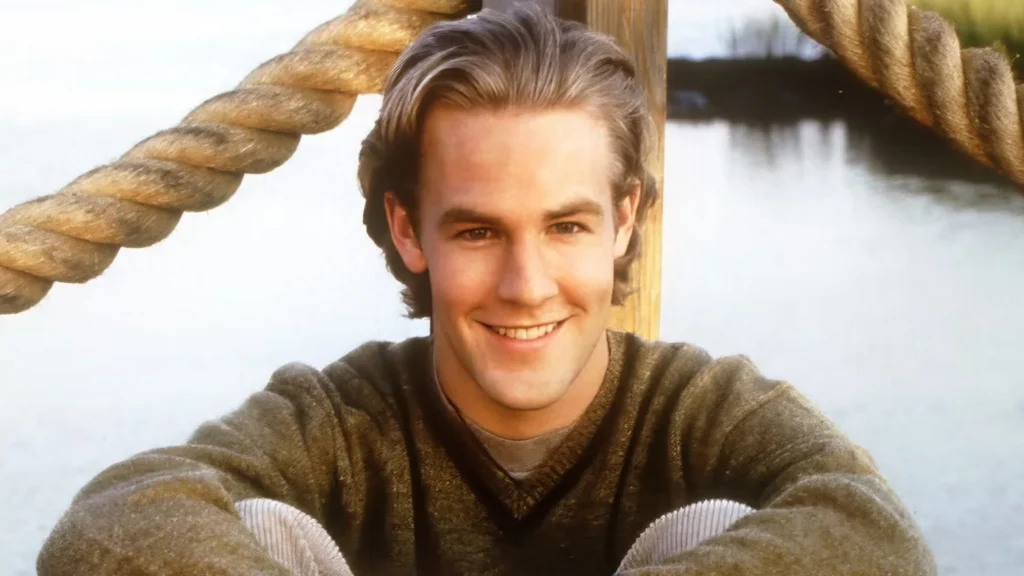
So that’s why so many of us feel hit so hard by his passing. In some ways, it feels like a little bit of our adolescence, in that belief that we can do anything we put our minds to, has passed a little bit along with him. Through those early characters he portrayed, he conveyed that there was nothing wrong with sincerity and a little bit of naivety. It’s a part of ourselves that we sometimes don’t want to admit that we wish we could hold onto a little longer. Through those characters, Van Der Beek was the face of that.
That’s not to say that he should be remembered as just a beacon of late 90s innocence that has long passed. As an actor, he was at his best when he played devilishly against type (Sean Bateman in The Rules of Attraction) or when he showed he had no issues poking fun at himself and his persona (the gone-too-soon Don’t Trust the B**** in Apartment 23). Van Der Beek was way more than the early roles that made him a star, but what those roles leave us with is what he became known for as he matured and tackled other ventures, and simply led with his best role to date, which was simply being himself. A man with integrity. A man with grace. A man who fought hard to the very end. The silver lining for the fans who feel like they’ve lost a piece of themselves by losing him is that he taught us early on, through those roles we love, to never give up and carry on. Even if it feels impossible.
Rest in Peace James Van Der Beek.




 That Hashtag Show
