
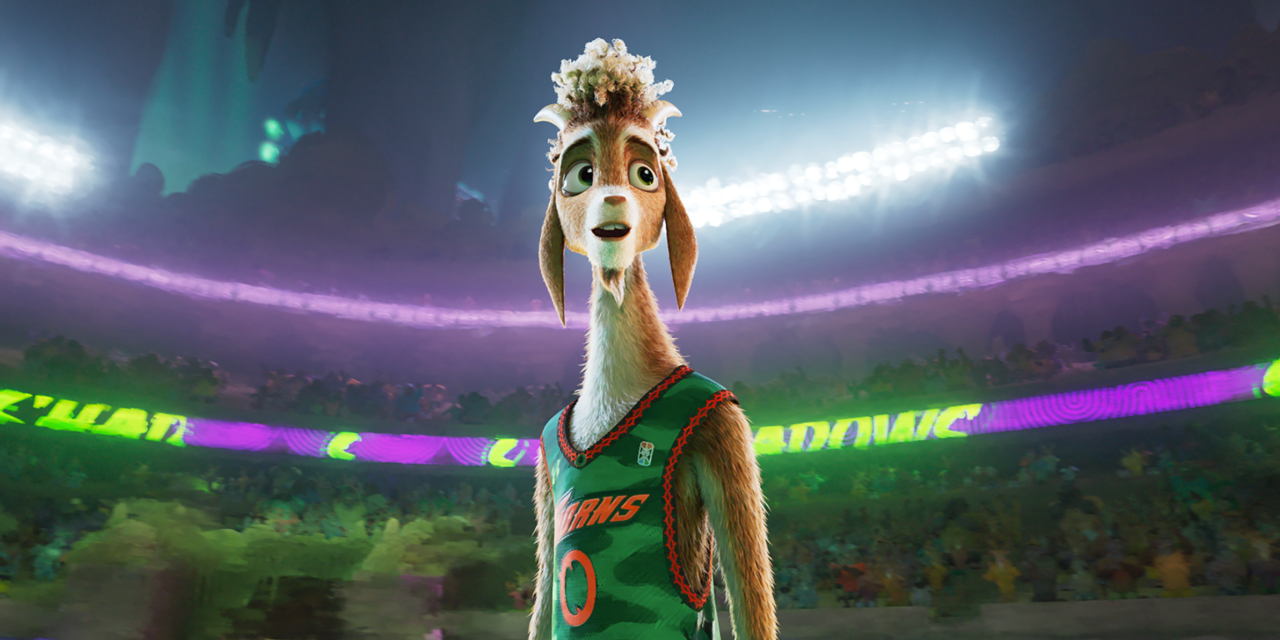
This weekend sees the release of the animated sports comedy GOAT, directed by Tyree Dillihay and written by Aaron Buchsbaum and Teddy Riley.
The film features the vocal talents of Caleb McLaughlin, Gabrielle Union, Aaron Pierre, Nicola Coughlan, David Harbour, Jennifer Hudson, Andrew Santino, and Steph Curry, among others, and follows an anthropomorphic goat named Will Harris (McLaughlin) who aspires to be the greatest of all time at a sport called roarball, which is very similar to basketball. Steph Curry, who plays for the Golden State Warriors, also serves as an executive producer, so with all of these basketball connections linked to the film, it gave us an excuse to dive into the five best basketball movies ever to determine which is the greatest of all time.
Honorable Mention: Space Jam (1996)
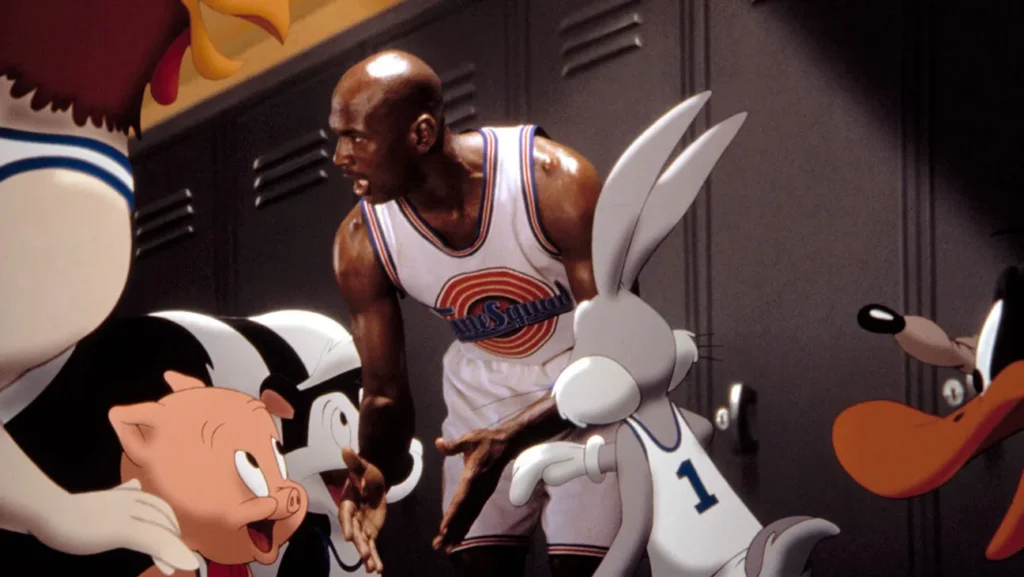
It would be a crime not to include this nostagic mid-90s gem on the list in some capacity. Space Jam may not hold up completely by today’s standards, but it certainly takes you back to a time when you were a kid, and this felt like a true cinematic event. Directed by Joe Pytka and written by Leo Benvenuti, Steve Rudnick, Timothy Harris, and Herchel Weingrod, Space Jam stars basketball player Michael Jordan as himself and follows the sports phenom as he is brought out of retirement by the Looney Tunes characters to aid them in winning a basketball match against an alien race that wants to enslave them as amusement park attractions. It’s all really silly when it comes down to it, but it truly is a time capsule of 90s pop culture, a killer soundtrack, and a seamless live-action/animation blend that just makes it a joy to watch.
Jordan had no acting experience when stepping into Space Jam, but he does have natural charisma that adds to the film’s charms. While reviews were mixed at the time of release, Space Jam was a huge hit, grossing $250.2 million worldwide on an $80 million budget, making it the highest-grossing basketball movie of all-time. Throw in a soundtrack that went six times platinum when movie soundtracks were king (those times are greatly missed), Space Jam delivers as a fun look back to when releasing a movie like this simply made sense.
5. Coach Carter (2005)
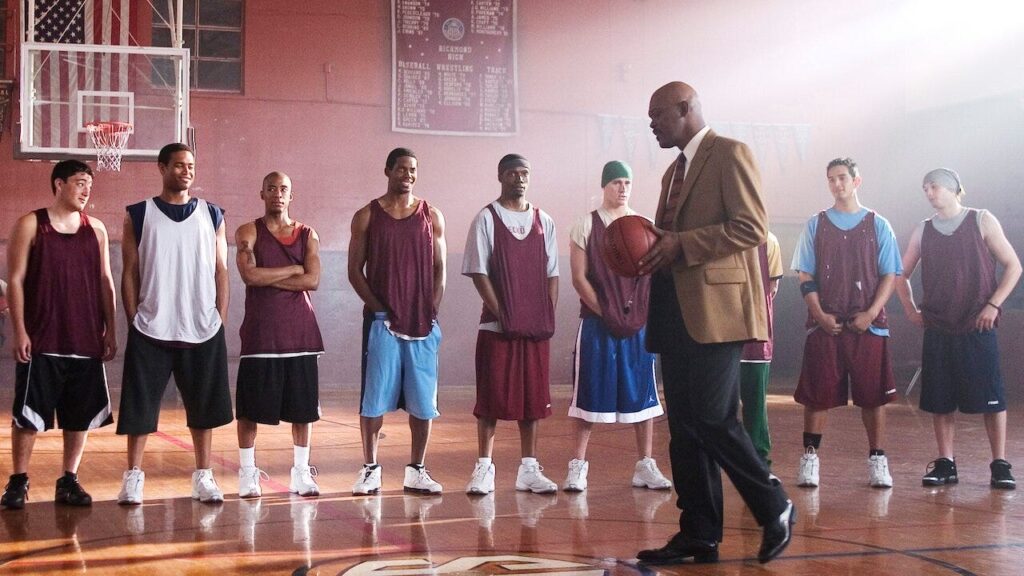
While Coach Carter doesn’t deal with the race relations like the football drama Remember the Titans, something about its inspirational story of accountability above all else feels as if it was reaching for the same DNA of that compelling sports film. While it doesn’t reach the same heights, it does have a strong actor in the form of Samuel L. Jackson at the lead (similar to Denzel Washington), who gives the film an extra amount of credibility. Directed by Thomas Carter from a screenplay by Mark Schwahn and John Gatins, Coach Carter is based on the true story of Ken Carter (Jackson), a Richmond High School basketball coach who made considerable headlines when he suspended the undefeated team due to poor grades. The lesson in the film does hit all the right notes, as many people put sports over academics, and this movie makes a strong case that academics is the true path to success and that playing the sport is more of a privilege rather than an easy way out to avoid the other essential tools that school affords you. It’s also great to look back on Jackson getting the opportunity to truly act in a role rather than doing some of the things that have become his signature.
That’s not to say Jackson’s signature foul-mouth and yelling is a bad thing; it’s just that we sometimes forget that he’s capable of diving into characters in a real way that gives them actual emotional depth, which is something he showcases here. Coach Carter might be less about the sport of basketball as it focuses more on character development and disclipline but the latter part feels like a necessary evil to achieve greatness in the sport if you truly want to succeed. It’s a bit cliched at times, but it’s motivational and packs the right emotional punch to hold some weight. Fun Fact: This film also marked the film debut of Channing Tatum as Jason Lyle.
4. Above the Rim (1994)
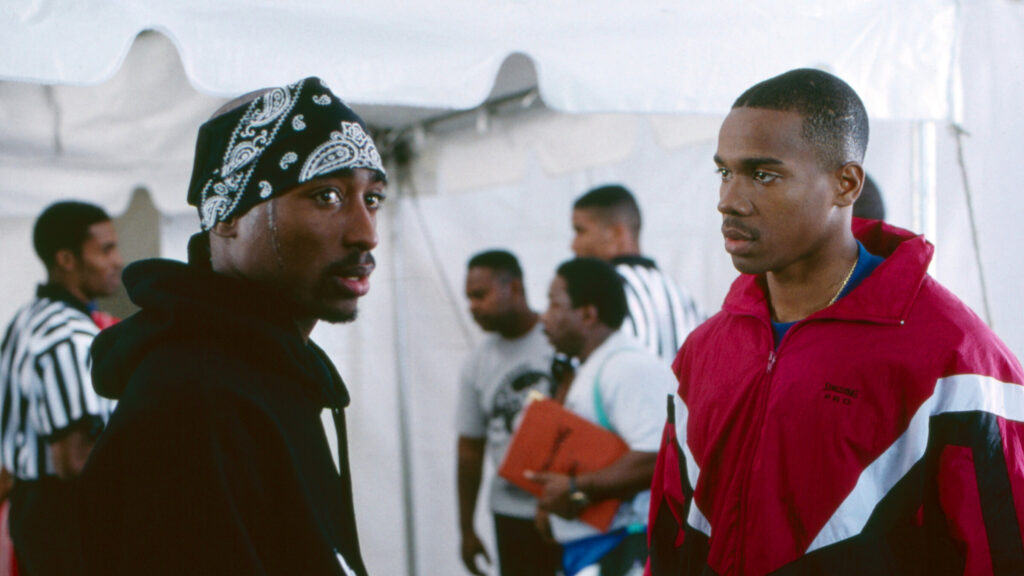
If you want an authentic look at urban basketball culture in the 90s, blended with a compelling coming-of-age story, Above the Rim is the movie for you, and it’s a shame it’s sometimes forgotten in the grand pantheon of urban films released in the 90s. Directed by Jeff Pollack in his directorial debut and written by Pollack and Barry Michael Cooper, from a story conceived by Benny Medina, Above the Rim centers on a promising New York City high school basketball player named Kyle-Lee Watson (Duane Martin) and his relationships with a drug dealer Birdie Sheppard (Tupac Shakur) and former basketball great named Thomas “Shep” Sheppard (Leon), who is now a security guard at the same school he once was a promising young star at. Above the Rim is a movie all about choices and demonstrates how negative outside forces can influence you when potential opportunities that could change your life are also available.
The basketball scenes are shot with a grittiness by Pollack that makes you feel like you’re amongst the action, aided by the fact that the director put real players in the scenes to give the film more authenticity. The movie offers up real emotional stakes, and even though they are a bit cliched, you’re invested in whether Kyle-Lee will choose to follow his basketball dreams or be sucked into the life of dangerous street culture, which is also calling his name. Above the Rim features powerful performances, particularly Shakur’s portrayal of Birdie, which is raw, intense, compelling, and proof that he had even more to offer as an actor beyond the few films he gave us before his death. This actually concludes Cooper’s “Harlem Trilogy,” which also includes 1991’s New Jack City and Sugar Hill, which was released a month before Above the Rim, and all three represent a cultural snapshot of the time that is honest in its depiction of the good and bad of the culture at the time. Above the Rim wasn’t a huge hit when released, grossing $16.2 million on a $6.5 million budget, but it has gained traction over the years as a signature film of its time. Also, let’s not forget the double platinum soundtrack, which features bangers like “Regulate” by Nate Dogg and Warren G, and the “Anything (Allstar Remix)” by SWV. They just don’t make them like they used to.
3. Hoosiers (1986)
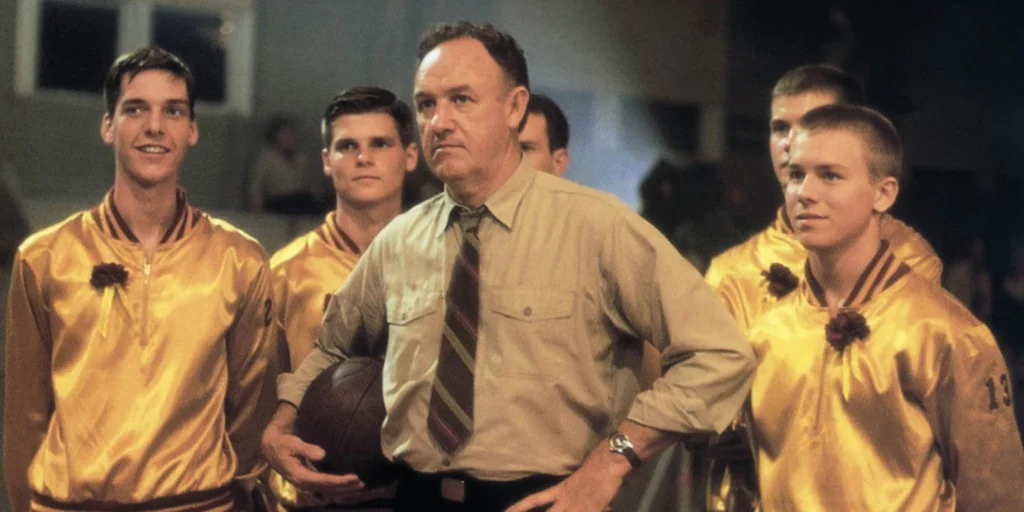
Every sport needs its movie that functions as a true underdog story, and Hoosiers is that very film for basketball. Directed by David Anspaugh in his feature directorial debut and written by Angelo Pizzo, Hoosiers is inspired by the Milan High School basketball team, which won the 1954 state championship against Muncie Central High School, and follows a small-town Indiana high school basketball team as they try to make it to the state championship finals. Hoosiers has a ton of heart, and what it truly gets right is the authenticity of the time. From the details to the costumes, setting, and the gym in which the players play, Hoosiers makes you feel like you’ve stepped into 1950s Indiana.
Like any good sports movie, Hoosiers is a true underdog story, and you would have to have a heart of stone not to be moved by it. That being said, should the story not move you, Jerry Goldsmith’s Academy Award-nominated score should do the trick. It’s the epitome of uplifting, and it adds emotional weight to many of the scenes. Gene Hackman, portraying Coach Norman Dale, gives a truly grounded performance, but it’s Dennis Hopper, as the town drunk who has a love for basketball, that steals many of his scenes. Hopper earned a much-deserved Academy Award nomination for portraying Wilbur “Shooter” Flatch, a showy yet heartbreaking role that remains one of his best. Sports movies like this get some criticism for diving into sentimentality because some think they use it as a tool to manipulate the audience, but Hoosiers always feels 100 percent honest, making it hard not to get sucked into its underdog charms.
2. Love & Basketball (2000)
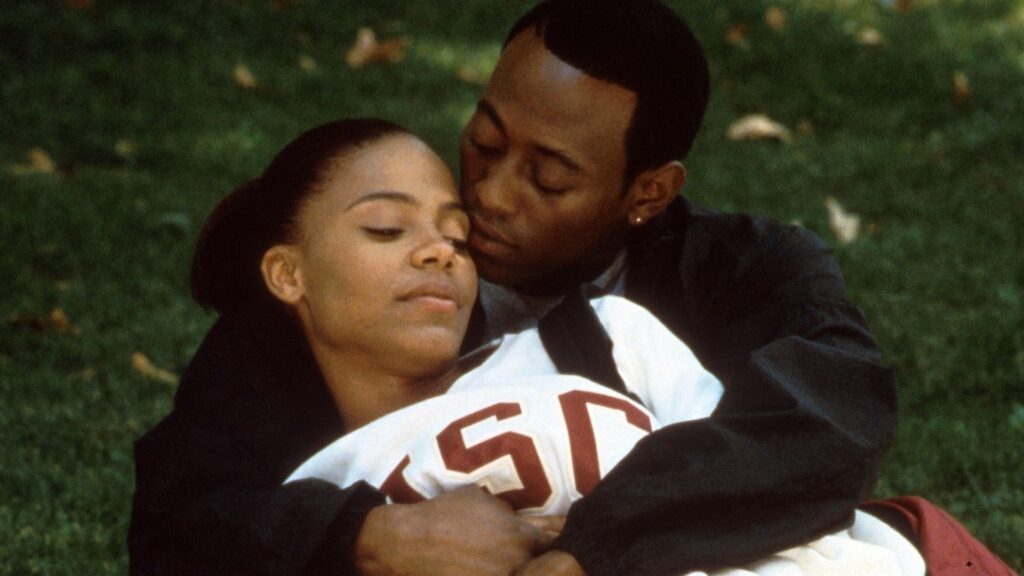
Sports movies aren’t always known for mixing romance with athletics, but writer and director Gina Prince-Bythewood proves that when done right, it can make for one perfect cinematic marriage. Love & Basketball is Prince-Bythewood’s feature directorial debut, and it follows next-door neighbors Quincy McCall (Omar Epps) and Monica Wright (Sanaa Lathan), who are pursuing their individual basketball dreams while also navigating a growing romantic relationship. Love & Basketball offers up the best of both worlds. From a basketball movie perspective, Prince-Bythewood directs the sports play with realism and wisely had Epps and Lathan go through extensive basketball training so the basketball scenes would have pure authenticity.
The sport isn’t shortchanged for the romance, but if you’re looking for a love story that is pure to its core, Love & Basketball also excels. Epps and Lathan have combustible chemistry together, and they effectively portray the evolution of their romance as rivals during their younger years and eventually as lovers. There is a natural push and pull between the two that is truly palpable, and in a time when Black love stories aren’t always told, it’s great to see the representation shown through this film with honesty and respect. Kudos to how the film portrays female athletics as well. Perhaps if Prince-Bythewood wasn’t at the helm, this wouldn’t be the case, but we often see these kinds of films from the male perspective, but it’s also compelling to watch Monica’s ambition as she achieves her professional dreams. Love & Basketball covers all the essentials to tell a captivating story, choosing to focus on relationships and ambition, rather than just the trauma that can be associated with movies about people of color. It’s a film that gets better with each rewatch, and it’s a joy to watch its cult status ascend with each passing year and even more impressive to watch it be added to the United States National Film Registry by the Library of Congress in 2022 because it truly is “culturally, historically, or aesthetically significant.”
1. He Got Game (1998)
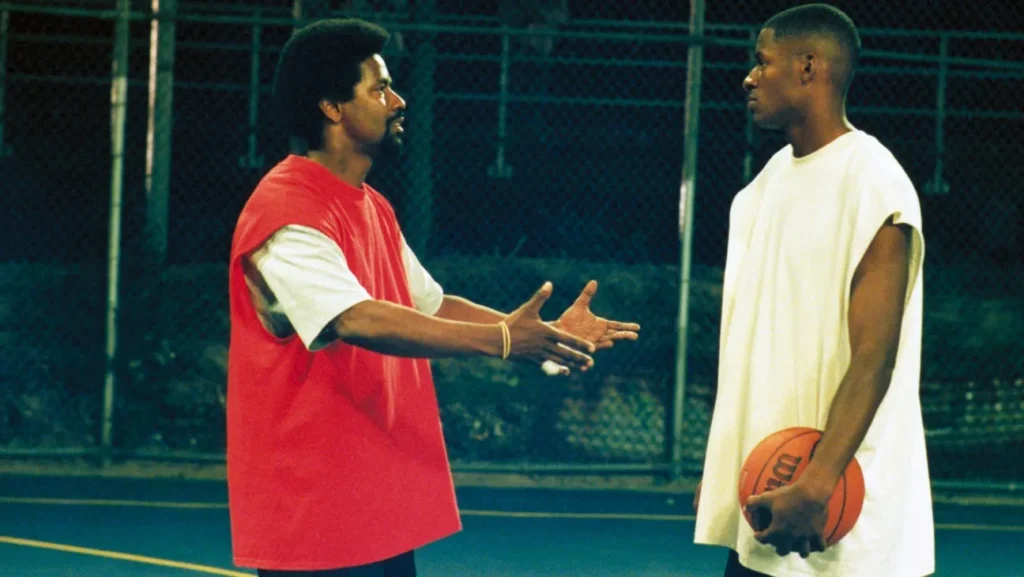
It’s no secret that director Spike Lee is a huge basketball fan, with his love for the New York Knicks on full display at just about any game he can show up at. That’s why his directorial touch feels so ingrained in his film, He Got Game, as it shows his love for the game but also his love for telling compelling, and sometimes complicated, human stories with a raw and unflinching eye. Lee also penned the screenplay for the film, which follows Jake Shuttlesworth (Denzel Washington), the father of a highly-ranked basketball prospect named Jesus Shuttlesworth (Ray Allen). The compelling hook to the film is that Jake is in prison for killing his wife, and he is granted parole for one week by the state’s governor to persuade his son to play for the governor’s alma mater, which will lead to a reduced prison sentence. Lee took a chance on casting Allen, a real-life basketball player with no acting experience, to portray such a pivotal role, but it proved to be a wise choice because Allen has natural charisma on screen, and he brings legitimacy to the basketball scenes that raise the bar when compared to other basketball films.
Speaking of performances, this is one of Washington’s best performances, and it’s not talked about nearly enough. His portrayal of a flawed father pursuing a rather complicated relationship with his son is compelling, and he does his part to elevate Allen in their scenes together. If Allen has a hint of being a rookie in the acting department, it fades away whenever he shares scenes with Washington. Lee’s signature style gives the film a rough aesthetic, and yet it also captures the beauty and love of the sport, more than likely because Lee shares a love for the game too. The film also speaks to corruption in the system, portraying a rather shady world where high school recruiting and college scouts can go down nefarious paths in order to get the players they want. He Got Game was well received at the time of release, but it only grossed a mere $21.5 million on a $25 million budget, which makes it an easy one to forget in the director’s filmography, but make no mistake: He Got Game is one of Spike Lee’s best joints.
GOAT is now playing in theaters nationwide.

![THS WEEKEND WATCH: SEPTEMBER 9th [NEW RELEASES]](https://www.thathashtagshow.com/wp-content/uploads/2022/09/project_20220912_1217422-01-440x264.png)



 That Hashtag Show
