
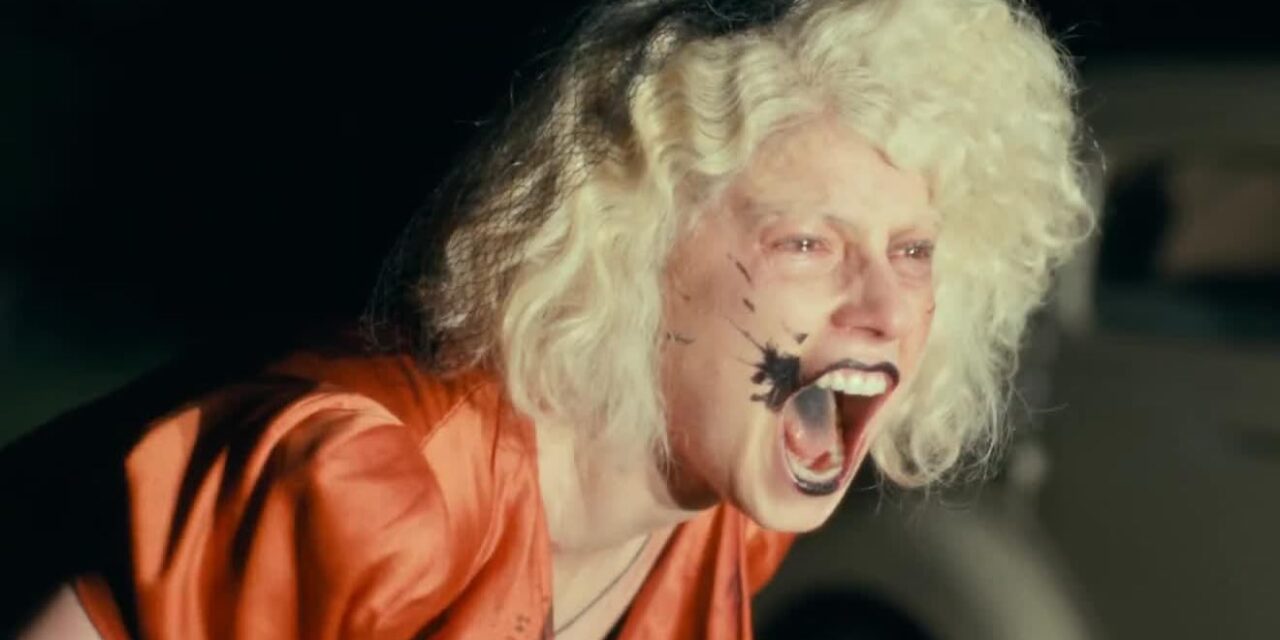
The Bride! was always going to be a tough sell. A period piece gothic romance inspired by the 1935 film Bride of Frankenstein, which itself was based on Mary Shelley’s 1818 novel Frankenstein, isn’t exactly the kind of film that could appeal to the masses and casual moviegoers. All that being said, writer and director Maggie Gyllenhaal built up creative goodwill with her directorial debut, The Lost Daughter, and the movie boasted a solid ensemble cast, including Jessie Buckley, like Best Actress Oscar winner for her role in Hamnet, Christian Bale, and her brother Jake Gyllenhaal, among others.
Perhaps because of these reasons, it was fair to assume that The Bride! could illicit some interest over the weekend, but it looks like the uphill challenges it endured ahead of release were difficult to shake, and now it spells a potential $90 million loss for Warner Bros.
Tracking for The Bride! was perceived to be on the low end, given its $80 million budget (not including $65 million spent on worldwide P&A). Ahead of the weekend, a potential $17 million opening was in the cards, but some saw the low range at about $12 million. Once reviews became public and the reception was decidedly mixed (it currently sits at 57 percent rotten on Rotten Tomatoes), the potential for the entire weekend sank to $10-12 million.
Once the preview numbers on Thursday were lukewarm, the writing was on the wall for The Bride! but its single-digit debut proved to be more disastrous than anticipated. When the dust settled, The Bride opened with just $7.1 million, and it will soon be an afterthought at the box office. This isn’t what we want when audacious and bold movies like this are made, but some lessons can be learned from what went wrong here.
It’s possible that some moviegoers sensed an identity crisis with The Bride! It’s a gothic romance film with a horror movie aesthetic, but it appears that the creatives involved, at least during the promotional run, wanted to pushback on the film’s placement within the horror genre. Something more artsy and prestigious is what they were going for, but given the fact that the trailers and TV spots still had a taste of the horror genre within them, that was going to turn away audiences who typically don’t find horror to be in their wheelhouse. It was too offbeat and bizarre for casual moviegoers, and trying to be something it wasn’t to the keen-eyed fans of the horror genre.
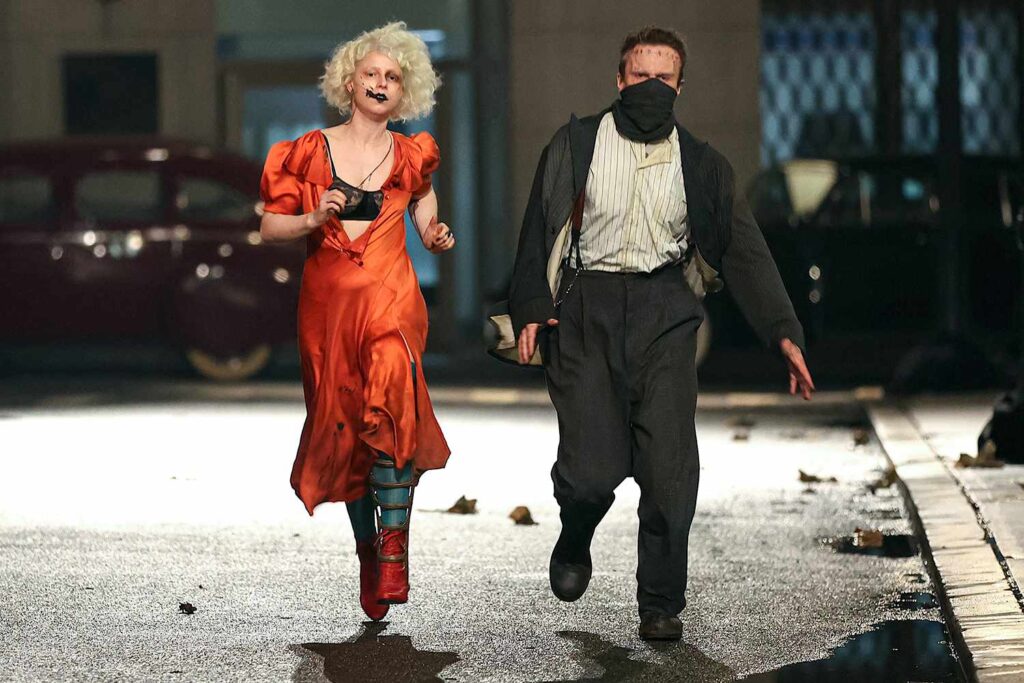
The Bride! is essentially a period horror film, and those tend to be hard to sell because horror fans sometimes consider them too highbrow and sophisticated audiences, who are normally turned off by horror, aren’t typically interested unless stellar reviews can convince them otherwise. The Bride! didn’t have reviews on its side, so that eliminated some of the audience the film could have had. It’s possible for period horror films to hit with both sides of the aisle. In 2024, Robert Eggers’ Nosferatu, a remake of 1922’s Nosferatu: A Symphony of Horror, scored big at the end of that calendar year with a domestic tally of $95.6 million and a global take of $182 million on a $50 million budget.
Good reviews played a significant role (85 percent fresh on Rotten Tomatoes) because they convinced non-horror fans that the film was legit, but the film’s marketing, which found the right balance between images of sophistication and horror, spoke to the proper viewing sensibilities of the demographics it was selling itself to. Unfortunately, The Bride! never found that balance and instead sold itself to an audience confused by what the film was trying to be.
A cinematic identity crisis seems to be a problem that The Bride! had even during its production. Gyllenhaal, for her part, reportedly got the full support of Warner Bros. Motion Picture headhonchos Pamela Abdy and Michael De Luca to make the film that she wanted. There have been reports of what the director had to tone down following test screenings, but this isn’t the case of a film being abandoned by the studio because they didn’t have faith in it. The faith was there, but Gyllenhaal still needed to find the film’s voice.
The ideas behind her take on the Shelley lore ranged from an us-against-the-world Bonnie & Clyde adventure to a tale of female agency and empowerment to a monster movie with rock n’ roll sensibilities. There is a lane for a movie trying to do so much, but the film, which had early test screenings given its unconventional approach to its story, was criticized during these screenings for having too much of all of these things, and the response indicated that some of it needed to be toned down.
Gyllenhaal was reportedly game during the testing process and took all of the comments into consideration when it came to taking more looks at the film before its final cut. This isn’t a case of this is my vision, and it won’t be compromised. Gyllenhaal, Warner Bros., and the necessity for test screenings all worked well together in unison, but The Bride! still never got to where it needed to be. Issues with the film’s pacing remained, and other complaints, such as characters that ate up unnecessary screentime (the detective pair of Gyllenhaal’s husband, Peter Sarsgaard, and Penelope Cruz), weren’t fixed in the editing process.
Also, the question of who the film was actually made for was seemingly left unanswered. In a time when studios think films need to be events to get people out of their homes and into the cineplex, The Bride! was proving to be a film that couldn’t get any of its potential audience excited enough to see it.
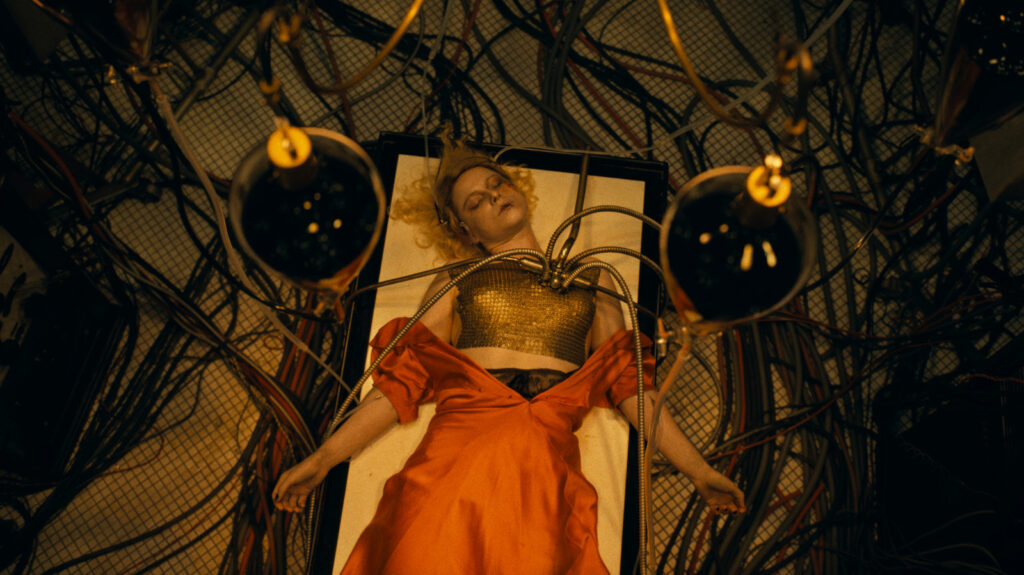
The demographics for the film’s opening weekend point to a film that was confused about who its audience was. According to Deadline, Screen Engine/Comscore’s PostTrak exits revealed that the audience was 53 percent male and 47 percent female, with 39 percent of that male demo being over 25 and 27 percent of the female audience being over 25. This means that the younger male audience, which normally eats up all things horror, didn’t respond to the film’s marketing, but hints at an audience who did see it that scaled older because of what appeared to be something that leaned towards the arthouse crowd.
The female audience is also crucial here. It’s stated constantly how the female demo is underserved at the box office, and they prove time and time again by making films skewed towards them, big hits, that they want a reason to head to the movies. There isn’t a huge gap between the male and female demos for The Bride! as a whole, but it’s a little surprising that the film’s audience leaned more on the male side, given the film’s embrace of female empowerment and having a female lead character front and center in the marketing.
What is clear is that the wackiness of some of Gyllenhaal’s choices split audiences and critics. Bale’s homage to Young Frankenstein with his “Puttin’ on the Ritz” number was embraced by some, while the moment flew over the heads of others and was met with a confused shrug. It’s clear that, once more, audience exits are examined, the film’s tone and execution certainly confused a portion of the audience.
The definite recommend on Screen Engine/Comscore PostTrak Exits is at a low 43 percent, while the film’s CinemaScore comes in at a “C+”, a score that isn’t good for legs moving forward. One bright spot here is that the Rotten Tomatoes Popcornmeter, which is essentially the film’s audience score, sits at 73 percent. Given the opening weekend and mixed response, that score isn’t particularly alarming.
There is also the issue of the film’s budget. On the one hand, Warner Bros. should be applauded for giving Gyllenhaal $80 million to work because it’s uncommon, especially with a female director at the helm, for this to happen for an original film such as this. Even though The Bride! takes inspiration from previous source material, its execution is wholeheartedly original. On the other hand, given the offbeat nature of the project, an $80 million investment is a big investment, and maybe there could have been ways to keep costs more in check. Gyllenhaal’s cast alone beefed up the budget, and the decision to shoot on location in New York also played a role in production costs becoming exorbitant. Reportedly, the latter decision is why Netflix, which was interested in the project, ultimately passed.
The streamer already put its strength behind Guillermo del Toro’s $120 million Frankenstein, and even though this is just speculation, they likely felt that putting $80 million into something like The Bride! wouldn’t be necessary since they had their Shelley fixed already lined up. The headlines proved to be better for Frankenstein, with 33 million views during the film’s first week of release, and it has turned into a nine-time Academy Award-nominated project, including Best Picture.
It shouldn’t be all doom and gloom for The Bride! There is a HUGE chance that this turns into a cult favorite down the line. While it won’t turn profits in theaters, once the film hits digital, streaming, and physical media, this could become a movie that finds the audience it had been seeking since its inception. There have been some social media posts that Warner Bros. shouldn’t have put its money and muscle behind The Bride! because it was a project doomed to fail, but that should not be the lesson learned here.
It’s still more important than ever to bet on originality, and they should be celebrated for doing so. That being said, it’s also important with projects like this to find its identity so it’s clear what audience it’s being made for. It’s also essential to keep budgets in check, especially for audacious films such as this one, but the performance of The Bride! should not scare studios away from original ideas. Let’s continue to bet on originality but play things smart. It’s not always a this way or no way scenario. Sometimes it’s a blend of ideas, business strategy, and following marketing trends that makes a film like this work rather than it turning into a loss.
For more on Movies, make sure to check back to That Hashtag Show.


 That Hashtag Show
