
The weekend following the Thanksgiving holiday at the box office typically sees a series a lows after the robust previous frame is boosted by kids being off from school and adults getting a bit of a break from work. Even knowing this, Universal Pictures and Blumhouse/Atomic Monster released the sequel, Five Nights at Freddy’s 2, in the post-Thanksgiving frame in the hopes that the game’s rabid fan base could turn this particular weekend’s fortunes around.
Reviews for the film were far harsher compared to its predecessor, so there was a chance that the sequel wouldn’t live up to their expectations, but that was soon proven wrong. Despite being down from the $80 million opening of Five Nights at Freddy’s, the sequel still pulled in a domestic opening of $64 million and a global debut of $110.5 million. Reviews be damned, this is the biggest opening for a post-Thanksgiving theatrical release and further proof that the fan service these films offer has the power to overcome lackluster reviews.
I was unaware of the phenomenon of Five Nights at Freddy’s before the first film was released a few days before Halloween in 2023. I saw the first movie with my younger brother on opening night, and he himself was already an expert on the video game series that inspired it. As we walked into the theater, I was a bit shocked to see a sold-out crowd of mostly teenagers who only grew more excited as the film played out. There were moments they gasped at that flew over my head, and there was genuine laughter at scenes that clearly represented some kind of inside joke I was completely unaware of.
It wasn’t until after its opening weekend that I learned the video game series had spawned several sequels and spin-off games and that its creator, Scott Cawthon, earned over $26 million following the first two years of the games’ release and over $66 million within the first years. Throwing in the revenue the games have made on Steam alone (a reported $113.9 million) and merchandizing, including plushies and other goods, this is a brand that was successful long before it made its first trip to the big screen. This is more than gateway horror for kids. This survival horror game has spoken to the target audience in such a way that they’ve eagerly anticipated any expansion upon it, including seeing the game go from its PC origins to the big screen.
The opening projections for the first movie were as high as $50 million, despite the film also debuting day-and-date on the Peacock streaming service. When the movie opened, reviews were on the weaker side at 33 percent on Rotten Tomatoes with a consensus that read, “Loaded with Easter eggs, Five Nights at Freddy’s may be fun to watch for fans of the game, but most viewers of any other persuasion will find this adaptation muddled and decidedly unscary.” The “fun to watch for fans of the game” is the most important part of that consensus because this is a film that was clearly made for them, and they responded in kind.
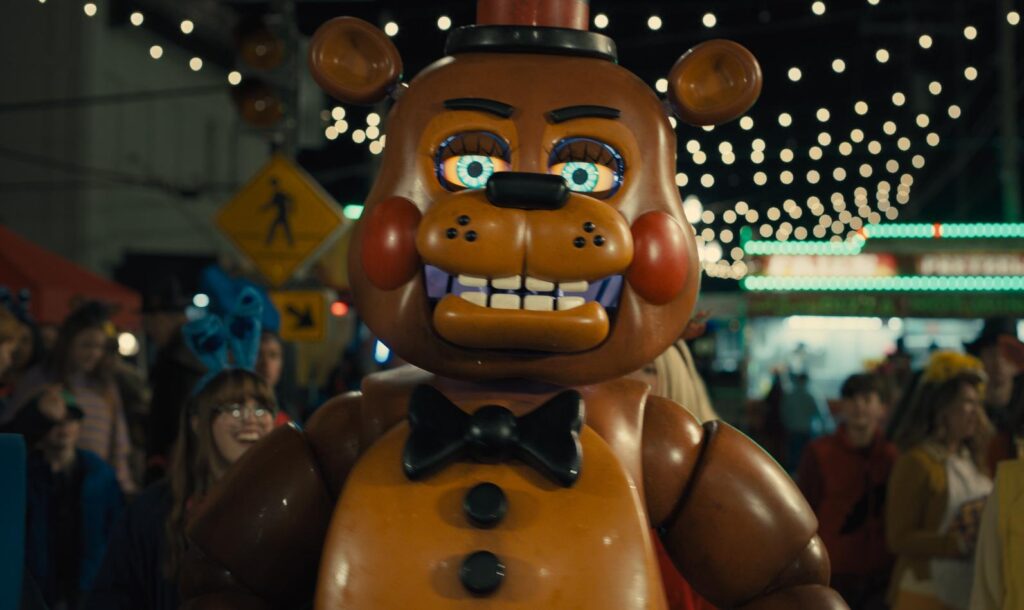
When the film exceeded expectations with an $80 million debut, it was seen as a bit of a shock from those not in the know about the game’s immense popularity. For the young fans, seeing the popular animatronics from the game come to life proved to be a fun collective experience, and noticing all the Easter eggs only proved to make those packed opening showings even more enjoyable. Even though Five Nights at Freddy’s proved to be extremely frontloaded (it dropped 76 percent in its second weekend) but it was still a massive success, grossing $137.3 million domestically and $297.1 million worldwide on a $20 million budget by the end of its run.
In the process, the movie became Blumhouse’s most successful film globally, and it reportedly pulled in a net profit of $161 million. These are the kind of totals that might upset critics who thought the film was disposable trash, but they’re also grosses that prove the importance of listening to the audience and satisfying their expectations.

There may have been some hope among those who aren’t on the FNAF train that the sequel would improve on the missteps of the first movie, as there was potential for the film to appeal to audiences beyond the already initiated. When the movie’s embargo was lifted just a day before its December 5th release date, those hopes were quickly diminished, and when the film debuted on Rotten Tomatoes with an even lower score (15 percent rotten), Five Nights at Freddy’s 2 found itself in the position to really prove the power of the fan base. The sequel wouldn’t have the benefit of a spooky season release date, and those who tried out the first movie and left underwhelmed likely wouldn’t be making a repeat visit to Freddy’s Fazbear’s Pizza. Any success would rest solely on the fans who have driven the phenomenon to impressive heights.
Even though the film began lower at $64 million, the debut is impressive because the release date isn’t known for break-out hits, and it typically is a time when more family-friendly films and prestige award contenders take up most of the attention. There have been exceptions to this in the past with horror films (Five Nights at Freddy’s 2 topped the already impressive $32.9 million opening of 1997’s Scream 2), and that kind of counterprogramming can work, but it’s still a bit of a risk. That being said, look at what happens when risks pay off.
Not only did the FNAF sequel become the biggest December horror opening over Scream 2, it also gained bragging rights as Universal Pictures’ biggest December opening (topping the $50.1 million of Peter Jackson’s King Kong) and it’s the third biggest opening for a PG-13 horor film following the first Five Nights at Freddy’s and the $66.4 million opening of World War Z.
Universal Pictures banked on a normally ho-hum weekend because they believed that the fan base would buck trends and show up for the movie. Considering how young the film skewed during its opening weekend, the studio was right to bet on that crowd. Analytics show, according to Deadline, that 77 percent of the audience was under the age of 25 (once again proving that young people, along with women, remain a lucrative box office asset), and the sequel was also huge with Hispanic and Latino audiences at 38 percent (another key demo that shows up when necessary, especially for horror films).
Jim Orr, who is the head of Universal Domestic distribution, spoke to the power of that fan base and the creatives behind the film by saying, “With Five Nights at Freddy’s 2, Emma Tammi, Scott Cawthon, and our great partners at Blumhouse delivered a raucous, thrilling, scary sequel that our enthusiastic fanbase could not wait to see and experience in theatres around the world this weekend. These spectacular box office results were exactly what the industry needed.”
That sentiment is extremely important as the film’s opening weekend took place in the wake of the potential union of Netflix and Warner Bros., with the former winning the initial bid to take over the studio. While much of this has now come into question with Paramount Pictures’ hostile bid for Warner Bros. Discovery, the primary fear from many in the industry is that Netflix would threaten the theatrical window even more than where it currently stands because its model has always catered to an audience who watches movies at home. Netflix seems to believe that they have their finger on the pulse of what moviegoers want, but the opening weekend of Five Nights at Freddy’s 2 proves that the fan base will rush out for what they want when it feels like an event to them.
This was seen earlier this year during the viral “Chicken Jockey” hysteria that resulted from packed A Minecraft Movie showings, and it’s evident here. Fans will respond with their wallets for the movies that represent something to them, and this fan base showed they would be there with their friends for this spooky experience, whether it’s during the Halloween season or as Santa Claus is prepared to spread holiday cheer at the start of December.
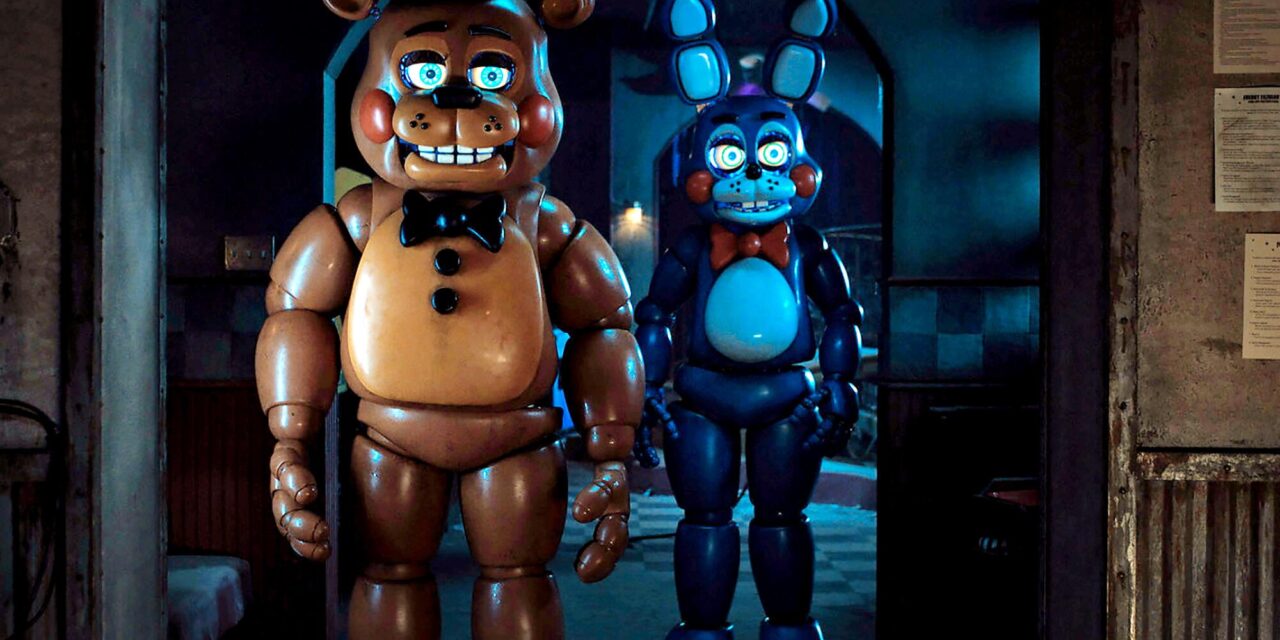
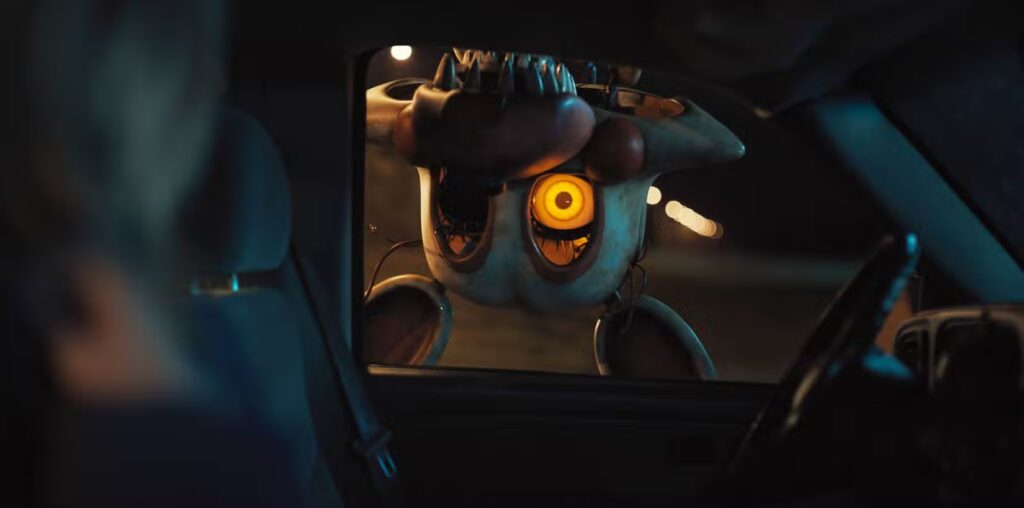
The fact of the matter is, Five Nights at Freddy’s 2 gave fans more of what they wanted, and that was a bigger emphasis on the game’s lore and even more Easter eggs for them to discuss. A lot of the reactions on social media show that the fans liked the sequel a bit more than its predecessor because it was more game-accurate. Some of the film’s more suspenseful scenes called back to some of the tension presented in gameplay, and the animatronics, once again, were faithfully rendered by Jim Henson’s Creature Shop. This is a sequel made for them, and with the expansion of the game’s mythology in the film, it’s clear that by how the movie ends, fans will be getting another sequel that is likely to satisfy their expectations even more.

The reactions from non-fans are as expected, and as I watched the crowd for this sequel, in a similarly packed crowd of moviegoers who knew the lore from top to bottom, I realized that sometimes projects aren’t made for all of us. Sometimes they cater to a specific crowd that is hungry for something for THEM. Some people don’t think this argument stands when it comes to criticizing the film for its shortcomings, and they could be right, but moviegoing is an experience that can satisfy all interests and demographics.
It’s communal and brings people together (much like these films have), and sometimes it can be squarely focused on one audience. There really isn’t anything wrong with that because, at the end of the day, we can choose not to see some of these films because they just aren’t our cup of tea, and simply let the intended audience have fun with something that clearly brings them joy.
Five Nights at Freddy’s 2 is now playing in theaters nationwide.
For more on Movies, make sure to check back to That Hashtag Show.


 That Hashtag Show
