
AI is seemingly everywhere these days. In Hollywood, questions about its role in the filmmaking process are accompanied by legal concerns that have embroiled the embattled entertainment world for some time now. It’s also frequently a subject of the stories onscreen themselves, as in “Mercy.”
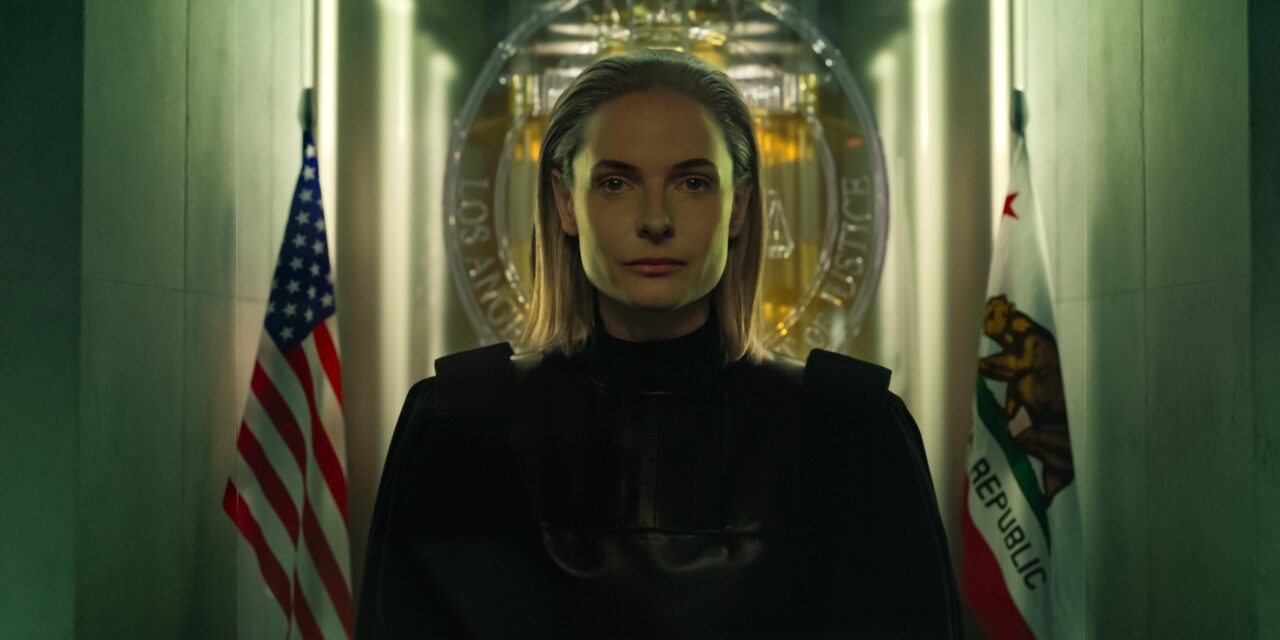
“Mercy” is a wrongfully accused style thriller starring Chris Pratt and Rebecca Ferguson set in a not-too-distant future where an artificial intelligence called “Mercy” has become judge, jury, and executioner in a dystopian legal system.
When asked about his own experience using AI tools, Director Timur Bekmambetov said, “In general, everything we see today with AI is not as good as it could be.”
“AI is missing our involvement. We should spend more time and resources to train our own AI models. AI could be [a] director, prop master, costume designer, or make-up artist. All aspects of filmmaking could be trained by AI, and maybe in a year from now we’ll see better [AI] content.”
Unlike some of his peers, Bekmanbetov seems more than willing to embrace the tools and help improve them, and even employ them. It’s not surprising when you consider the general concept of his film, which is that these tools may not be perfect, but they are here, and they can help us.
While the story sets up ‘surveillance’ culture of the modern tech landscape and the scary potential role of an AI in law enforcement, it takes a surprisingly generous stance on both things. Maybe they can be tools for justice and not just tools of destruction.
Star Kali Reis, who plays an extremely AI-enthused cop in the story, added the following, “My only fear with AI is that you see people too dependent on it. We can’t lose our humanity… We’re always being watched. We’re always being heard. Maybe that can prompt us to be a little more mindful of how we interact.”
Bekmanbetov is not only unafraid of the nature of rampant technological advancements, but he also made a point of keeping the film deeply grounded in the world of… digital user interfaces. He finds the suspense of a loading screen to be cinematically irresistible, and made sure to build his visual story through a cornucopia of digital overlays. He believes that as we all live our lives more and more in digital spaces and screens, our movies should reflect that reality.
He’s not wrong. While “Mercy” isn’t without its flaws, it’s a surprisingly positive take on the overload of the digital tech landscape, on the whole. It humanizes it and suggests that we have little choice but to find a way to live with it productively.
Mercy is in theaters January 23, 2026.
For more on Movies, make sure to check back to That Hashtag Show.



![‘Acapulco’: Vico Escorcia On Her Growing Role With Eugenio Derbez [THS Interview]](https://www.thathashtagshow.com/wp-content/uploads/2025/09/Untitled-1-38-440x264.jpeg)

 That Hashtag Show
