
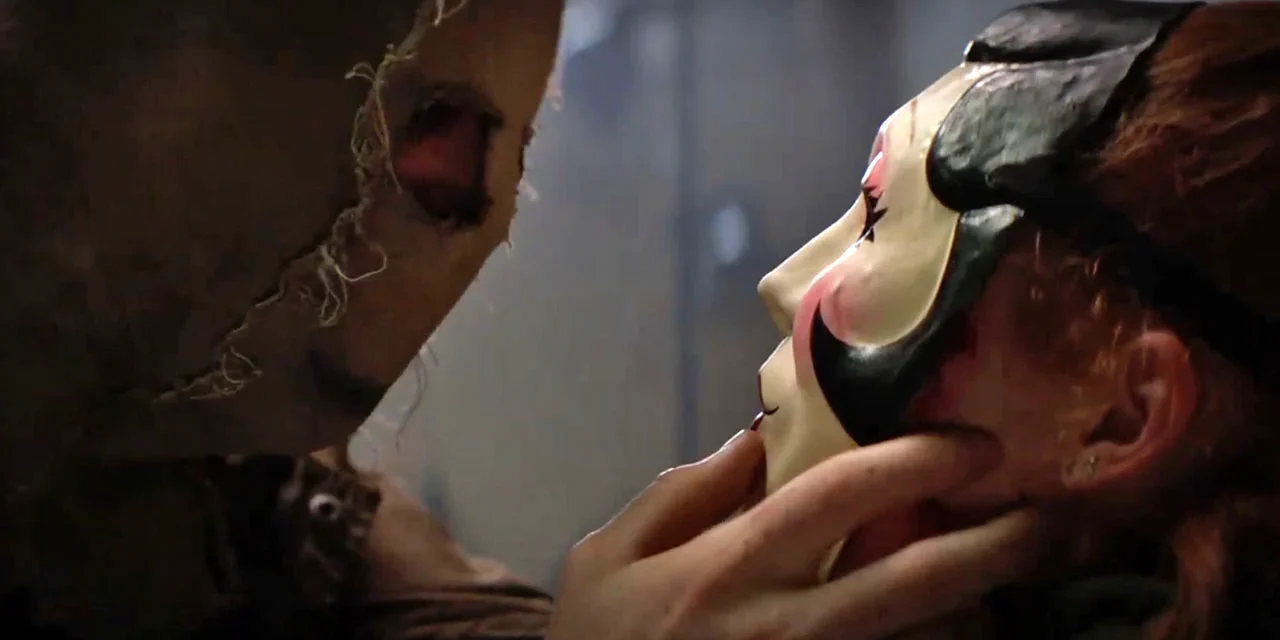
This weekend sees the release of The Strangers: Chapter 3, the final installment of the new trilogy that was meant to expand on the mythology of the 2008 film written and directed by Bryan Bertino. It’s been unceremoniously dumped on Super Bowl weekend, when movies tend to be an afterthought thanks to the big game. Why is this being done? Perhaps Lionsgate realized after the release of Chapter 1, and especially after Chapter 2, that this experiment didn’t go as planned, and they had to get this third installment out to fulfill an obligation and not because of necessity. The fact of the matter is, this new trilogy has always been a headscratcher, and as the final chapter hits the big screen, one has to wonder, what was even the point of doing this?
Taking it back to the beginning, The Strangers, released in 2008, was a masterclass in escalating tension and utilizing atmosphere to illicit scares. Starring Liv Tyler and Scott Speedman, the film follows a couple, on the verge of breaking up after a proposal gone wrong, who are staying at a vacation home when all of that is disrupted by three masked intruders who engage in a game of mental torment as they plot one hell of a home invasion. The movie worked because of its lack of motive and was sold on the simple yet terrifying question answer given after Tyler’s character asks, “Why are you doing this to us?” When one of the masked strangers answers with, “Because you were home,” the pure randomness of the attack only ratchets up the fear for audiences, and its simplicity ultimately paid off. Made for just $9 million, the film became a sleeper hit in May 2008 when it grossed $82 million worldwide and eventually became a cult hit as critics, who were more mixed when it came out, reassessed the film as a prime example of utilizing tension to great effect.
Despite the success of the first movie, it took nearly 10 years to get a sequel. The Strangers: Prey at Night, released in March 2018, followed a similar motif, with the three masked strangers targeting a family vacationing at a secluded mobile home park, but the sequel had more slasher-movie sensibilities and relied less on tension and atmosphere. The follow-up was more of a chase and talk movie, something that disappointed a bit at the time, but has since made the sequel a cult favorite in its own right in the years since its release. It was financially less successful than its predecessor ($32.1 million globally on a $5 million budget), but it was enough to generate a profit, and with the movie gaining more traction following its release, it was only a matter of time before someone tapped into this franchise again.
The start of this new trilogy
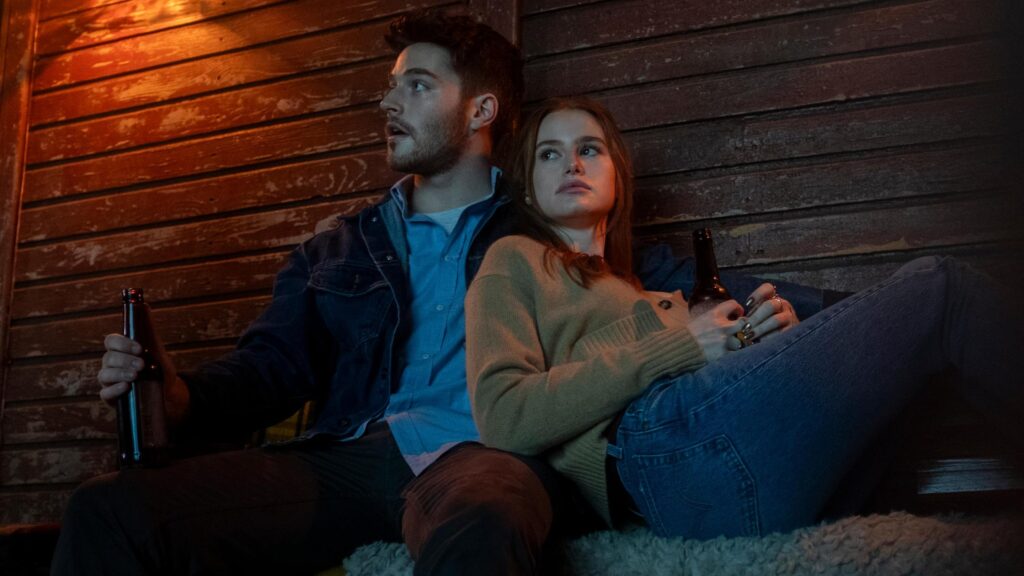
In 2022, it was announced that a new trilogy for The Strangers, which would be shot consecutively, was in the works with the film’s original producer, Roy Lee. The movie would have Renny Harlin at the helm, an inspired choice given his background with films like A Nightmare on Elm Street 4: The Dream Master, Die Hard 2, and Deep Blue Sea, and it would star Riverdale’s Madelaine Petsch alongside Froy Gutierrez. Providing the screenplay would be Alan R. Cohen and Alan Freedland, while a story credit went to Bertino. That latter addition is significant as it became clear what the first installment was going to be. One of the film’s producers, Mark Canton, stated that the trilogy was meant to introduce new audiences “to the world of The Strangers,” while fellow producer Courtney Solomon said their goal was to tell a bigger story and expand on the world created in the first movie. That’s all well and good, but things became more confusing when it was later announced that the new trilogy takes place within the same universe as the first two movies, but how strange when The Strangers: Chapter 1 was finally released, and it just looked like a lesser remake of Bertino’s film. Is this why Bertino received a story credit? Simply because Chapter 1 mostly copied beat for beat his 2008 film? Once audiences saw the film, it really appeared that way.
If The Strangers: Chapter 1 had come first, it would’ve been a serviceable, albeit flawed horror movie. If it were being judged on its own merits, it’s not all that bad. Petsch gives it her all as Maya and carries most of the film with her fully committed performance. The problem is, Chapter 1 is essentially the first movie, but with a few subtle changes. Instead of a couple attacked at their vacation home, this film’s couple makes contact with the three masked strangers after their car breaks down on a road trip, and they find themselves having to stay at a secluded Airbnb cabin. There are hints dropped as they try to seek refuge that something is strange about the town they’ve found themselves in, and that it could lead to something bigger, but eventually the film settles into home invasion horror, complete with the same lines from the original (“Is Tamara Home”) and sequences of suspense that mirror ones featured in the superior 2008 effort. By the end of the movie, our two leads are tied to a chair with Maya why they’re doing this to them and one of the strangers responds with, “Because you’re here.” It’s a one-word change on the infamous line from the first movie, but close enough for astute viewers to feel as if they were duped into seeing this first chapter that didn’t want to be viewed as a loose remake when, in fact, it really was.
There is an argument to be made that it was way too early to remake The Strangers, and that’s why this method was chosen by the creatives. They say the intention was to introduce a brand new audience to this universe, but audiences could easily seek out the 2008 film and its 2018 sequel to immerse themselves in the random violence perpetrated by Scarecrow, Dollface, and Pin-Up Girl. If they wanted to continue the franchise, they could’ve made proper sequels and even gone with their ambitious Chapter format for the trilogy, but essentially making the first movie a redo of the 2008 installment was the wrong foot to start on. The result was a movie that wanted to have things both ways. It wanted to be viewed as this new thing meant to start a fresh story, but it so closely mirrors Bertino’s film that it could pull in an audience familiar with the original. Call it a “soft reboot”, remake, or legacy sequel, it just feels downright lazy, but perhaps that could be fixed with the new two chapters?
A lackluster continuation
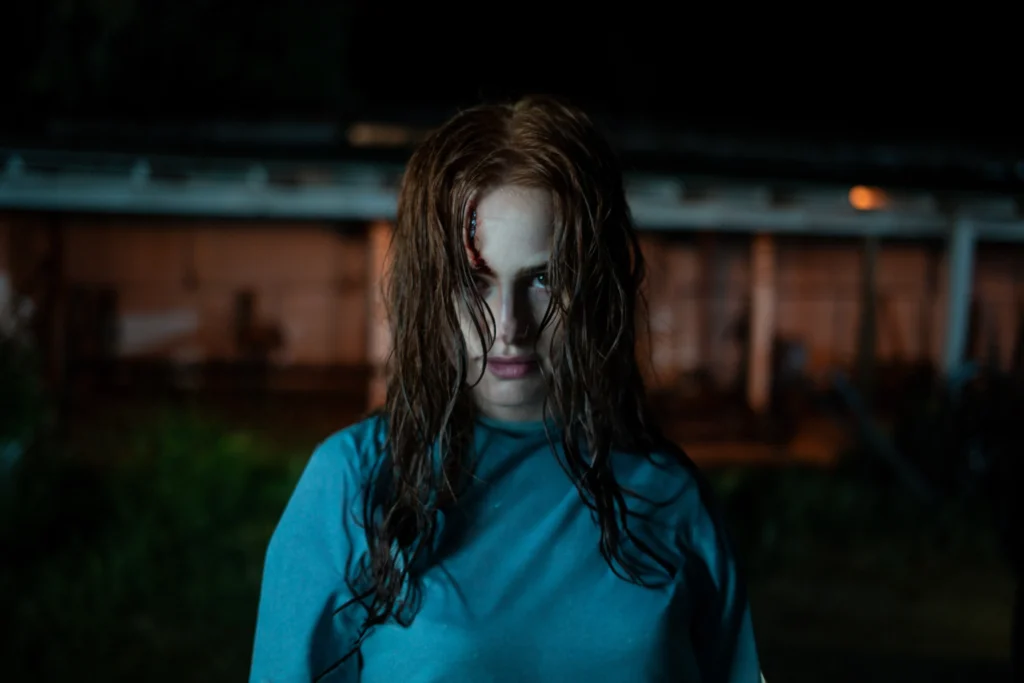
The Strangers: Chapter 1 did well enough to warrant its existence. Likely due to audience curiosity, the movie grossed $48.2 million worldwide on an $8.5 million budget. Profit was made for Lionsgate, and it ensured that the next chapters would be released, and perhaps the intentions behind this new trilogy would make more sense. Sadly, with the release of The Strangers: Chapter 2, it was clear that the intention was to dull the mystery behind the three strangers and add unnecessary backstories that no one really asked for. Through flashbacks, there are attempts to provide motivations for why they’re doing all of this, and it just ruins what made The Strangers so great. It was the randomness and lack of motive that made that film so frightening. We didn’t need to know the reason because the lack of reason only escalated the tension. Any attempts to give them motivations strip them of everything that makes them scary, something that everyone involved on the creative side doesn’t really seem to understand.
Chapter 2 had other problems. It suffered from severe middle installment syndrome and felt more like filler rather than a legitimate continuation of the story. There are huge pacing problems, and it lacks tension or suspense. It’s interesting that the second legit movie, Prey at Night, was criticized for being more by-the-numbers than its predecessor, but Chapter 2 takes that crown right from that film. It feels repetitive in the sense that it feels like it’s borrowing from better horror films in terms of execution. Nothing about it feels originaland it’s all made more egregious once it steps into the truly absurd when Maya has to fight a wild boar. It’s a pure CGI misfire that not only looks bad, but it’s a weird sequence that feels insanely out of place. By the conclusion of its “To Be Continued” ending, one would be understood if they felt a sense of fool me once, shame on me, fool me twice…well, you get the idea.
Perhaps because Chapter 2 was met with even more dismal reviews compared to Chapter 1 (21 percent vs. 14 percent), and the box office came in lower ($22 million worldwide), Lionsgate chose a pretty throwaway weekend to dump The Strangers: Chapter 3. Super Bowl weekend isn’t really the time to launch new movies, although it has worked out for some (the When a Stranger Calls remake opened to $21.6 million during the Super Bowl weekend of 2006), but it’s ultimately avoided by most studios because the Sunday dropoff is so drastic that it craters even the best of holdovers at the box office. It doesn’t show much faith in the conclusion of this trilogy by Lionsgate, and the reviews that have been released only add to the chorus of, “What was the point of all of this?”
Why?
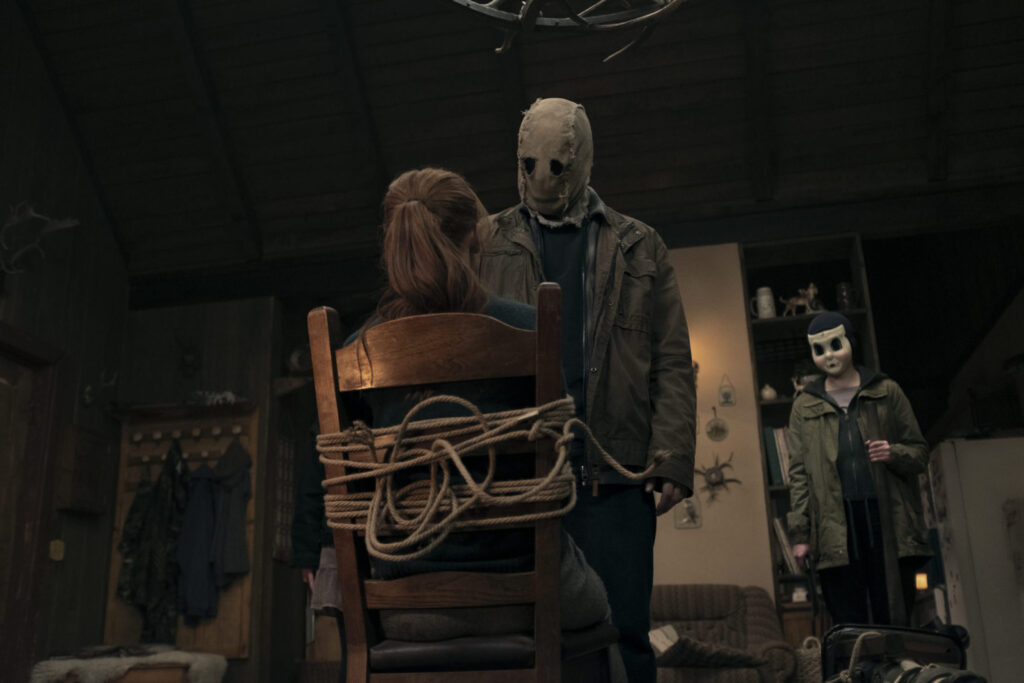
Carla Hay of Culture Mix said about Chapter 3, “The Strangers: Chapter 3 is proof of what has ruined The Strangers franchise. The last film in this terribly conceived horror reboot trilogy ends with a kill that is so underwhelming and predictable, it confirms all three movies are time-wasting garbage.” Julian Roman of MovieWeb added to that sentiment by saying, “The Strangers reboot trilogy comes to a bloody and baffling end in a nonsensical finale that’s utterly devoid of scares. An absurd climax literally buries the hatchet in a franchise that never went beyond a tedious exercise in generic horror tropes.” Perhaps William Bibbiani of The Wrap says it best by stating, “They say ‘if it ain’t broke don’t fix it,’ and they didn’t. They just broke it, seemingly on purpose.” That’s what we’re left here, folks. A new horror trilogy carrying The Strangers’ name that didn’t amount to anything but a baffling mess.
It seems as if the intention was to expand the narrative and mythology, but it didn’t work because audiences weren’t clamoring for these answers. No one cared about the town of Venus, Oregon, and its inhabitants, and certainly no one wanted more backstory for the film’s once imposing home invaders. The one aspect of the story that could’ve been interesting is following Maya through a three-movie installment of ultimate survival, but Petsch, who has been the lone saving grace of all three chapters, can only do so much. The problem is that the new trilogy started poorly as a haphazardly constructed reboot of the much superior original film and then couldn’t manage to justify its existence across two more chapters. If they wanted to explore some of these new ideas, perhaps an original idea would’ve sufficed, but what audiences and horror fans ended up with is an absurd experiment that ultimately wasted everyone’s time.
The Strangers: Chapter 3 is now playing in theaters.



 That Hashtag Show
