
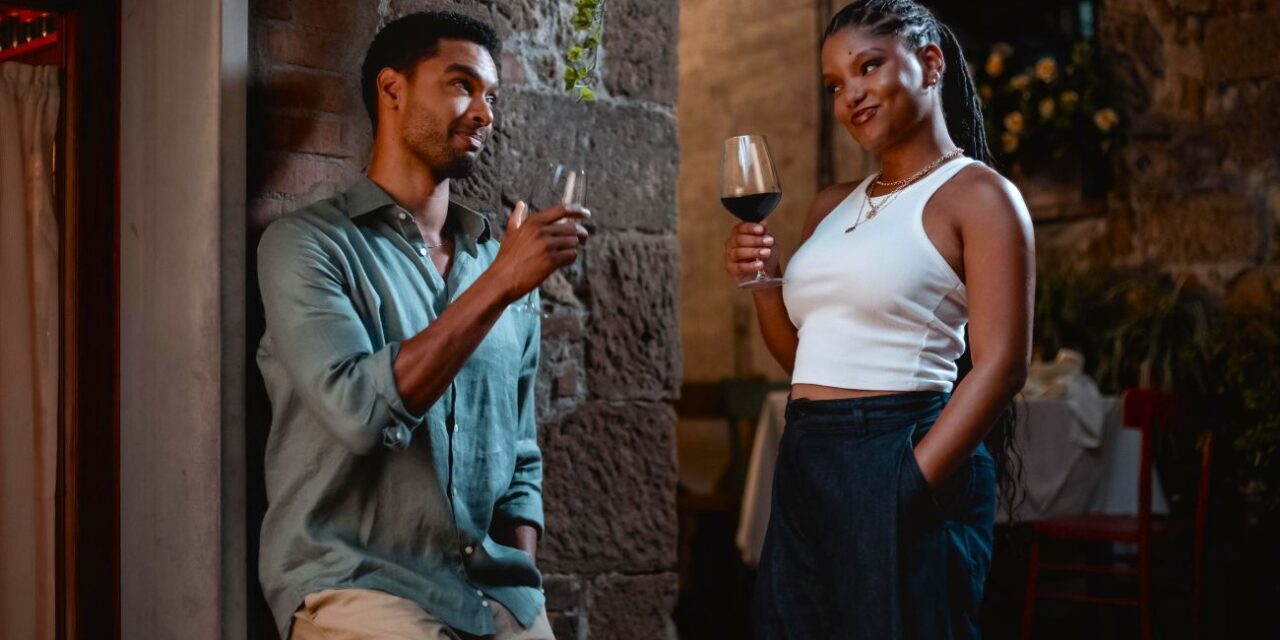
This weekend sees the release of You, Me & Tuscany, a romantic comedy starring Halle Bailey and Rege-Jean Page. Romantic comedies rarely get the theatrical treatment nowadays, and it’s even more rare that rom-coms featuring African American leads get that treatment. It’s an unfortunate truth about the industry, but with good reviews and solid word of mouth so far, hopefully the potential success of this film will lead to more being greenlit in the future. That being said, You, Me & Tuscany isn’t the first of its kind, as there have been other Black rom-coms that have hit the romantic spot in the past. As audiences are enjoying their Tuscany fantasy this weekend, it’s time to explore the five best Black romantic comedies ever that definitely deserve your attention.
5. Brown Sugar (2002)
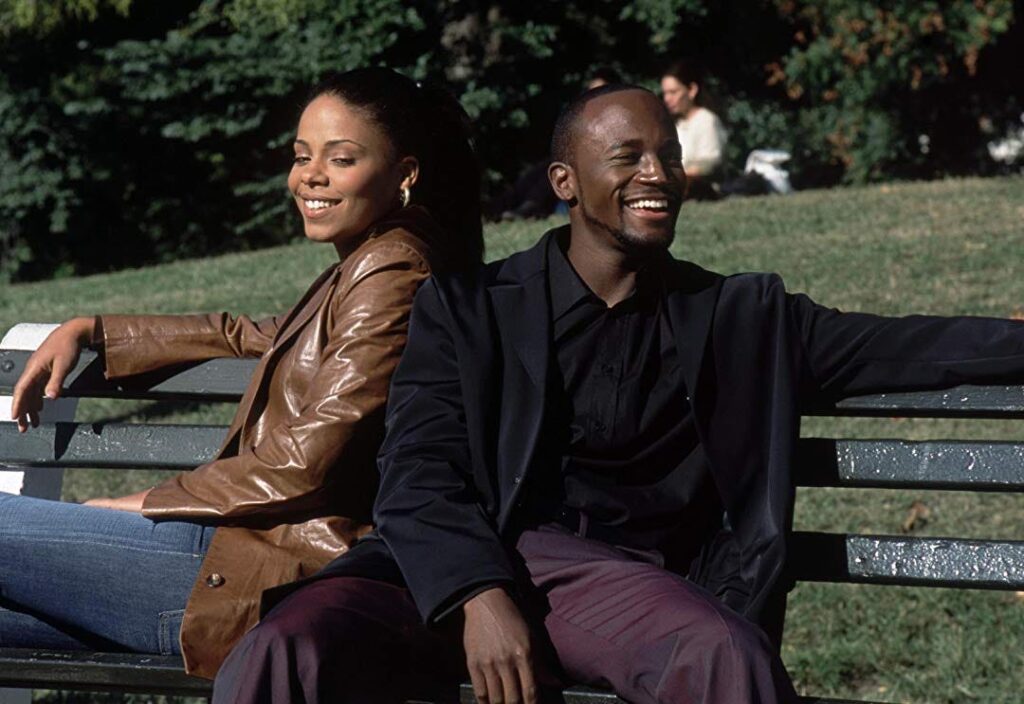
Music can be a universal love language, and that’s a notion that 2002’s Brown Sugar runs with to tell its story of two lifelong friends who can attribute their relationship to the moment they discovered hip-hop music. Directed by Rick Famuyiwa from a screenplay he co-wrote with Michael Elliot, Brown Sugar follows A&R Andre Romulus ‘Dre’ Ellis (Taye Diggs) and Editor-in-Chief Sidney ‘Sid’ Shaw (Sanaa Lathan), who discovered their friendship and love for hip-hop at a very young age. Now, fifteen years after that discovery, and as they lay down their futures, most notably with Dre set to marry his attorney girlfriend, Reese (Nicole Ari Parker), they’ll soon discover that their friendship is turning into something so much more. Brown Sugar lives and breathes on the palpable chemistry between Diggs and Lathan, as the audience knows long before they do that their friendship is destined for romance.
The “friends-to-lovers” plot device is common in most rom-coms, and it’s utilized effectively here, thanks in large part to both actors selling the authenticity of the relationship. The film also serves as a love letter to hip-hop music, with the art form being treated respectfully rather than just using various songs as background noise. The music is just as essential to the romance as the love story between the two leads. As for the comedy aspect, Diggs and Lathan get some witty moments together but it’s the supporting turns from Mos Def’s cabby/secret rapper Christopher and Queen Latifah’s Francine (Sid’s cousin) that generate the most laughs, particularly the latter during Dre’s wedding ceremony to Reese that sees her wanting to speak up for her cousin’s affections for Dre. It’s all a breezy good time, and the bonus here is that this film was shot in New York City shortly after 9/11, so the audience also gets to see the love for the city still shining bright while also getting a dose of love and hip-hop.
4. Jumping the Broom (2011)
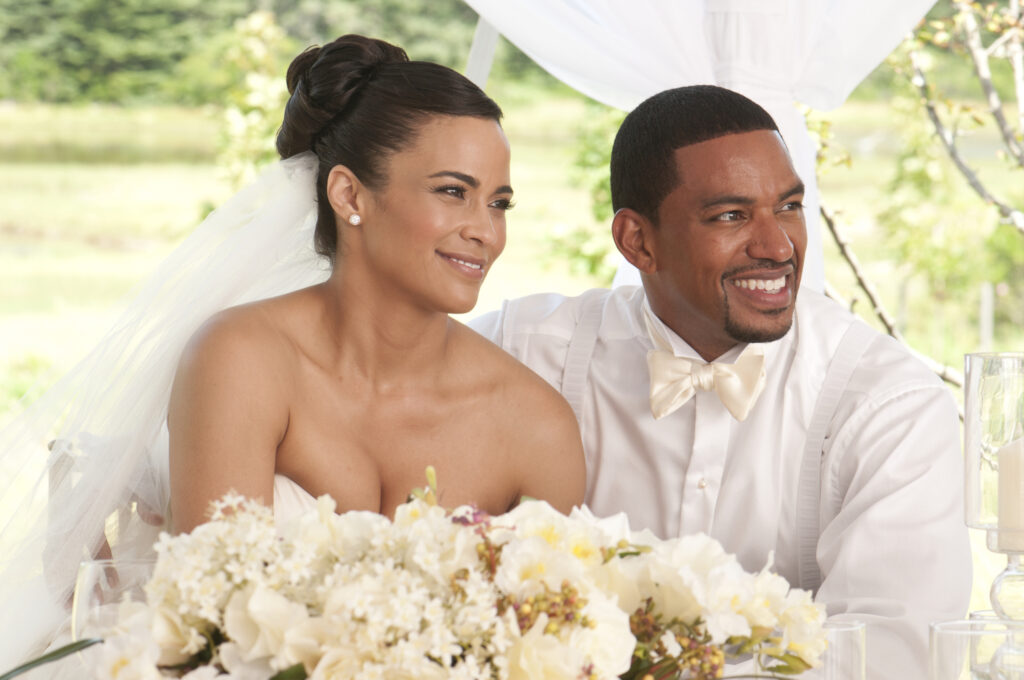
Some romantic comedies also involve high-stakes family drama, and what better time for that to all come out than at a wedding? Directed by Salim Akil from a screenplay by Elizabeth Hunter and Arlene Gibbs, Jumping the Broom derives its title from a Black American tradition where the bride and groom will jump over the ceremonial broom after getting married, as the broomstick wedding explores the intersections of race, culture, and class. The film itself focuses on two very different families, one very affluent and the other very middle-class, who come together on Martha’s Vineyard for the wedding of their respective children. Jumping the Broom features a stacked ensemble cast that is all game for a few laughs and some light drama that gives the film something relevant to say.
The class conflict, which shows that there can be a culture clash within one’s own race, is expertly showcased here with enough emphasis, but is never too heavy-handed that it dilutes the comedy. The wealthy Taylor family and the working-class Watsons all get a moment to shine and make their case, but in the midst of the family squabbling, there is a representation of positive black love between Paula Patton’s Sabrina and Laz Alonso’s Jason. The film never loses sight of its love story and proves that love can conquer all. Even the conflicting opinions of the family. With a cast that also includes Angela Bassett, Loretta Devine, Mike Epps, Tasha Smith, and Meagan Good, to name a few, Jumping the Broom is funny and poignant with a sentiment that rings true. Plus, it ends with the cast dancing to the “Cupid Shuffle,” so that alone garners it a recommendation.
3. Think Like a Man (2012)
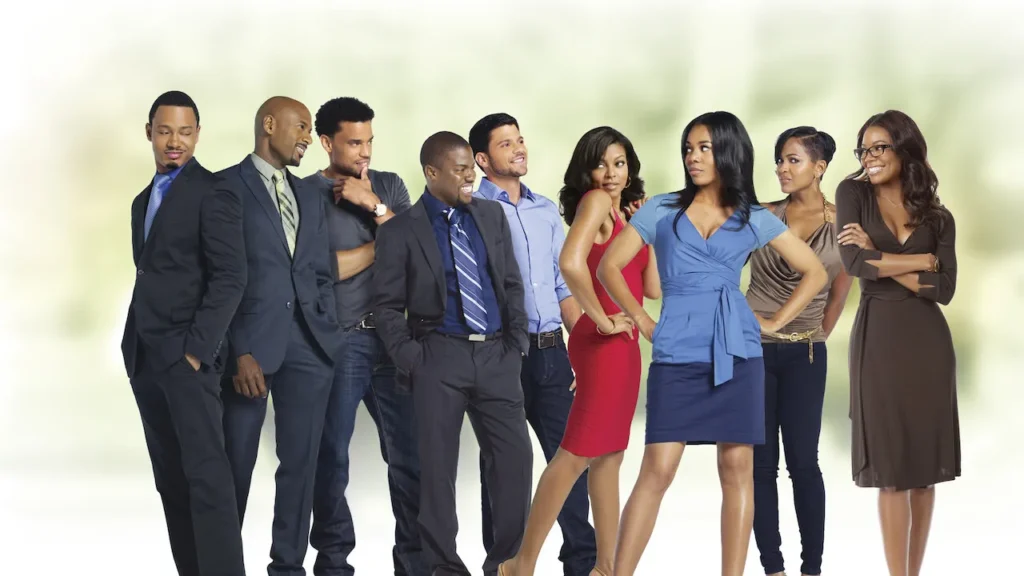
Much like the film He’s Just Not That Into You explored dating dynamics, 2012’s Think Like a Man proved that this could be done with a predominantly black cast and that these dynamics are universal and go beyond race. Directed by Tim Story from a screenplay by Keith Merryman and David A. Newman, Think Like a Man is based on Steve Harvey’s 2009 book Act Like a Lady, Think Like a Man, and follows four storylines that broken down as follows: “The Mama’s Boy” vs. “The Single Mom,” “The Non-Committer” vs. “The Girl Who Wants the Ring,” “The Dreamer” vs. “The Woman Who Is Her Own Man,” and “The Player” vs. “The 90 Day Rule.” Each of the women in the film is reading Harvey’s book, and once the men realize that they are reliant on his advice, they try to turn the tables, but it, of course, backfires.
Harvey’s book is essentially a self-help book about how men really think of love, intimacy, and relationships, and the film does a good job of adapting those concepts through the stories of the four couples. The scenarios are all recognizable and accessible, which makes them funny but also resonates with the audience, and the film also turns the genre on its head a bit by sometimes mocking conventions of the rom-com in its narrative. It’s all driven by a stellar ensemble cast that includes Gabrielle Union, Taraji P. Henson, Michael Ealy, Regina Hall, and Kevin Hart, among others. It should be noted that Hart’s work here, as the “Happily Divorced Guy,” is some of his best and proves that some of his best comedy in films emerges when he’s a supporting player. The best thing that can be said about Think Like a Man is that it really isn’t a “black romantic comedy.” The themes are universal, and anyone could relate to the dynamics of navigating dating, love, and intimacy in this complicated modern age.
2. The Best Man (1999)
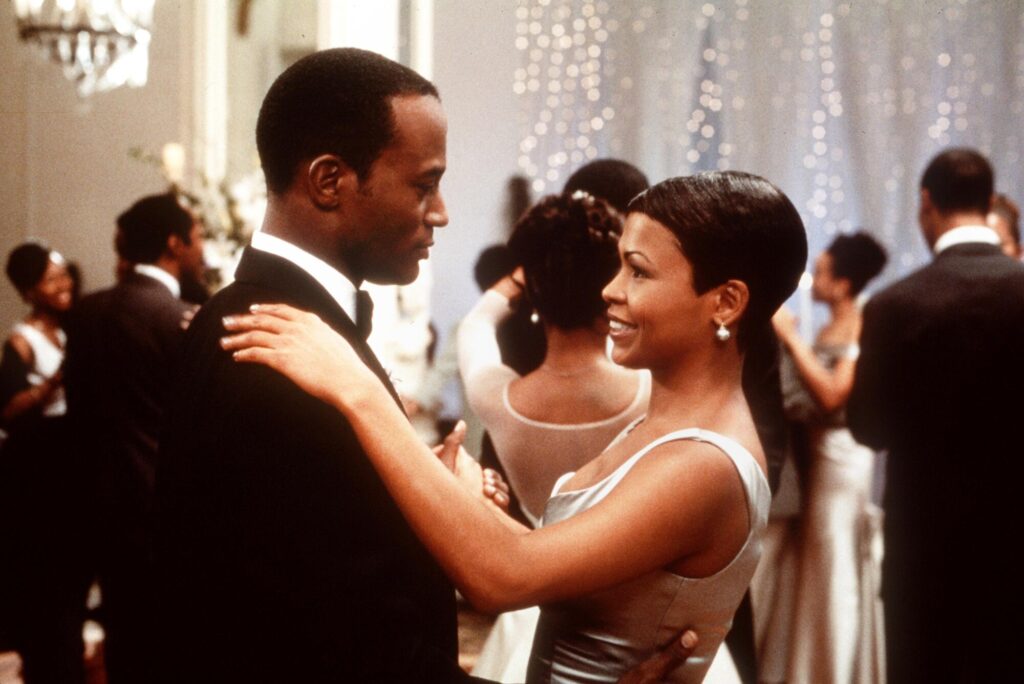
While the film may be more of a comedy drama, there is still some romance within 1999’s The Best Man that quickly made it a mainstay in black cinema, while also, much like Think Like a Man, exploring universal themes that anyone could find relatable. Written and directed by Malcolm D. Lee in his directorial debut, The Best Man follows an up-and-coming author named Harper Stewart (Taye Diggs) whose debut novel, Unfinished Business, is making quite the stir in Oprah’s Book Club and amongst some of his friends, as they received an advanced copy ahead of his friend Lance’s (Morris Chestnut) wedding with the details of the book hinting at a truth that could destroy a friendship and the wedding at hand. The Best Man touches on so many tangible ideas and does so with respect and depth. It explores the power of friendship and relationships, but also how they can be complicated by trust, infidelity, and loyalty.
These are all very mature themes, and Lee tackles them with honesty but also with a biting sense of humor delivered through his whip-smart script and a game ensemble cast that also includes Harold Perrineau, Terrence Howard, Sanaa Lathan, Melissa De Sousa, Nia Long, Monica Calhoun, and Regina Hall. Speaking of the cast, the chemistry is excellent across the board, whether it’s of the romantic variety or showcasing the long-term friendships that help shape the story. The Best Man has proven to be culturally significant since it was released in 1999, as it shaped a new age of Black ensemble films that portrayed its Black cast with depth and as highly educated professionals who deal with life and love just like everyone else. It truly is a classic of the genre, no matter the race, and continues to be so all these years later.
1. Boomerang (1992)
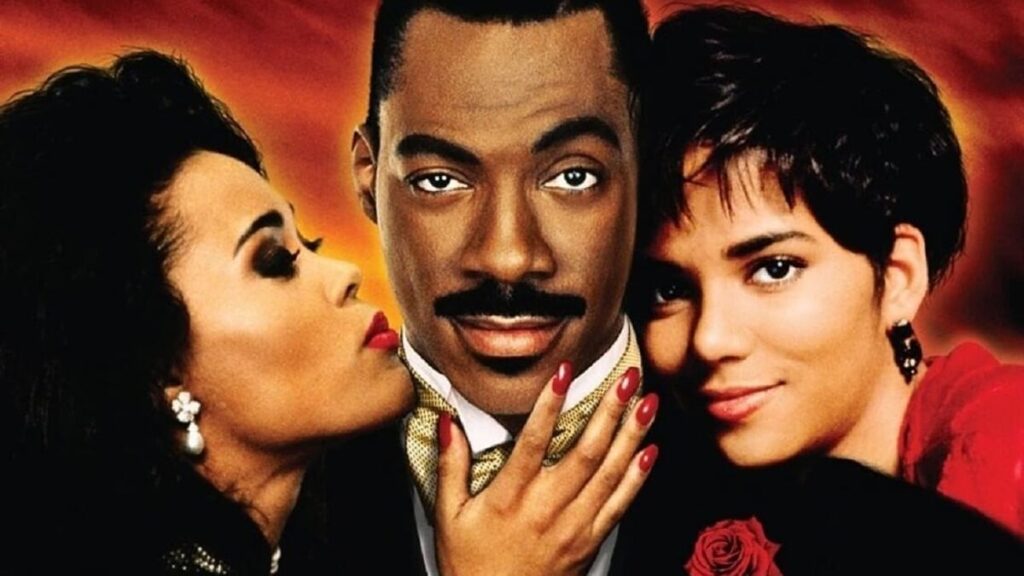
The best Black romantic comedy sees Eddie Murphy at his peak and also serves as a celebration of Black excellence when critics seemed to be confused by the concept. Boomerang takes the “womanizer” narrative and turns it on its head to drive home the fact that women are just as much in charge of the direction of sex and relationships. Directed by Reginald Hudlin from a screenplay by Barry W. Blaustein and David Sheffield, Boomerang follows hotshot advertising executive Marcus Graham (Eddie Murphy), a male chauvinist and womanizer who meets his match in the form of his new boss Jacqueline Broyer (Robin Givens), who happens to be a female version of him that shows him the treatment he’s been giving to every woman he has encountered. Boomerang is a fun battle of the sexes movie that is smart in the sense that the whole point is to show how women hold a lot of power while men simply think they do. Murphy caught a lot of flak following the release of his directorial debut, Harlem Nights, for its perceived chauvinistic view towards women, and Boomerang feels like his apology and response to that.
Murphy portrays Marcus with his signature comedic flair, but he also exudes a certain charisma that he hadn’t shown up to that point. Matching his pitch is Givens, who is equal parts sexy and self-assured in a role that allows her to dominate every time she’s on screen. Humor comes fast and furious thanks to Murphy and an ensemble that includes Martin Lawrence, David Alan Grier, Grace Jones, Chris Rock, Eartha Kitt, and many more, all of which help make this one of Murphy’s best and most underrated comedic efforts. As for the romance, the film gets there once Murphy and Halle Berry’s Angela link up to show his character that women are more than their bodies and sex appeal.
Berry is especially good here in one of her earlier roles, giving Angela a suitable amount of sweetness while also making her strong and self-assured. From its top-of-the-line soundtrack (Boyz II Men’s “End of the Road” begins here), smart script, and great ensemble, Boomerang proves that Black people can be successful in a corporate setting while also achieving excellence and looking for love (look up a few reviews from the time of its release that found this “unrealistic”). It’s a cultural cornerstone that only gets better with age.
You, Me & Tuscany is now playing in theaters nationwide.
For more on Movies, make sure to check back to That Hashtag Show.

![Conversations With Friends – A Delightful Mess [REVIEW]](https://www.thathashtagshow.com/wp-content/uploads/2022/05/project_20220515_1543075-01-440x264.png)
![Babylon: A Party Only 1920’s Hollywood Could Throw [Trailer]](https://www.thathashtagshow.com/wp-content/uploads/2022/09/bab23073r4-440x264.jpg)
![STAR WARS: Havina Vonreg 1/2 Scale Bust From Gentle Giant Ltd. [Review]](https://www.thathashtagshow.com/wp-content/uploads/2021/12/Havina-Vonreg-Review-Cover-440x264.jpg)
 That Hashtag Show
