
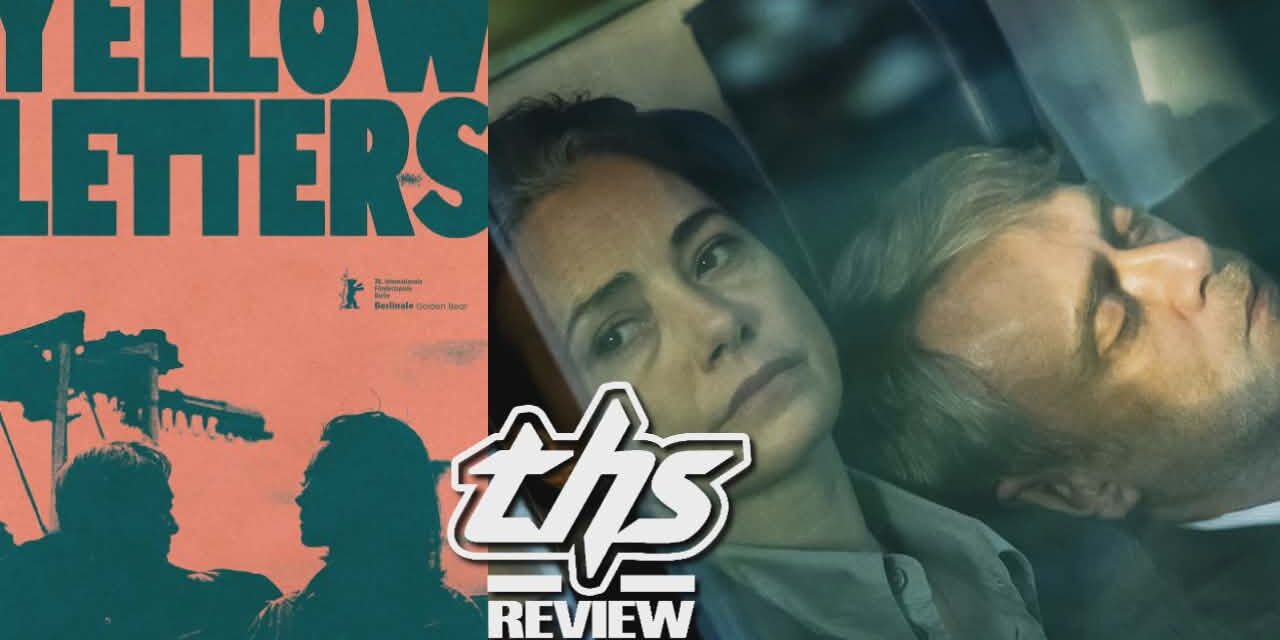
For a film festival seemingly set on remaining apolitical – from the programmers to the directors to the celebrities – it’s kind of ironic that both of the Berlin Film Festival’s winners were politically supercharged. The Golden Bear – the festival’s most prestigious award went to Yellow Letters, an incendiary indictment of rising fascism and the global stifling of freedom of expression.
A follow-up to the critically acclaimed and Oscar-nominated film The Teacher’s Lounge, director İlker Çatak returns to tackling power dynamics in social systems. This time, he takes her razor-sharp critiques out of the classroom and into the theater, and employs some creative tricks to make the film feel universal in its depictions of struggle and art while also sneakily making it deeply personal. Yellow Letters smartly uses another country to indict her own, using Turkey as the setting and characters, but very much being directly about Berlin and Germany’s political landscape instead. Every year, international and indie cinema seem to focus on central themes, and this year, resistance and the struggle of survival seem to be the core of 2026 in film.
Directed by Catak and written by Catak, Ayda Çatak, and Enis Köstepen, Yellow Letters follows Aziz and Derya, a Turkish couple with a teenage daughter who both teach and perform at their prestigious university. Aziz is the playwright and Derya the stage star, and both have used the arts to gain solid success in their community. That all comes crashing down when the state lodges a criminal complaint against their company and university, leading to a series of events that sees the couple lose their jobs, their apartment, their finances, and pretty much everything else as the entire weight of an authoritarian regime crushes them into submission.
This pressure begins to cause a rift within the family, with Aziz wanting to continue fighting and using the theater to express his criticism and Derya struggling to keep up the good fight all while their young daughter struggles to adjust and cope with the new lifestyle unexpectedly thrust upon her. The film stars Özgü Namal, Tansu Biçer, Leyla Smyrna, and İpek Bilgin.
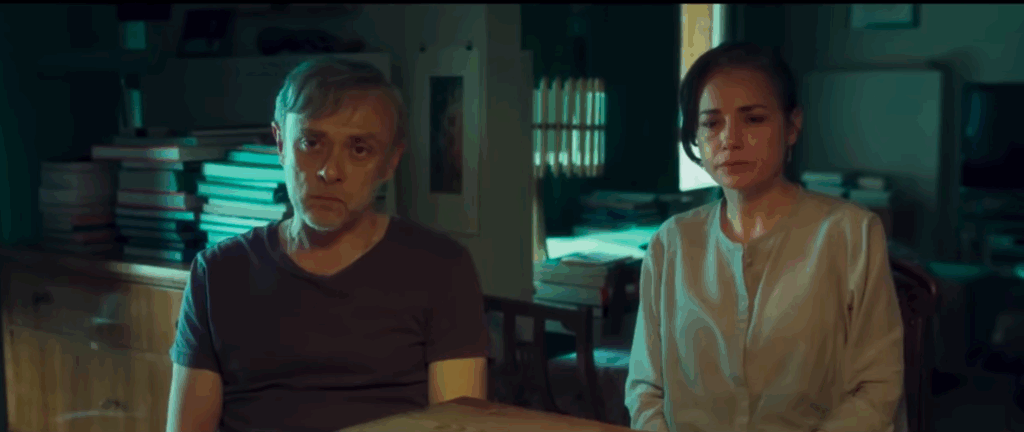
Yellow Letters is quite bleak, leaving us very little room to breathe as each day is becomes one more battle they have to fight just to stay alive. You really feel for Aziz and Derya, both who share the same belief at the start but ideologically drift apart as their lives are upended without much control over how to change it. Catak’s choice to set it in Turkey but use it as a stand in for Germany is quite genius, and while it’s not entirely humorous I found myself laughing every time a title card came up that read “Berlin as Instanbul.”
Catak and the film’s script is acutely aware of how regimes work; art and education are often the first to come under fire as both champion freedom and criticism. Control is much easier when the people have neither, and Yellow Letters never shies away from the very blatant attack on both. It’s a little unnerving that you could substitute plenty of countries for the Germany stand in and nothing in the film would change, making it hit far closer to home than most people would care to accept. But that’s exactly what makes Yellow Letters so necessary and engaging.
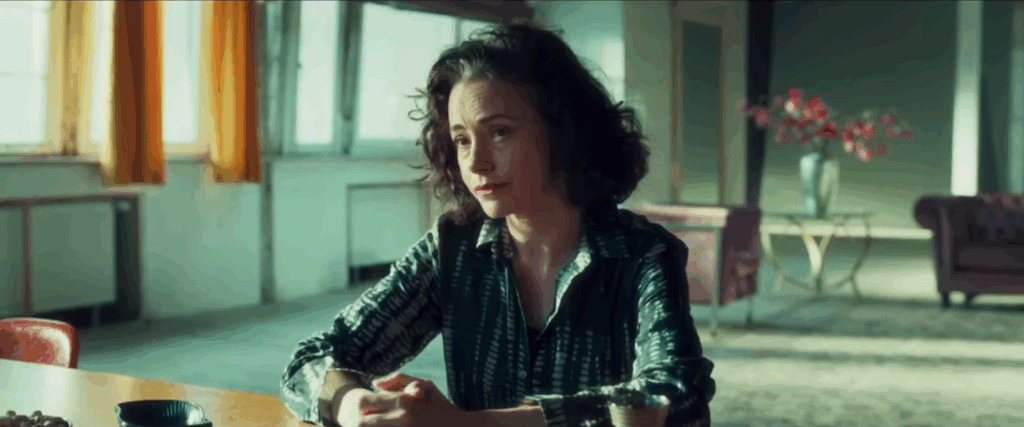
We have to reckon with the attack on artistic expression around the world, and Yellow Letters isn’t afraid to take these complex issues head on even if it means pointing the finger back at a country Catak clearly has a love for. There’s no weak link in the performances, but Özgü Namal is phenomenal as Derya. She begins as the real fighter of the pair, brash and outspoken to a fault and ready to take on anyone and everything to keep pursuing her passions.
She’s fiery, but as the struggles continue without any respite in sight, you can see her fire begin to dim. Namal is asked to shoulder the most of shifting perspectives and character driven changes, and she makes the case as one to watch this year. Tansu Bicer is also strong as Aziz, a man who seems aimlessly trying to understand the crumbling world around him and wants to fight back but is never quite sure how. His desire to continue his work requires great sacrifice and we seem him become more and more driven to create even if it costs him everything.
And that’s really what Yellow Letters is about. The conclusion may drift into familial melodrama and leave its broader contextualization of larger themes, but ultimately it wants to remind us that resistance is hard. the fight against fascism and authoritarian regimes are never singular nor are they simple. It requires constant fortitude and costs you more than you may be willing give up when it comes to a head.
Yellow Letters wrestles with this in some truly fascinating ways, and while it doesn’t quite have the propulsion and claustrophobic energy of Teacher’s Lounge, it’s still the best of its kind so far and is a film that has a lot on its mind and whole lot more to say about it. It’s smart enough to be timely and timeless, never trapping itself into strictly current events but never straying too far from current relevance. That’s really hard to pull off, and while Yellow Letters may be a little too slow moving in its restraint and patience, it serves a rallying cry for change and megaphone warning of what happens when we lose art and artists to state control propaganda machines. We all want to save the world, and Yellow Letters asks us how much are we willing to lose to be the change we want to see.
Yellow Letters is the kind of film I personally love to see, and I hope more people find it as effective and moving as I did whenever it gets released to the general public.
For more on Reviews, make sure to check back to That Hashtag Show.


![[Review] Fear The Walking Dead – Mother](https://www.thathashtagshow.com/wp-content/themes/Extra/images/post-format-thumb-text.svg)
![Spoiler Alert – Heartwarmingly Tragic [REVIEW]](https://www.thathashtagshow.com/wp-content/uploads/2022/11/Spoiler-Alert-review-440x264.png)

 That Hashtag Show
