
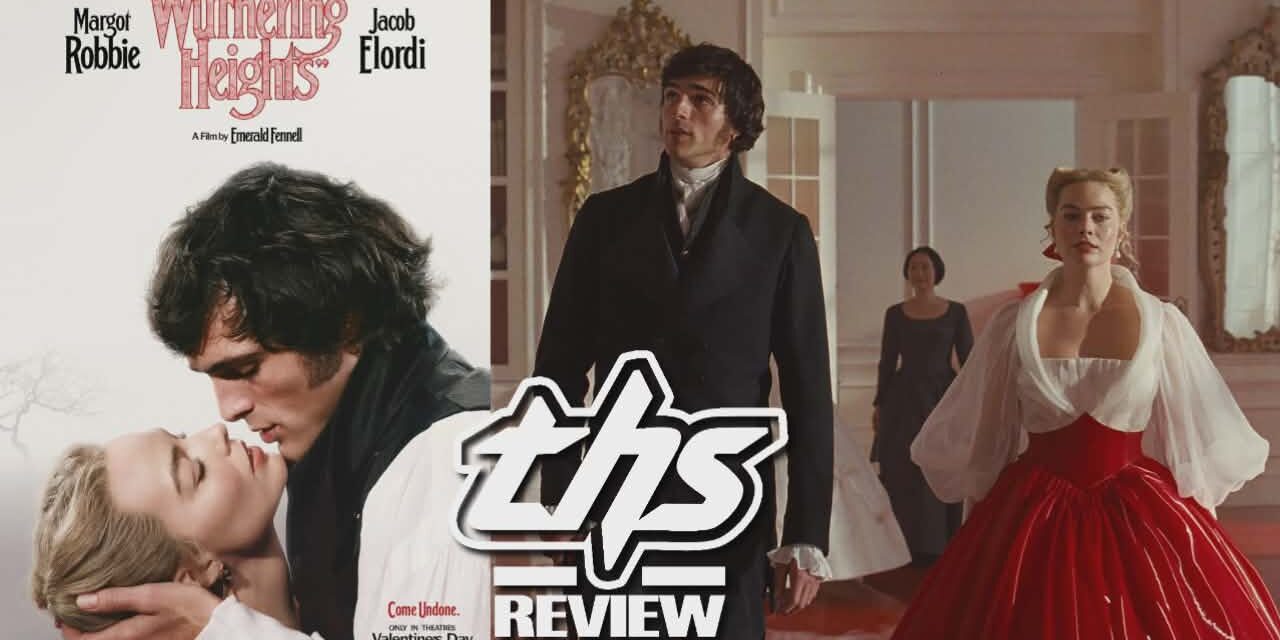
Emerald Fennell’s highly anticipated adaptation of Emily Brontë’s Wuthering Heights has finally arrived, and yes, the quotes around the title, the casting of Jacob Elordi, and the sheer audacity of it all have sparked endless discourse. But what becomes immediately clear is this: Fennell isn’t interested in playing it safe. Her love of excess, sweeping melodrama, and blowing the romance genre wide open is front and center.
Let’s get this out of the way: Wuthering Heights is not a love story, no matter how many people insist otherwise. It’s a cautionary tale. Catherine and Heathcliff’s love is total, but it is not healthy, aspirational, or survivable. Modern romances promise growth. Wuthering Heights promises ruin. They’re iconic not because they loved well, but because they loved without limits, and both the novel and Fennell’s adaptation refuse to lie about the cost.
Excess, Audacity, and No Interest in Playing It Safe

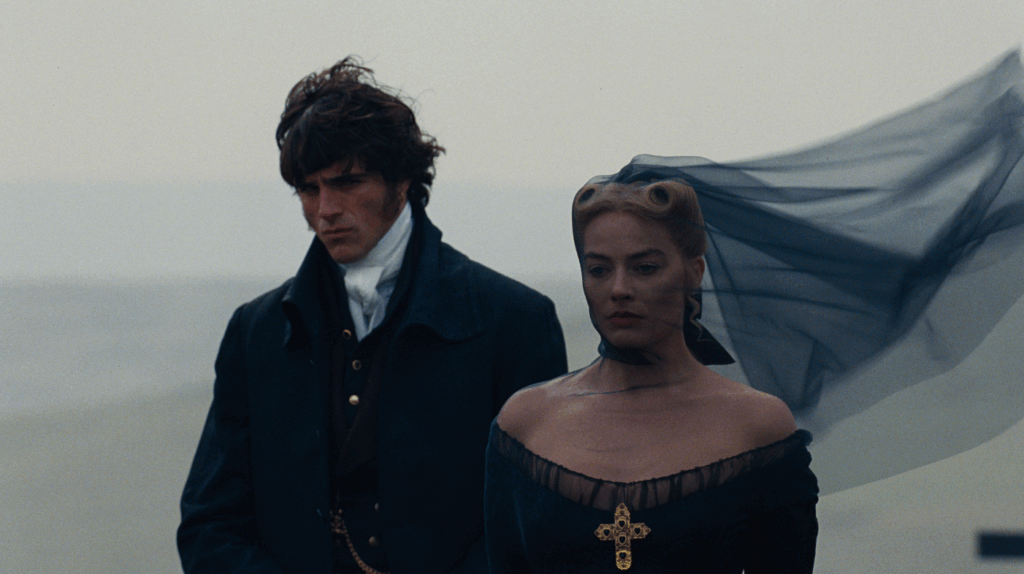
If you’re looking for a page-for-page, reverent adaptation, this is not your film. Emerald Fennell takes big, intentional liberties, telling only Catherine and Heathcliff’s story almost entirely through Catherine’s eyes. The narrative is linear, stripped of framing devices, and yes, filled with bodice-ripping sex and romantic yearning moments people only read about.
But Fennell doesn’t add sex because something was “missing” from Brontë’s novel. In her films, sex is never just sex. It’s power, humiliation, transgression, performance. Here, it’s the clearest cinematic shorthand for obsession and collapse in a medium that can’t live inside Catherine’s head for 400 pages.
Telling the story chronologically keeps Catherine at the center. We watch her choices as they happen, not softened by hindsight or filtered through someone else’s judgment. One of the boldest (and most satisfying) choices Fennell makes is ending the story with Catherine. In most adaptations, Wuthering Heights eventually becomes Heathcliff’s story. It becomes all about his suffering, his revenge, and their children coming full circle for them. This film refuses to go on after Catherine. It’s a gutsy, devastating choice, and it works.
WUTHERING HEIGHTS Feral Chemistry
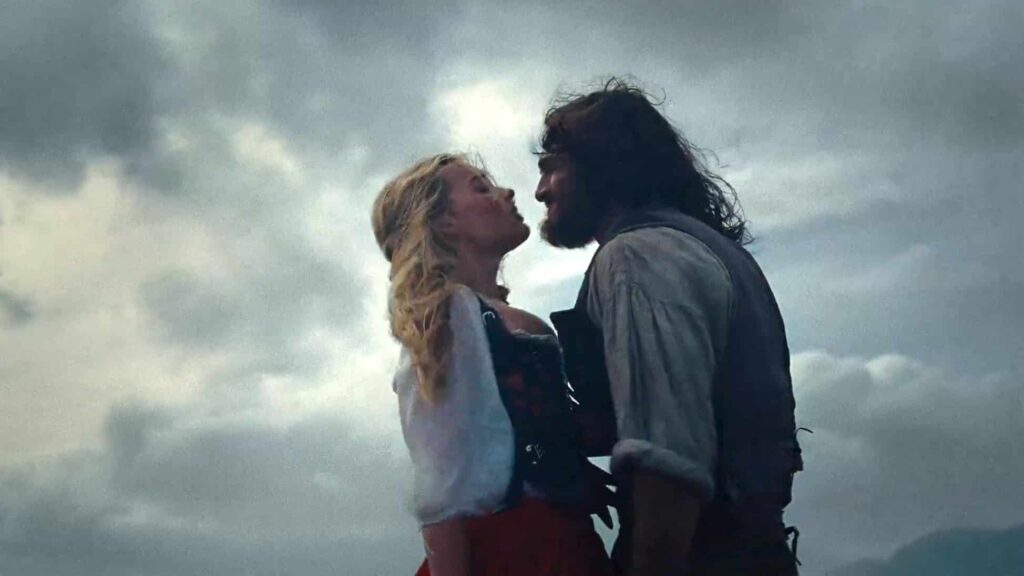
Let’s talk performances. The characters of Wuthering Heights are insufferable. There is not a single kind, generous, emotionally healthy person in sight. Margot Robbie expertly dials down her natural likability to embody Catherine’s capricious, bratty, self-destructive chaos. Jacob Elordi yearns with Olympic-level intensity. Together, their chemistry is feral and electric, burning through the screen. You can see how deeply Heathcliff loves and enables Catherine’s wild abandon, and how that devotion turns corrosive. Elordi’s Heathcliff feels like a barely contained animal, and it’s thrilling to watch.
Pop icon Charli XCX handles the score with ease, blending modern synths with classical moodiness to give the sweeping landscapes a sharp, contemporary pulse. It’s giving girlie-pop Trent Reznor in the best possible way. When Charli’s modern lyricism cuts through: “I think I’m gonna die in this house”, it doesn’t feel out of place or distracting.
The costumes are immaculate. I do not care that they’re not period-perfect. I’m here for the glamour. The over-the-top, IDGAF attitude. The drama. The wardrobe understands the assignment. The set design is equally stunning, from the literal realization of the “skin” room to the crumbling ruins where Catherine and Heathcliff begin their official torrid affair. The cinematography is lush and picturesque, making the moors feel less like scenery and more like an accomplice.
Emerald Fennell’s Wuthering Heights isn’t interested in comforting you. It wants to unnerve you, seduce you, and leave you a little scorched. Which, frankly, feels exactly right.
For more Reviews, make sure to check back to That Hashtag Show.

![The Batman Drops ‘The Bat And The Cat’ Teaser [Trailer]](https://www.thathashtagshow.com/wp-content/uploads/2021/12/image001-1-440x264.png)



 That Hashtag Show
