
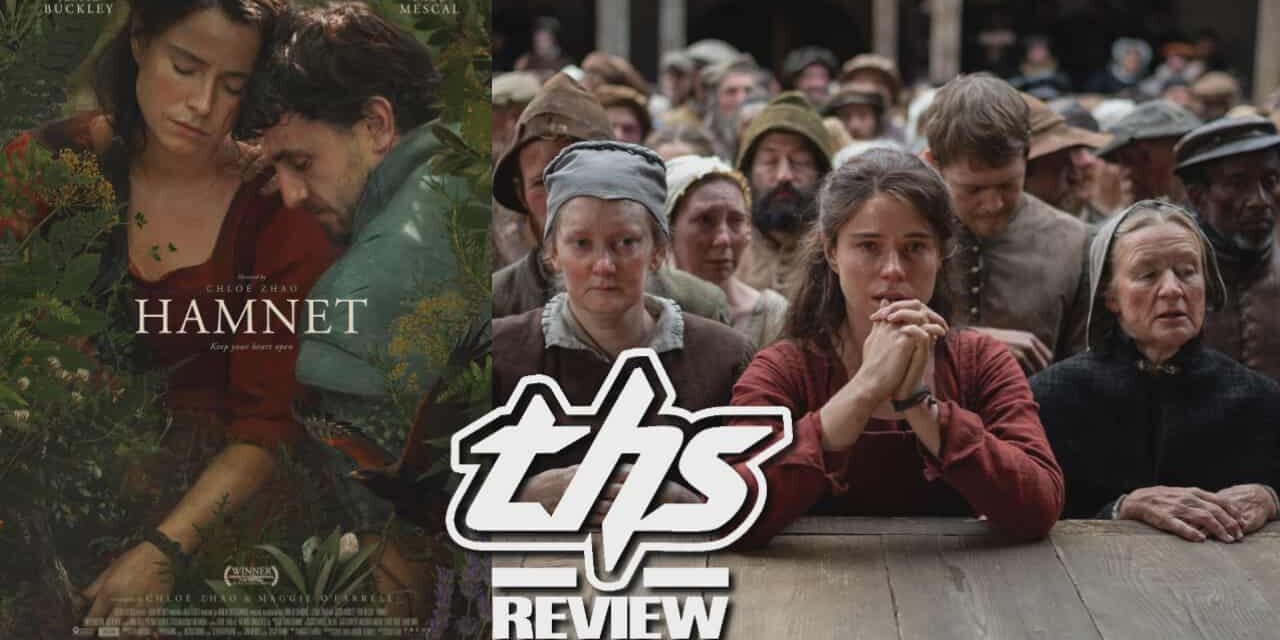
What do we do when life deals out unbearable pain? How do human beings get back up and recover when their worst nightmares become reality? Chloe Zhao’s adaptation of Maggie O’Farrell’s novel Hamnet attempts to address these questions through a heartbreaking exploration of motherhood, mortality, and the most famous play ever written.
Art has the potential to take us past the darkest moments life offers. It can connect us with other human beings, granting us the magical ability to experience the pain of others. In that we find our sameness, our empathy, and compassion. Hamnet attempts to do these things, but at the same time, it is very much about how and why great art does these things.
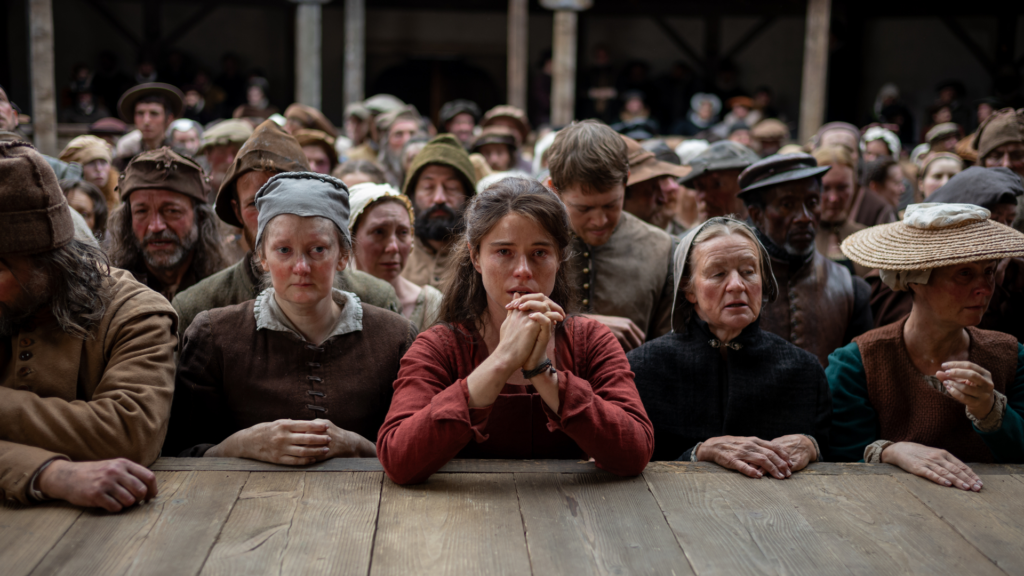
But to understand the film, and appreciate its layers, it is necessary to consider its roots in historical fact as well as its relationship to Shakespeare’s work, and to the mythology of his region far predating him. Hamnet is packed with heart-wrenching human drama as well as references easily missed.
Was There a Real Hamnet?
The plot builds on the historical truth that William Shakespeare and his wife Anne Hathaway (named Agnes in this story) lost their son Hamnet when he was 11. The assumption from there is that the bard was deeply impacted, with the loss changing the nature of his work entirely and inspiring elements of perhaps his most famous tragedy, “Hamlet.” The names Hamnet and Hamlet were, as the opening card of the film informs us, interchangeable at the time.
This reading of the play and Shakespeare’s life isn’t entirely new to the O’Farrell novel. Historians and critics have considered it before, with ideas of real-life impact on the art falling in and out of favor over the centuries of analyzing Shakespeare’s everlasting texts.
Whether or not the Prince of Denmark was named for Shakespeare’s son is up for debate. There is evidence that “Hamlet,” in name and plot, was a riff on the Scandinavian legend “Amleth,” which was the subject of Robert Eggers’ film a few years ago, “The Northman.”
The historical accuracy and basis of the plot for Hamnet are hardly the major concern, however, for O’Farrell and Zhao. The name Shakespeare was uttered only once in a “Leo pointing at the screen” meme moment in the third act.
This is not the story of Shakespeare, Hamlet, or Hamnet. This is the story of Agnes, played at full tilt by Jesse Buckley opposite Paul Mescal’s William Shakespeare.
In this female focus, Hamnet echoes “Mysts of Avalon,” a 1983 novel where author Marion Zimmer Bradley looked at Arthuriana through the lens of its female characters (most specifically villain Morgan le Fay.) Long a simple villain, this angle on Le Fay’s part in the foundational myth looked at female power, and how it was impacted and changed by the rise of Christendom against the Celtic faith. Hamnet is doing something very similar.
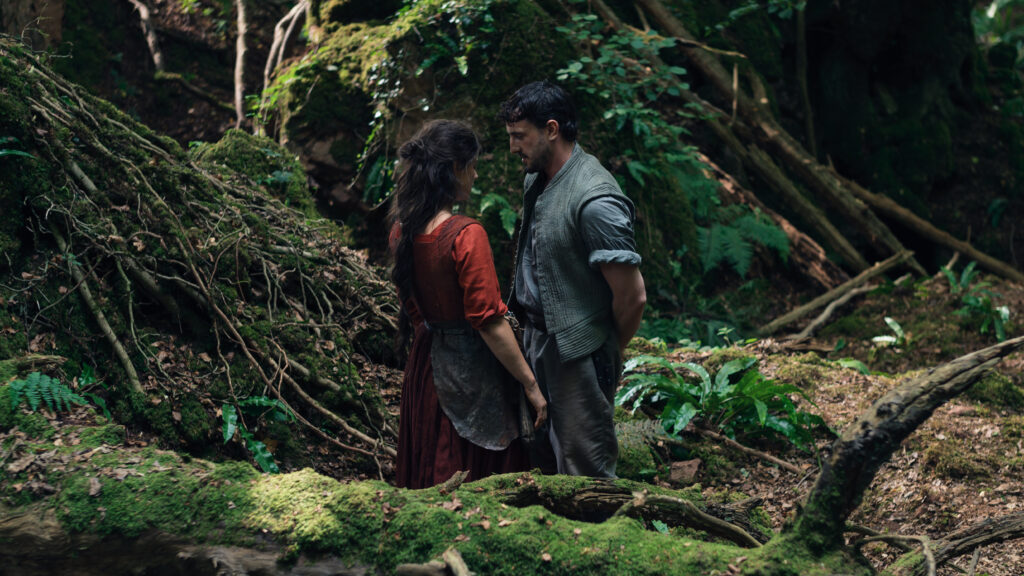
The film opens with Agnes in the forest, in a fetal position, seen at a distance. We learn she is a mysterious figure said to be a witch. Zhao’s flat space, gorgeous colors, and long takes emphasize this initial moment and many others that will echo it later.
Agnes is one with nature, a being that embraces her mysterious lineage, and brings with her some kind of magic that has ‘bewitched’ the young Latin tutor destined to write the most enduring poetry in the English language.
Chloe Zhao’s Visual Themes and Cinematic Influence
Zhao’s visual language is everything early on, a key to unlocking and thinking about larger themes at work. Early shots in the initial encounter involve many framing devices separating an inner and outer world, similar to John Ford’s framing in his classic westerns like The Searchers and Stagecoach.
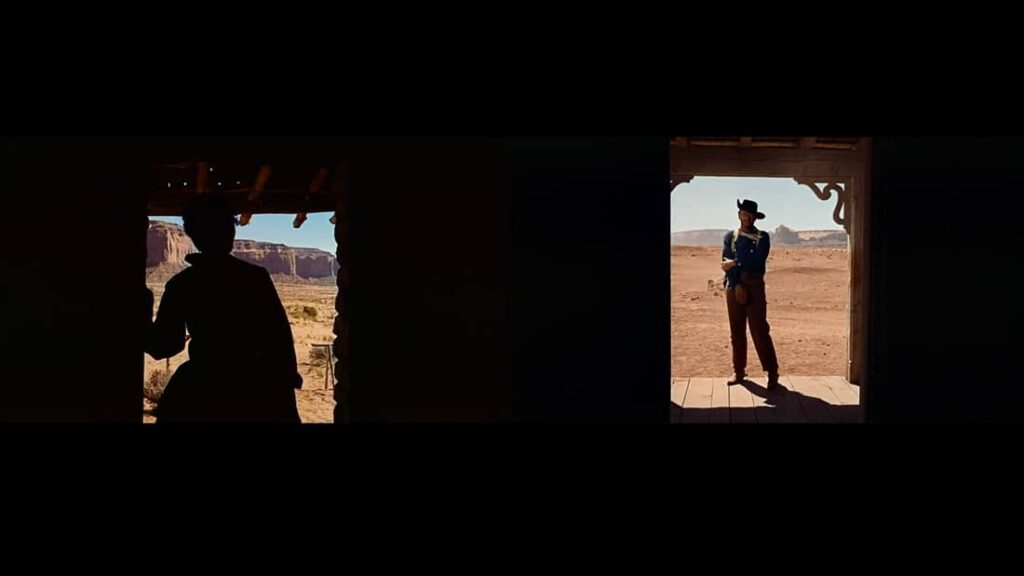
Ford never copped to any sort of intent, but plenty of ink has been spilled considering the visual motif about the natural world and its relationship specifically to man, and his relationship specifically to woman.
Zhao has all that going on early. The forest features a deep black void, a birth canal, and an abyss all at once. There are also frequent frames, much like a stage proscenium, or a threshold crossed in and out of life and death.
The initial duality of the film is the ordered world of language and learning with Will, and the chaotically, dangerously beautiful world of Agnes. Their love transcends the differences and crosses the boundaries. Their initial meeting involves crossing many visual thresholds, from the outer world to the inner, culminating in a sex scene that forces them to be wed against their families’ wishes.
The traditional structure of Shakespeare’s world grinds against Agnes’ desire to be in the forest, and it all comes to a head as Will begins his career far away in London (we spend very little screentime there). Agnes uses her weakest child, and Hamnet’s twin sister, Judith’s health as a reason not to voyage to London, but we know (and so does Will) that it’s more than that. It’s tied to her not belonging there, and rather belonging close to her ancestral forest and its mystery.
Despite this core conflict, this is a story of a young family thriving, full of love and embrace of all life has to offer, including the death of a beloved pet hawk, who is sent away into the beyond with a pagan ritual per Agnes.
Tragedy strikes when the plague comes to the family during one of Will’s absences. Judith falls very ill, and in a classic Shakespearean style plot turn, Hamnet attempts to trick death by pretending to be his sister to save her.
Anges and Will are devastated, each in their own way. The scenes of the illness and death are operatic, showcasing a primal Buckley experiencing the full gamut of human emotion, often in single takes. This scene mirrors multiple intense childbirth scenes earlier in the film, again drawing the similarities between coming into the world and leaving it.
Agnes’s role in these sequences, where her children cross the plane between life and death, implies the unique role and power of motherhood. Will’s inability to be there is a curse, making it harder for him to directly manage his feelings and come to terms with the experience. Where Agnes was connected to the creation of the child, the natural world, and deeply entrenched in his loss, Will was absent. What he can participate in is reflection and thought, then something like the shadow puppets he sees one night in a London alleyway. Something akin to Plato’s cave.
Will turns his pain into words, imbuing his latest show, “Hamlet,” with ideas around mortality and the line between life and death that he has considered since the loss. His stage features a painted backdrop of a forest, a fake tree, and a centered black void very familiar to the one from the actual forest earlier in the film.
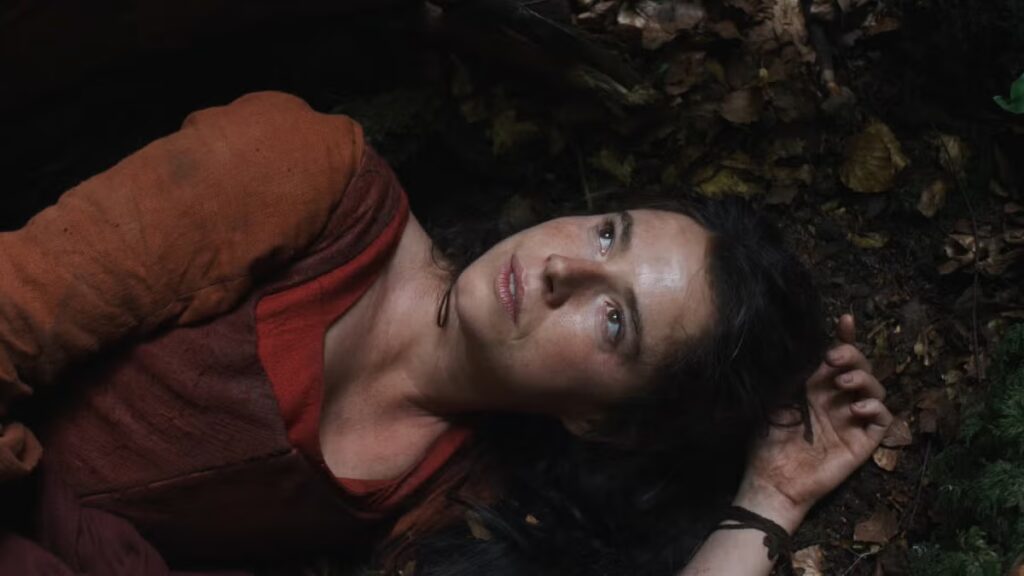
When Agnes decides to finally enter ‘the city’ and attend the play, she bristles in horror at the artifice representing her real life, and hearing her real son’s name.
She comes to see what Will has done, though, recognizing that he was working out his problems, and granting Hamnet his own immortality on the stage as a dashing hero, a beautiful young man, a thoughtful, inspiring presence who will exist in perpetuity.
Will’s ability to create this world is a mirror of Agnes’s ability to create life. The catharsis of his play touches those who see it, culminating in the idea that transference of pain through narrative and metaphor can connect us all.
The catharsis of Will through the play is raw and touches Agnes deeply, with the audience, in turn, somehow being touched as well, culminating in an idea that transference of pain and experience through metaphor and art connect us all in a manner that is deep and fascinatingly powerful.
The film starts with frames around Agnes’ natural world that Will was entering from elsewhere, and it ends with Agnes entering Will’s unnatural recreation framed by a stage. The dark, cavernous voids of the forest and the many cuts to black within the film become a final, emotionally exhausting stage exit.
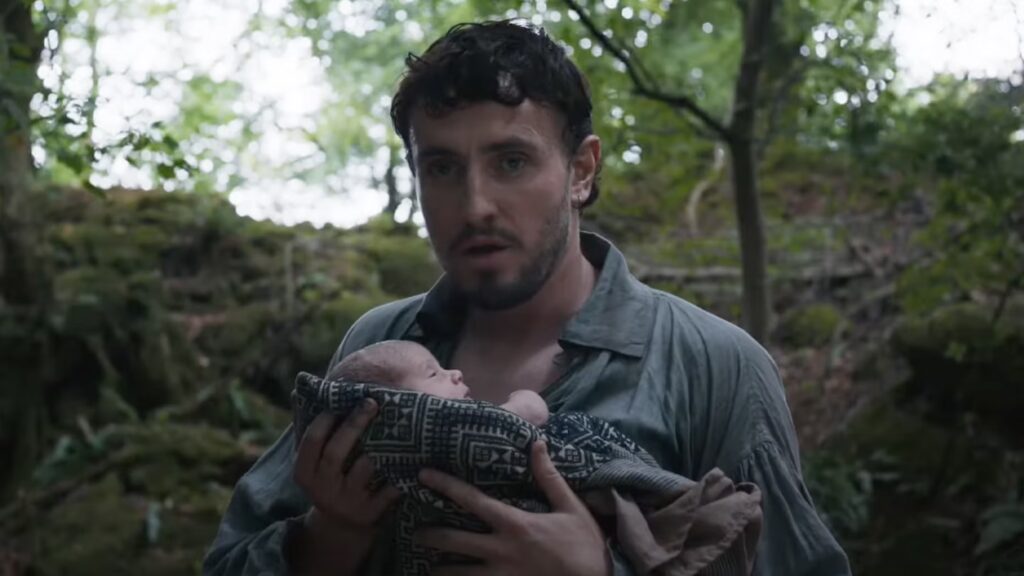
Hamnet is about the power of art, the power of nature, and the strange relationship between the two. The living beings at the center of this story are long gone, but here we are centuries later reliving their life and experiences because of what one of them scratched on a page with a quill. Does art have the power to connect us and circumvent the natural order of things, specifically that they must grow old and die?
Hamnet has meanings and ideas that stretch far beyond its run time, or even what can be expressed in one review. It’s a movie worth experiencing and considering. A text worth studying, a layered look at one of the most singular artists and their relationship to what it is to be human.
Today we live in an age marked by corporate overloads, a tech oligarchy, and simplistic KPI-charged mindsets, but Hamnet suggests the power of those who walk the less conventional paths of art and nature dance with our reason for existing, and leave an enduring legacy that shows us how to live, die, and love. The nature of ‘business’ and ‘trade’ is addressed in the form of William Shakespeare’s father, an inept bully who stands in the way of great and beautiful things, only to be deservingly tossed aside so that life can be experienced completely in all its magnificent joys and devastating sorrows.
For more Reviews, make sure to check back to That Hashtag Show.

![‘The Last Duel’ Brings Ridley Scott Back To Historical Epics With Matt Damon & Adam Driver [Trailer]](https://www.thathashtagshow.com/wp-content/uploads/2021/07/Damon-440x264.jpg)



 That Hashtag Show
