
![Satan vs. Jesus vs. Nicholas Cage in ‘The Carpenters Son’ [Review]](https://www.thathashtagshow.com/wp-content/uploads/2025/11/eece5eae-df32-4c1f-a0de-e892a7df5b8a-1280x640.jpg)
Nicholas Cage’s latest effort is biblical. That could be said of many of his performances, perhaps even all of them, but in this instance, it’s literally biblical, as he takes on the role of Joseph, the father of Jesus Christ. What makes this take on the story most unique is how it pits Christ against the devil in ways never previously put on screen. The dynamic between the two figures is explored as a kind of ‘what-if’ attempt to humanize them both.

The film focuses on Jesus Christ (played by Noah Jupe) during his teenage years. He is coming of age, and his parents, Joseph and Mary (FKA Twigs), are confused by his mysteriously divine lineage, searching for answers through rigorous prayer while staying on the run, knowing that “the boy” will bring questions and quite possibly danger.
Cage is tormented by the silence of his God in the face of all this uncertainty. A Cage tormented on screen is always fascinating to watch, having given us countless memes and moments over decades of internet culture. The prolific star’s greatness is in his conviction, though, and he leaves no room for doubt here as he digs as deeply as possible into the idea of Joseph’s responsibility and frustration pulling him to pieces in multiple directions. Joseph is flustered, desperate, and uncertain as to what the right actions are. He oscillates between rage, compassion, over-protectiveness, and absolute despair.
Basically, a typical parent.
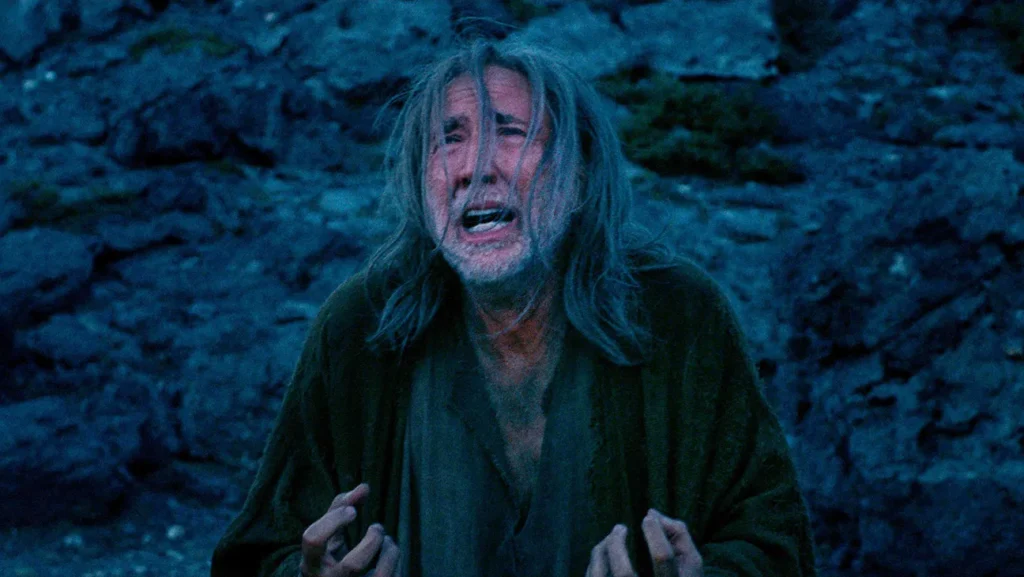
The weakness of the film comes in its first and second acts, where we bear witness to a family on the move in a small first-century village trying to keep a secret. Not much is really happening. Joseph is a harsh father, forcing his son to pray constantly and follow numerous strict rules, keeping his head down.
The visuals don’t help the barren first-half plot, as the camera wanders adrift in the brown, craggy landscape of burlap sack-clad people in huts and hovels. Nothing is visually exciting here, and there isn’t much happening plot-wise either.
That is, with the lone exception of Satan. Satan tries to bring the heat in the form of a girl covered in scars and a desire to tempt Jesus away from his lessons and his father’s rules. It’s not enough mystery (we know who this is and what is going on) nor enough action (she shoves him into a leper once) for us to get too excited, though.
When Satan aims at Jesus’ nice-seeming mute neighbor, whom Jesus has an obvious crush on, things start to move. At this point, we’ve waited long enough, but some violent and gross possession-like moments coupled with a trip to the outskirts of town where Satan shows Jesus how cruel man can be start to raise the stakes (another pun intended).
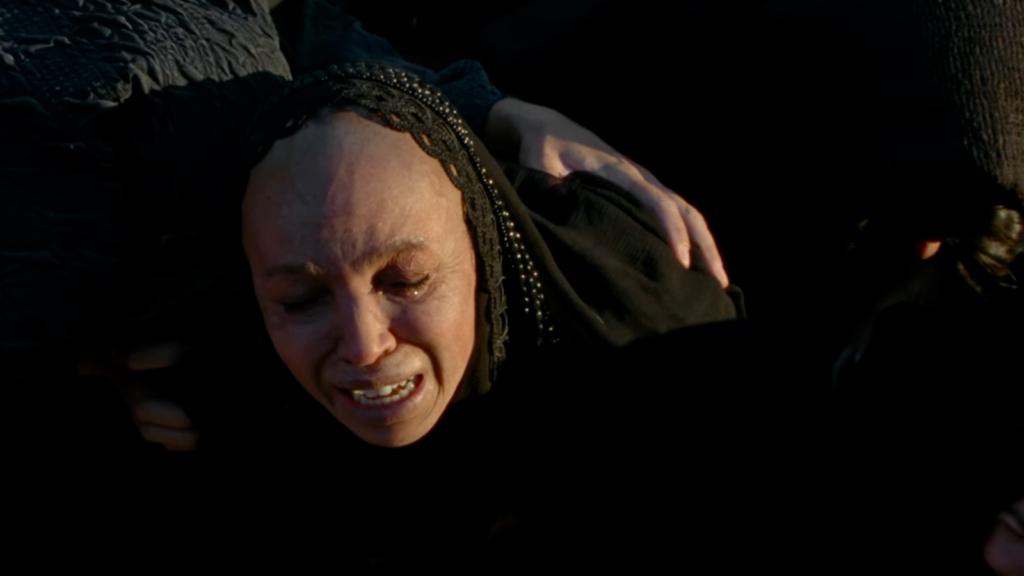
The third act of the film gets cooking at last when Jesus and Satan have to face off, and it turns into something of a Jesus origin story. How he got his powers, how he learned who he was, how he developed his world-famous empathy. Cage’s Joseph plays an integral role in much of this, finally landing the arc at a “I’m the dad who stepped up” type of place.
The most dynamic exchange happens in the film between Satan and Christ when Satan attempts to give a little backstory on what happened between her/it and Jesus’ real father. We don’t get much here, but we get enough to glimpse at the conflict that helped define so much of Western literature in John Milton’s ‘Paradise Lost’.
Will audiences recognize the power of forgiveness, so core to the concept of Christ’s actual teachings but so forgotten by much of modern Christianity? Whatever anyone thinks of “The Carpenter’s Son” as a movie, its message is valuable as much now as ever, asking if we can genuinely be Christ-like and have some sympathy for the devil.
For more Reviews, make sure to check back to That Hashtag Show.

![Paul Thomas Anderson Teams With Leonardo DiCaprio For ‘One Battle After Another’ [Trailer]](https://www.thathashtagshow.com/wp-content/uploads/2025/03/Leo-440x264.jpg)

![‘Americana’ Sydney Sweeney Heads West In New Crime Thriller [Trailer]](https://www.thathashtagshow.com/wp-content/uploads/2025/05/sydney-sweeney-paul-walter-hauser-movie-americana-from-sxsw-v0-fxWWgmTSpCqDLcNlqHV5ZtK3R_bzUBd4BS0rcyZDAeE-440x264.jpg)

 That Hashtag Show
