
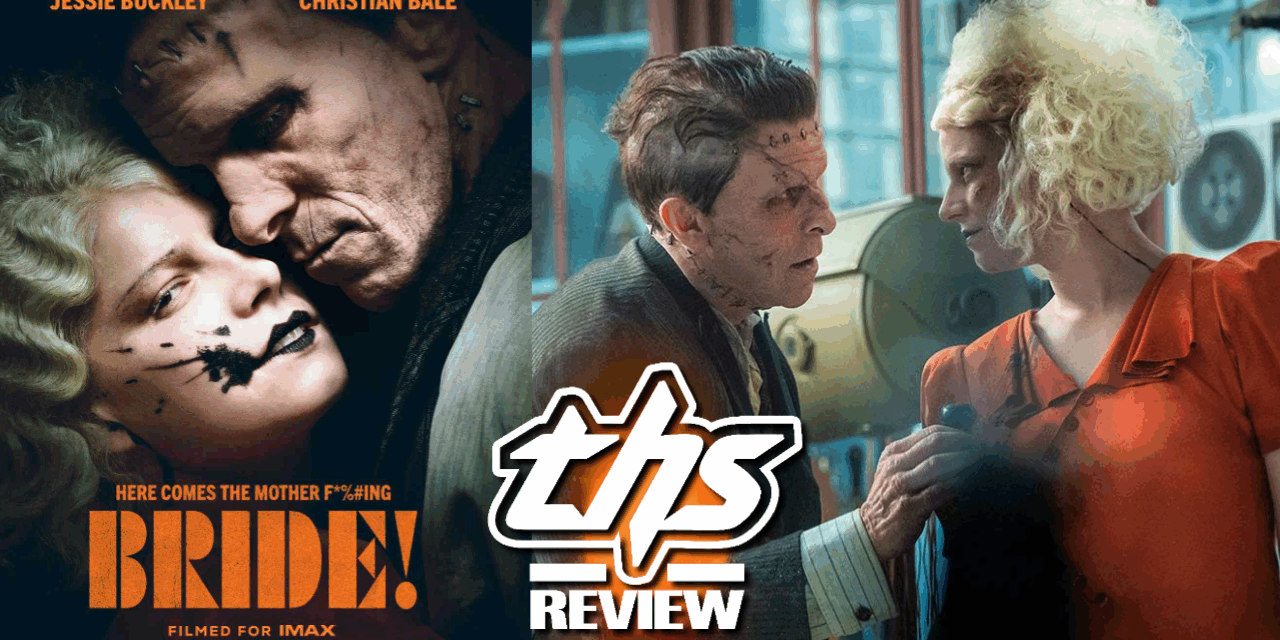
Maggie Gyllenhaal’s The Bride is fantastically unhinged in the most delicious and deliberate way. This is not a nostalgic retread of Frankenstein. It is a reclamation project. A gothic romance filtered through 1930s Chicago Mob grit, stitched together with satire, horror, and a sharp awareness of who has historically controlled the narrative.
The story follows Frankenstein’s Monster as he travels the world searching for someone capable of curing his isolation. That journey lands him in Chicago, where he pleads with Dr. Euphronius, played with steely intelligence by Annette Bening, to create him a companion. What they resurrect is not simply a bride, but a murdered woman brought back to life with fractured consciousness, who is volatile and electrically awake. From the moment she opens her eyes, the film makes it clear this experiment will not unfold as intended.
Jessie Buckley and Christian Bale Electrify
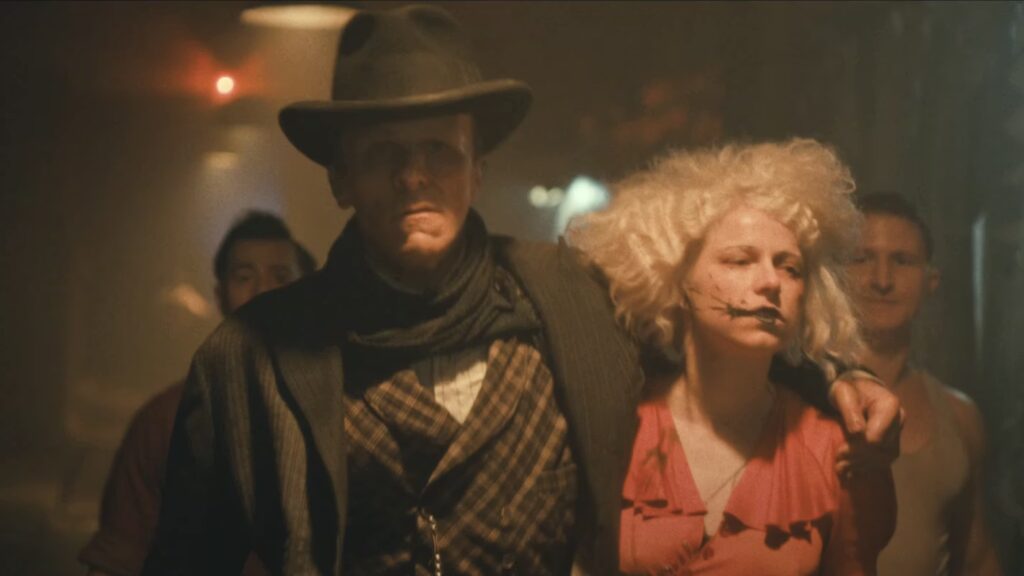
Christian Bale plays the Monster with disarming sincerity. He strips away the theatrical menace often associated with the role and replaces it with aching vulnerability reminiscent of childlike hunger for connection. The heartbreak comes from that vulnerability turning into desperation. This is a “man” who wants love so badly he convinces himself that lying, manipulating, and even running from the law are acts of devotion. However, Bale never plays him as a villain. He plays him as a man confusing possession with partnership. That distinction matters.
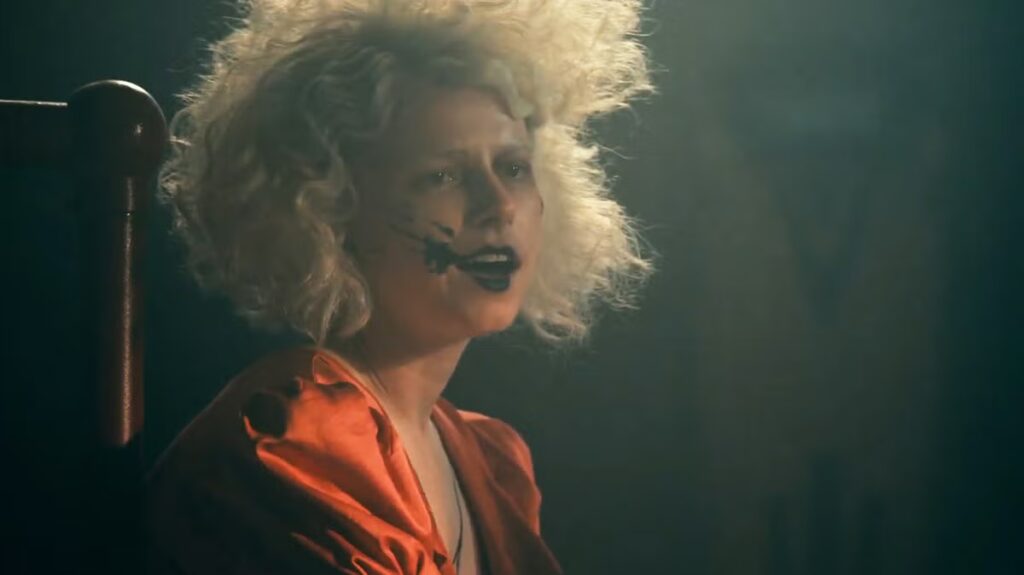
Then there’s Jessie Buckley. She doesn’t just enter the film. She detonates it. Her Bride feels inhabited by overlapping consciousnesses, moving between clarity and chaos in ways that suggest dissociation, trauma, maybe even something spectral. Gyllenhaal supports that instability formally. The editing turns jagged. Tonal pivots swing from absurd comedy to devastating grief without warning. In one scene, her volatility is laugh-out-loud anarchic. Next, it’s a raw portrait of stolen agency. Buckley makes both feel truthful and never like a gimmick.
Maggie Gyllenhaal Reclaims Frankenstein With Feminist Fury
This is the film’s sweet spot. The Bride thrives on contrast. Expressionist shadows nod to early monster cinema, while the production design coats decay in Art Deco glamour, with transatlantic accents. Chicago feels like a polished laboratory hiding rot beneath the marble. Civilization itself becomes the experiment.
The satire is unapologetically pointed, and the critique of patriarchal control is not subtle. The film refuses to soften those edges, and some will bristle. That’s the point. Rather than delivering a simple empowerment arc, Gyllenhaal presents liberation as messy, volatile, and morally complicated. In doing this, The Bride is a love letter to science fiction as a genre that dares to ask ethical questions about power and humanity.
The Bride is bold, chaotic, romantic, and fiercely intentional. A monster movie with a brain and a pulse. A reanimation that feels genuinely alive. See it in theaters beginning Friday, March 6, 2026!



 That Hashtag Show
