
![‘Mother Mary’ Pop Stars, Ghosts, And Immaculate Dresses [Review]](https://www.thathashtagshow.com/wp-content/uploads/2026/04/3d1c70fc-8768-44cc-93d9-cb3b6c635edb-1280x640.jpg)
Sometimes the best way to access the core of a film is to let it take you over completely. Locked behind metaphorical dialogue and an obtuse artistry, the key to the door is simply letting it all in and fester inside until the understanding comes to light. You can’t second-screen a film like this, and it requires your mind to actually engage and be wholly invested in order to really experience what it has to offer. That makes it sound like Mother Mary is an inaccessible avant-garde experiment void of general audience appeal. That’s not what’s happening here – though one can argue that by design this has little mass appeal – just that David Lowery has always been a filmmaker whose work requires some work of your own. His mind spilled out onto the page and brought to life with visceral imagery, often resting on vibes and our own ability to sift around in his vision until the meaning we’re searching for speaks to us. Immaculate vibes to match the immaculate dresses power Mother Mary, along with its committed leads who together craft something cinematically unforgettable even if you’re not quite sure what to make of it all on a first go around.
Mother Mary is a moving tapestry of intoxicating strangeness with pitter-patter dialogue, an intriguing almost spoken word cadence of metaphors and verbal sparring. Visually arresting, musically infectious, hauntingly invigorating and emotionally resonant, it demands to live inside your mind, burying itself deep and becoming an evergreen dissection you’ll want to return to over again to parse out its true intentions. It boldly proclaims it’s not a ghost story while using all of the foundations of a shared haunting to connect its protagonists. Mother Mary is packed to the brim with emotionality; a woman filled with love and hate in equal measure, a tortured artist wrecked with inner turmoil and an existential identity crisis, revenge, forgiveness, terror, loss, connection, fear, rekindling, and shared trauma manifested in ghostly visions.
Artists Give, But What Do They Keep For Themselves?
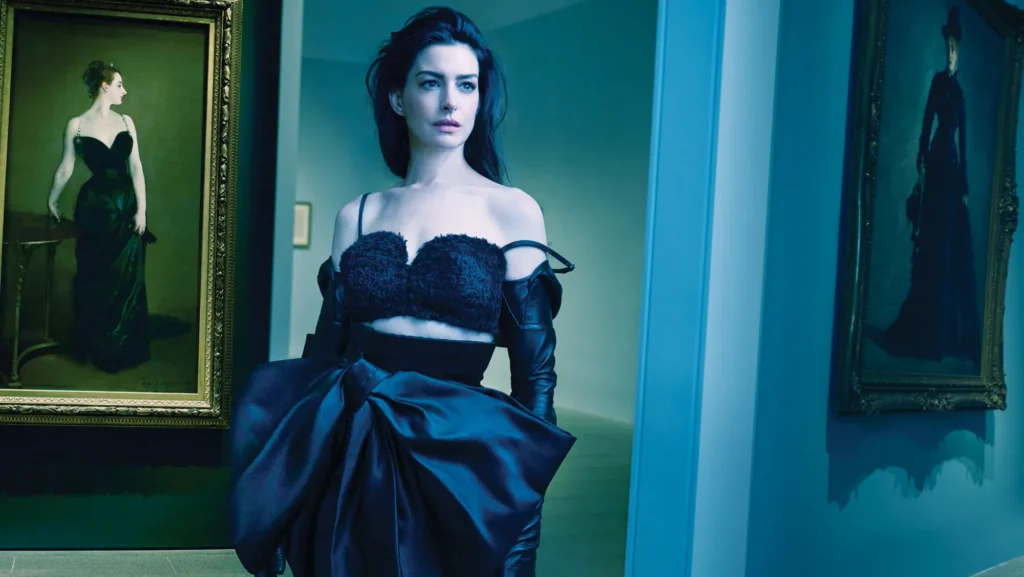
Written and directed by David Lowery (The Green Knight, A Ghost Story) Mother Mary stars Anne Hathaway as the titular Mother Mary, a gothic inspired pop star icon about to embark on a comeback tour after a tragic accident during her last run. Overworked and mentally fraught, she breaks down days before her first show to return to her old costume designer Sam (Michaela Coel), an estranged best friend whom Mary left behind in pursuit of new heights and reinvention. She needs Sam to make a dress for her new show, but the two haven’t spoken in years and what transpired between them years ago has left open wounds that have yet to heal. As the two women begin their journey back to each other, an unforeseen connection arises, something that has haunted them both but seems to draw them back together no matter how far apart they have been.
Lowery has spoken about his pop inspirations for Mother Mary and her whole pop star vibe, citing Taylor Swift’s Reputation era with a heavy layer of Lady Gaga fashion sense. Immaculate dresses abound, acclaimed costume designer Bina Daigeler creates some truly magnificent gowns and stylings. You can feel the whole of the current state of pop stars in every song and performance, both of which are electric and infectious. Artists give so much of themselves to us, but what do they keep for themselves? What happens to the giver in a take relationship? What about those caught in the sweeping tides of their orbit, the silent creators that bring visions to life and get discarded at will? Mother Mary explores all of that in unique and unforgettable ways, shedding the cliched ‘artists are people too!’ rhetoric and digging at something deeper and more universal.
Coel and Hathaway are Incredible
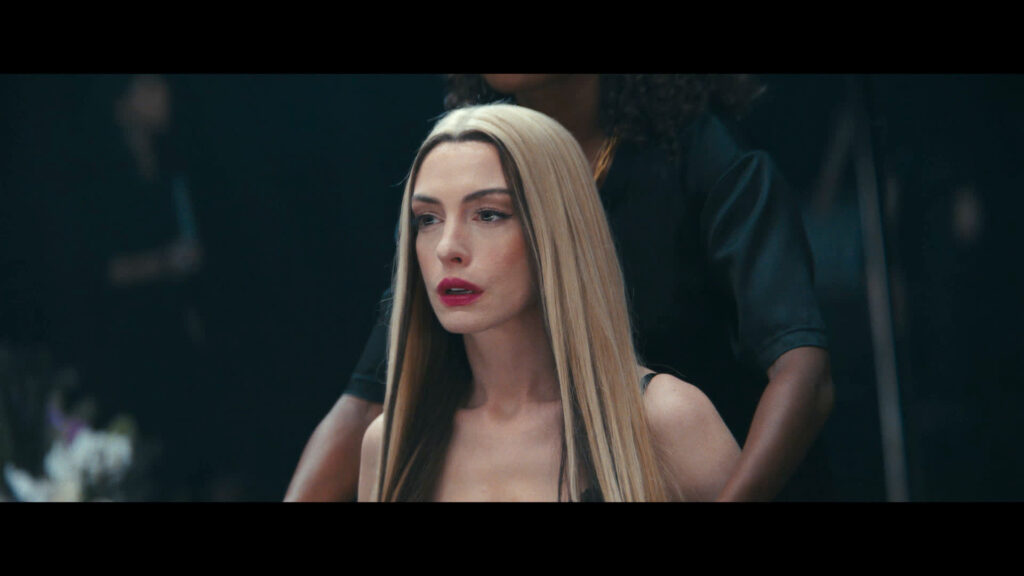
To be even more clear, this is not Jay Kelly (a movie I do actually enjoy but understand those that did not). No, Mother Mary only uses the concert film/tortured artist conceit as the bones of its narrative. Lowery has much more on his mind than attempting to humanize cultural gods. These are merely catalysts to get at more richly textured ideas about identity and friendship and both the spiritual and literal manifestations of guilt, regret, and creation. Mother Mary intentionally speaks in circles and metaphors, so much so even Mary herself says to Sam, “All this speaking in metaphors is exhausting.” And it would be were it not for the lightning bolt of Michaela Coel who chews through this largely two-hander script with razor-sharp delivery and a biting assuredness in every spoken work. Coel has always been good, but she is otherworldly here. Hell truly has no fury like a woman scorned, and Coel is that phrase personified.
Hathaway is equally committed, though by nature of her character demands more physicality than sharp wit and nasty quips in their verbal exchanges. She is the response in the call and response crafting of their dialogue, displaying a woman overwhelmed by the choices of her own life and in constant, nervous turmoil. She is desperate and magnificent, at times cruel and despicable yet sympathetic and kind, never villainous but not a hero, either. She’s also more shredded than a julienne salad, wearing the sweat equity of her character prep with her eight-pack abs and chiseled arms. She also feels like a very real pop star, performing and singing and dancing as if she has always been a music artist.
Final Thoughts
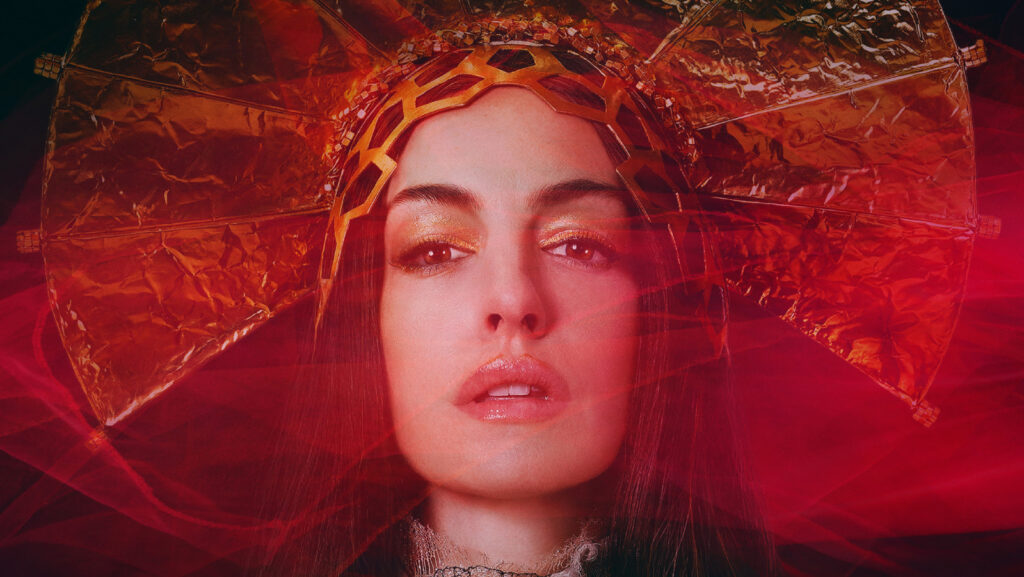
Mother Mary is a fraught tight wire act of ethereal visuals and blurred reality, skewed by characters who guard themselves even from each other as they navigate the true intentions and parse out fact from fiction. They are as drawn to each other as we are to them, and while you may not be able to fully grasp all that’s being show or said, it is nevertheless hypnotic and impossible not to look away. The first half of Mother Mary which mostly features Hathaway and Coel trading barbs and exchanging anecdotes as they dance around the real chasms between them is stronger than the ghost story-centric second half. Stunningly crafted and visually hypnotic, Mother Mary does start to get a little too wrapped up in itself the larger the picture painted becomes, and excels in its more minimalistic moments over its latter, high-concept ideas.
I’d be lying if I said I wasn’t still processing it all, but personally those are the best kinds of films. Mother Mary necessitates repeat viewings and continuous discussion ripe for new discoveries with every watch. Lowery invites you to let it in and take as much time as you need to sit with it all. Some may find Mother Mary too distant to be effective and – if you’re looking for it to BE a ghost story – a rather hollow affair. For me, a moving painting and Shakespearean-inspired dialogue about art and artistry was always destined to tickle my cinematic bones, and Mother Mary locked me in quickly and has not left my mind’s sense. I can’t stop thinking about it, and even as I begin to bring this Mother Mary review to a close, I continue to uncover new aspects missing from these many, many words written.
If you’re willing to let it carry you away, Mother Mary will flow through your veins and entrance all of your senses. It’s a film I can’t shake and wouldn’t want to even if I could. It is an all-consuming feast of visuals and storytelling, a deeply layered well that can be drawn from over and over and I can’t wait to return to it again.
Sky Riley/Mother Mary concert tour WHEN?
For more Reviews, make sure to check back to That Hashtag Show.


![The Final Season of The Walking Dead Shuffles Closer [New S11 Teaser]](https://www.thathashtagshow.com/wp-content/uploads/2021/06/Walking-Dead-season-11_1-440x264.jpg)
![Thrilljoy PIX! Are A Must-Have For Pop Culture Collectors [Last Minute Gift Guides]](https://www.thathashtagshow.com/wp-content/uploads/2024/12/thrilljoy-440x264.png)
 That Hashtag Show
