
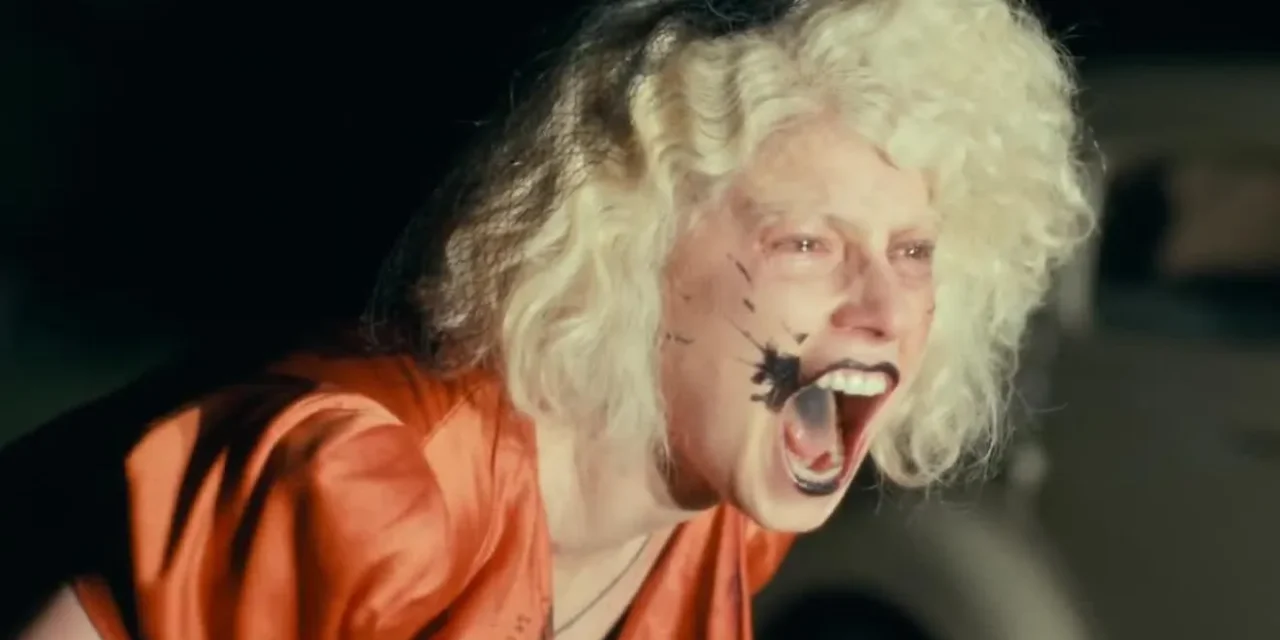
This weekend sees the release of Maggie Gyllenhaal’s The Bride!, a film she both wrote and directed that draws inspiration from the 1935 film Bride of Frankenstein. That movie itself drew inspiration from Mary Shelley’s 1818 novel, Frankenstein, which was adapted by Universal Pictures in 1931 and has been considered a classic of the genre for decades. Gyllenhaal’s take has been described as a bold swing and a re-assessment of Shelley’s source material, so if that bold swing was right up your alley or if you’re craving something a bit more, here are five films inspired by Mary Shelley’s Frankenstein that you definitely should check out.
5. Re-Animator (1985)
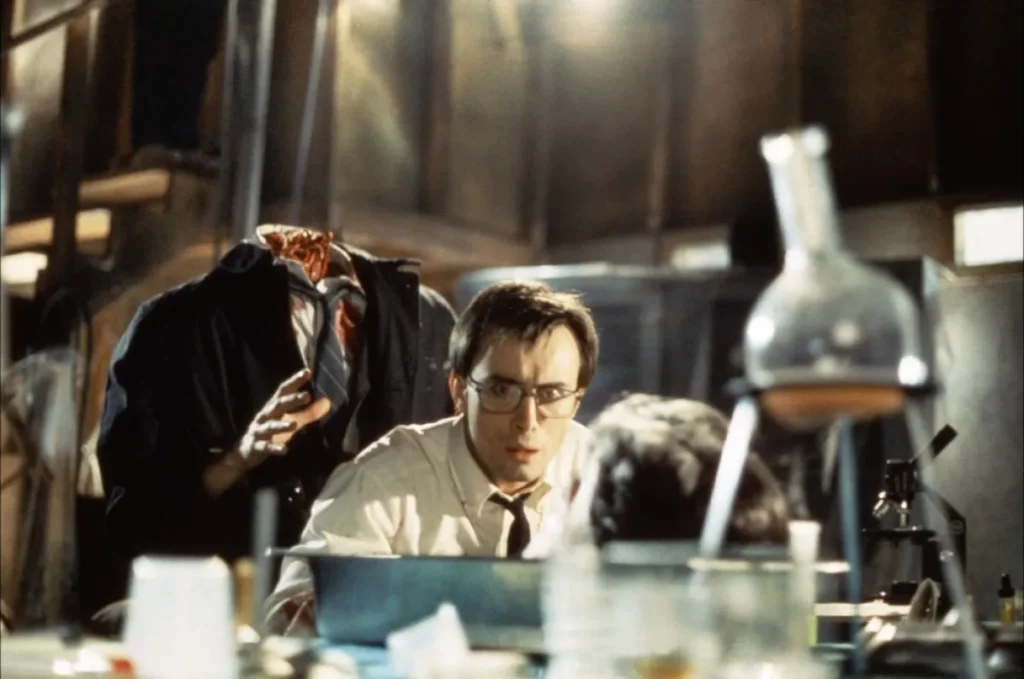
Re-Animator has solidified itself as a comedy horror cult classic, and it’s clear that it draws some of its inspiration from Frankenstein, but with more of a sci-fi twist mixed with some graphic images of horror that are hard to forget. Directed by Stuart Gordon from a screenplay he co-wrote with Dennis Paoli and William J. Norris, Re-Animator is also loosely based on the 1922 H.P. Lovecraft serial novella Herbert West-Reanimator and follows a medical student named Herbert West (Jeffrey Combs) who has invented a process that can reanimate dead bodies. Soon, Herbert and his classmate Dan Cain (Bruce Abbott) begin testing his serum on dead human bodies while Dr. Carl Hill (David Gale) wants to claim the invention as his own, along with Cain’s fiancée Megan Halsey (Barbara Crampton). Gordon has said that the 1958 horror film The Revenge of Frankenstein, which was a sequel to Hammer Film Productions’ The Curse of Frankenstein, was a major inspiration for Re-Animator.
The Curse of Frankenstein was a 1957 release from Hammer Films that was inspired by Shelley’s source material, and once all of these elements are factored in, it’s easy to see how this cult classic was also inspired by it. Herbert wishes to play God by finding a way to cheat the finality of death, much like Dr. Frankenstein, and he wants to do it by any means necessary. Where Re-Animator differs is in terms of gore because this is one messy piece of work that has made it a favorite among fans for over 40 years. Combs turns Herbert West into an instant horror mainstay, and his collaborations with Gordon, eight in total, make them one of the genre’s greatest partners. However, it’s the necessity to play God and seeing that get out of control that closely relates it to Frankenstein and makes it a solid choice for viewing if you’re in the mood for something that might make your stomach turn a bit. Also worthy of a look is Bride of Re-Animator, released in 1990, which is its own twisted take on The Bride of Frankenstein.
4. Lisa Frankenstein (2024)
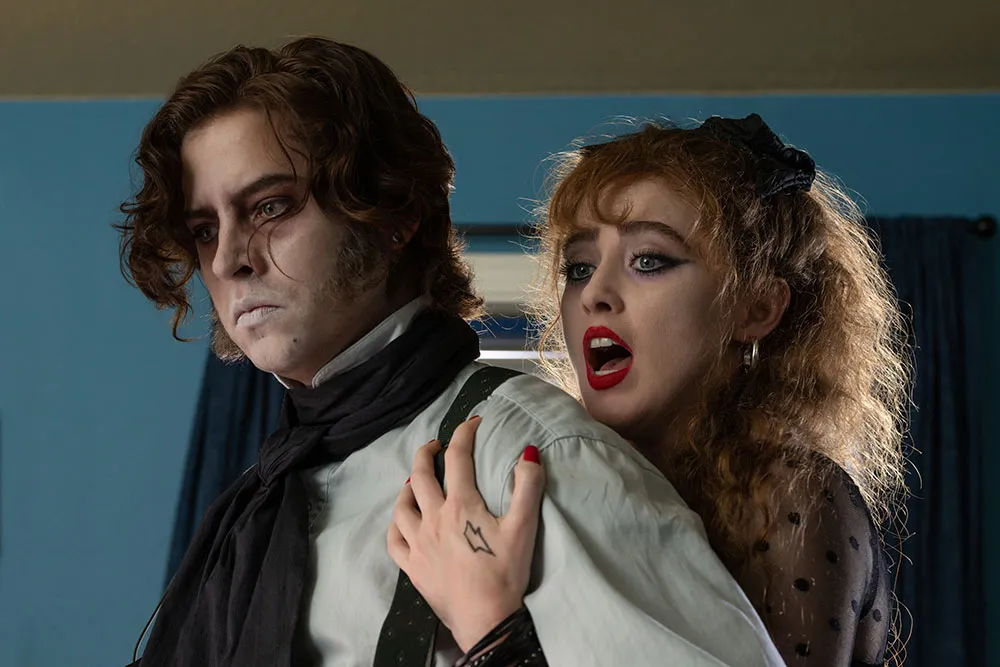
Lisa Frankenstein didn’t get the run it deserved in theaters, but this is a film that has cult classic written all over it, so it’s only a matter of time before it finds the audience it rightfully deserves. Directed by Zelda Williams in her feature-length directorial debut and from a screenplay by Diablo Cody, Lisa Frankenstein follows a lonely teenage girl named Lisa (Kathryn Newton) who meets and forms a unique relationship with a reanimated corpse (Cole Sprouse) from the Victorian era. Lisa Frankenstein is wonderfully campy and never loses sight of it. Wrapped in an 1980s aesthetic, the film works because everyone, from top to bottom, understands the assignment. Newton, in particular, shines here and is a natural fit for Cody’s quick-witted dialogue, while Sprouse’s Creature has moments of stellar physical comedy that work well alongside Newton’s clear understanding of the material and the genre. Inspiration from Heathers and some of Tim Burton’s work is evident, but Shelley’s source material is also present.
While Lisa didn’t bring him back from the dead, she did show her dedication to her discovery by killing people to replace The Creature’s missing body parts. It’s another variation of playing God with a gender switch on the Bride of Frankenstein narrative, but with a young adult twist that makes Lisa Frankenstein one of the better horror comedies to come out in recent years. Sadly, Lisa Frankenstein wasn’t a hit upon release, grossing a mere $9.9 million on a $13 million budget, but, much like Cody’s Jennifer’s Body, it’s bound to get a second life as a true cult classic.
3. Frankenhooker (1990)
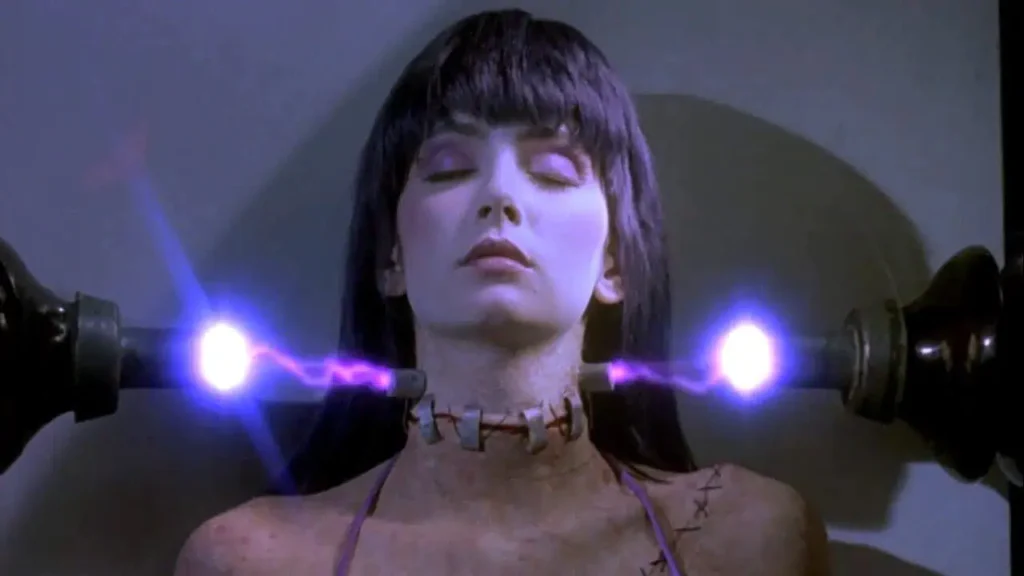
Frankenhooker is absurd, over the top, more than a little bizarre, but it’s unapologetically campy, which makes it a bit of a gem for fans of this sort of thing. Directed by Frank Henenlotter from a screenplay he co-wrote with Robert Martin, Frankenhooker is more of a parody of Shelley’s 1818 novel and a medical school dropout named Jeffrey Franken (James Lorinz) who attempts to resurrect his fiancée Elizabeth Shelley (Patty Mullen) with the parts of prostitutes after she is decapitated by a lawnmower. Of course, this doesn’t go as planned, and once she’s assembled with parts of the ladies of the night, she becomes a nymphomanical monster. Frankenhooker is a low-budget messiness but that is what gives the film most of its charm. This is the very definition of camp, and thankfully, all on board understand that, particularly Mullen, whose portrayal of the titular character is 100 percent committed; that is a masterclass in horror comedy. What’s interesting here, beyond the absurdist display of comedy, it proves that horror films offer up some of the best social commentary out there.
The way that Jeffrey uses the body parts of women who work a profession that often makes them forgotten and deemed unworthy speaks to a bigger issue of how some men use women for their bodies based on their selfish wants and desires. That being said, even though the bulk of the film is drenched in comedic sleaze, the movie has a beating heart because Jeffrey’s motivations are pure as he simply wishes to bring the love of his life back. There isn’t a need to dig into these deeper themes to enjoy Frankenhooker. If you want to ignore the social commentary, the film is simply a fun and campy good time that knows exactly what kind of movie it is.
2. Poor Things (2023)
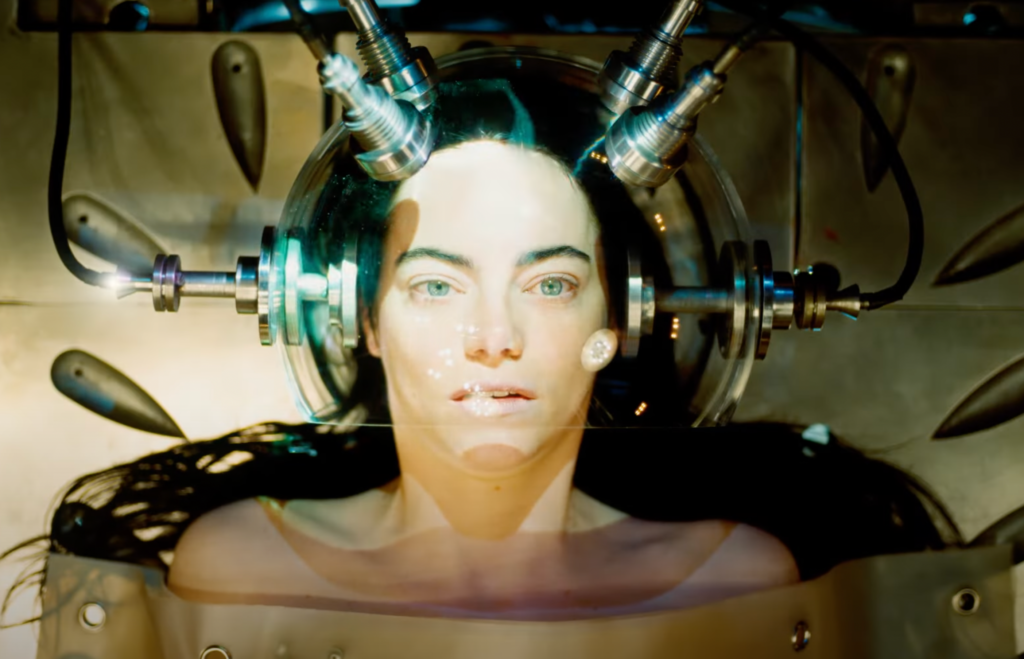
Should you want a more prestigious and Oscar-winning take on what Frankenhooker was putting down in 1990, Poor Things might be more up your alley. Due to Frankenhooker’s more campy intentions, some of its message might be missed by mainstream audiences, but Poor Things made it clear that it was a blatant statement of a woman’s sexual awakening and breaking free of the societal constraints that bind her. Directed by Yorgos Lanthimos from a screenplay by Tony McNamara, Poor Things is based on the 1992 novel of the same name by Alasdair Gray, but it’s clear that Shelley’s novel is also in its DNA. The film follows a young woman named Bella Baxter (Emma Stone) whose body is brought back to life by scientist Godwin Baxter (Willem Dafoe), following her suicide, via a brain transplant (which happens to be that of her fetus). Lanthimos isn’t known for making the most mainstream movies, and Poor Things is far from that.
It might not be readily accessible to casual moviegoers, but its themes are identifiable. Since Bella has now regressed to that of a child, it’s perceived that she’ll be easy to control, but there is also power in self-discovery, so Bella’s desire to learn is what ultimately gives her power and a desire to break away from the patriarchal confines put upon her. Bella’s evolution is equal parts darkly funny and fascinating as her sexual awakening becomes the driving force in giving her complete liberation. Stone, who won a much-deserved Academy Award for Best Actress for her performance, expertly conveys Bella’s growth from childlike naivety to a woman who grows complex and hard to control. Much of Poor Things might be considered, but it’s always intriguing and offers up a tantalizing question of what happens when the creator’s creation becomes far more advanced than who created it.
1. Edward Scissorhands (1990)
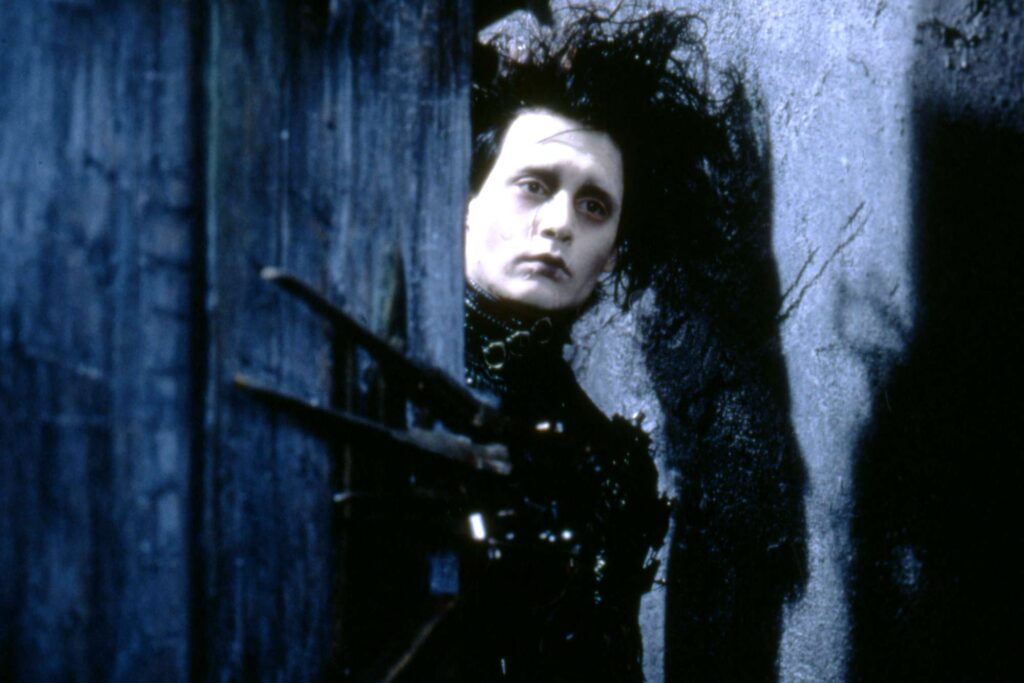
Ending this list on a sweeter note compared to the other entries is Tim Burton’s Edward Scissorhands, which is a take on Frankenstein’s monster, albeit a more misunderstood one who learns about the power of love and affection while also experiencing the nastiness of a society that turns on him when he’s no longer of use to them. Directed by Burton from a story he conceived with the film’s screenwriter, Caroline Thompson, Edward Scissorhands follows an artificial humanoid (Johnny Depp), left unfinished by his inventor (Vincent Price), who has scissor blades instead of hands. He’s ultimately taken in by Avon lady Peg Boggs (Dianne Wiest) and her suburban family, which leads him to fall in love with their teenage daughter Kim (Winona Ryder). Burton has cited Frankenstein, The Phantom of the Opera, The Hunchback of Notre Dame, and others as his inspiration for Edward Scissorhands, and it’s easy to see why.
Burton has described himself as misunderstood, which is why he’s able to relate to these stories and most definitely why he has called Edward Scissorhands one of his most personal films. Burton’s unique spin on Shelley’s source material makes it more of a fairytale and gives Edward much more heart than the flesh and blood human beings he comes in contact with. Many have said that the mistake some people make is assuming that Frankenstein’s creation is the real monster, and Burton doesn’t walk down that road.
The film’s tagline, “The story of an uncommonly gentle man,” drives home the notion that, despite not being human, Edward was being taught the capacity to feel and love before his inventor passed, which is why he sees this new world with a sense of wonder. Edward Scissorhands, in a very pointed fashion, also speaks to how society will cater to things they don’t quite understand, use them for all their worth, and then reject them either when they’re over it or if it somehow turns against them. This is the sad reality of life that Edward has to learn by the film’s climax, but in the midst of this is a poignant love story that overcomes all of that. Depp and Ryder share a sweet and palpable chemistry in the film that actually elevates it above how underwritten their union actually is. What rises above all of that is the heart behind it, which has made Edward Scissorhands an enduring classic that continues to captivate audiences.
The Bride! hits screens nationwide this Friday!

![Dexter: Resurrection: Kadia Sarif, Dominic Fumasa, & Emilia Suárez Talk Music, Relationships, and More [INTERVIEW]](https://www.thathashtagshow.com/wp-content/uploads/2025/07/project_20250714_1213223-01-440x264.png)


 That Hashtag Show
